The Living

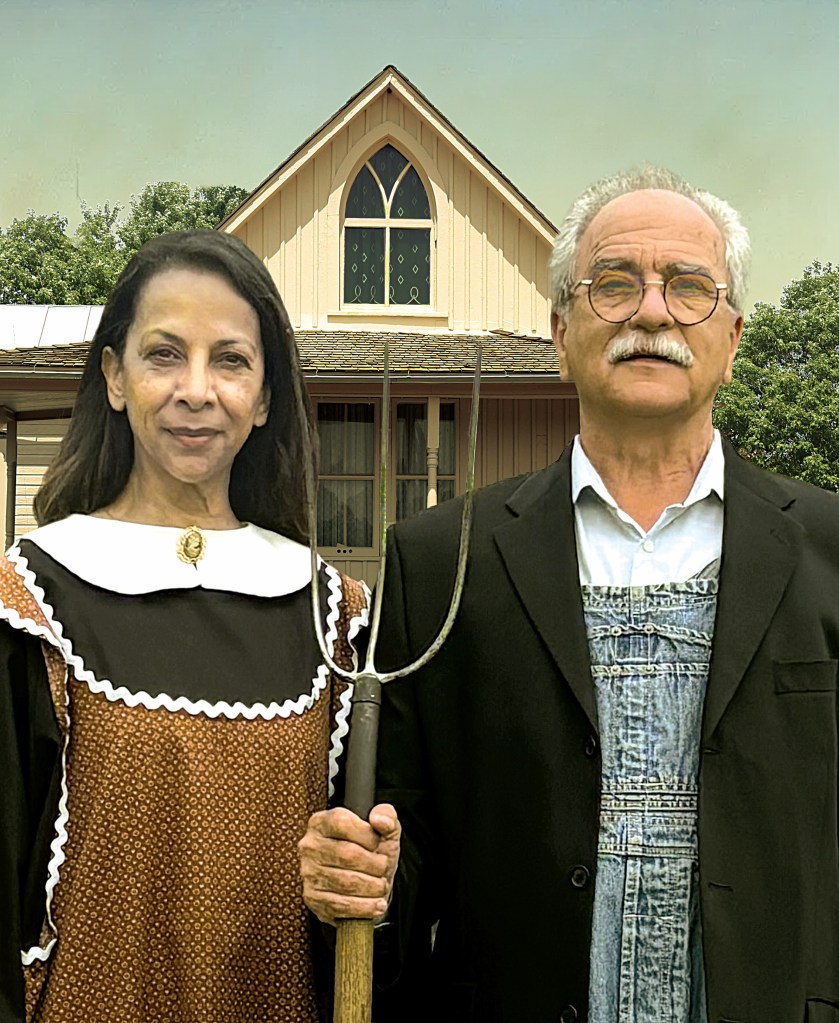
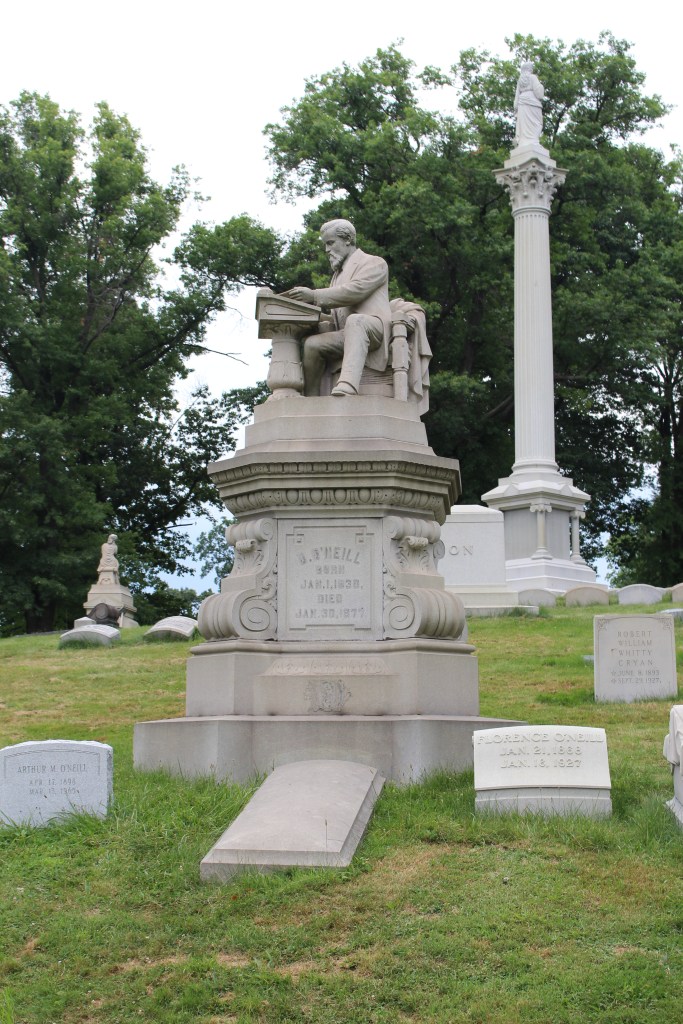
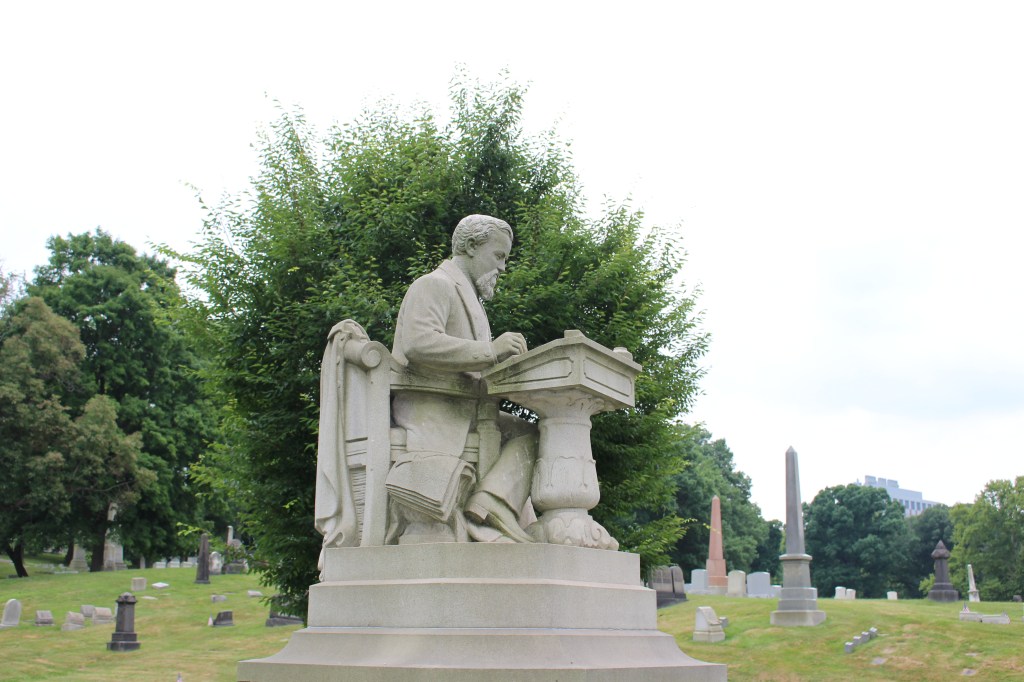
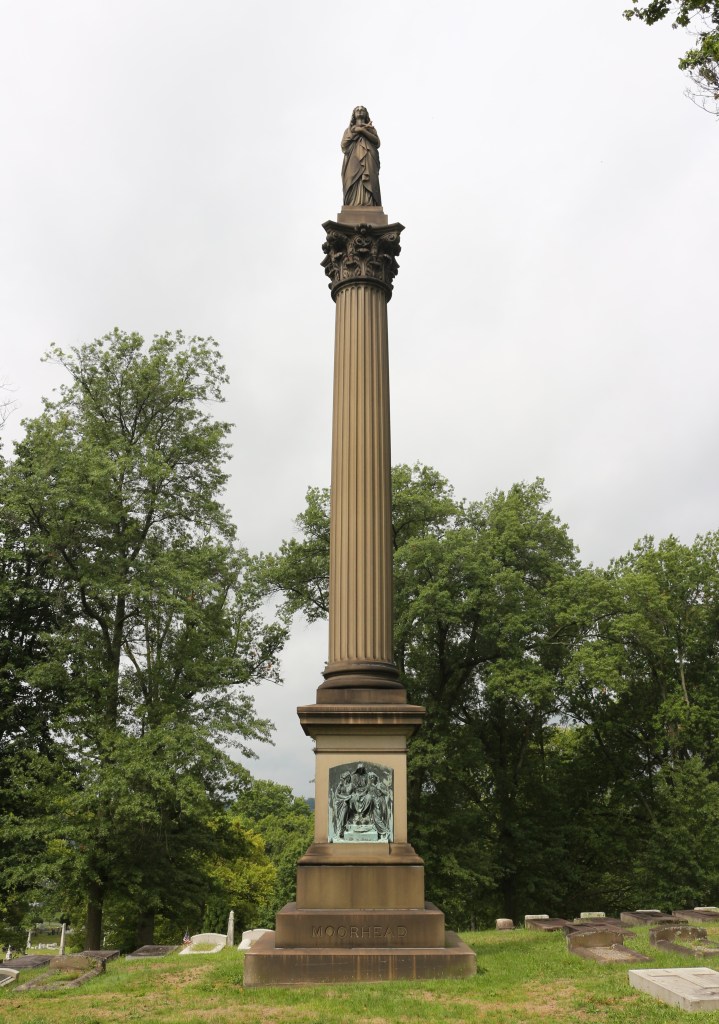
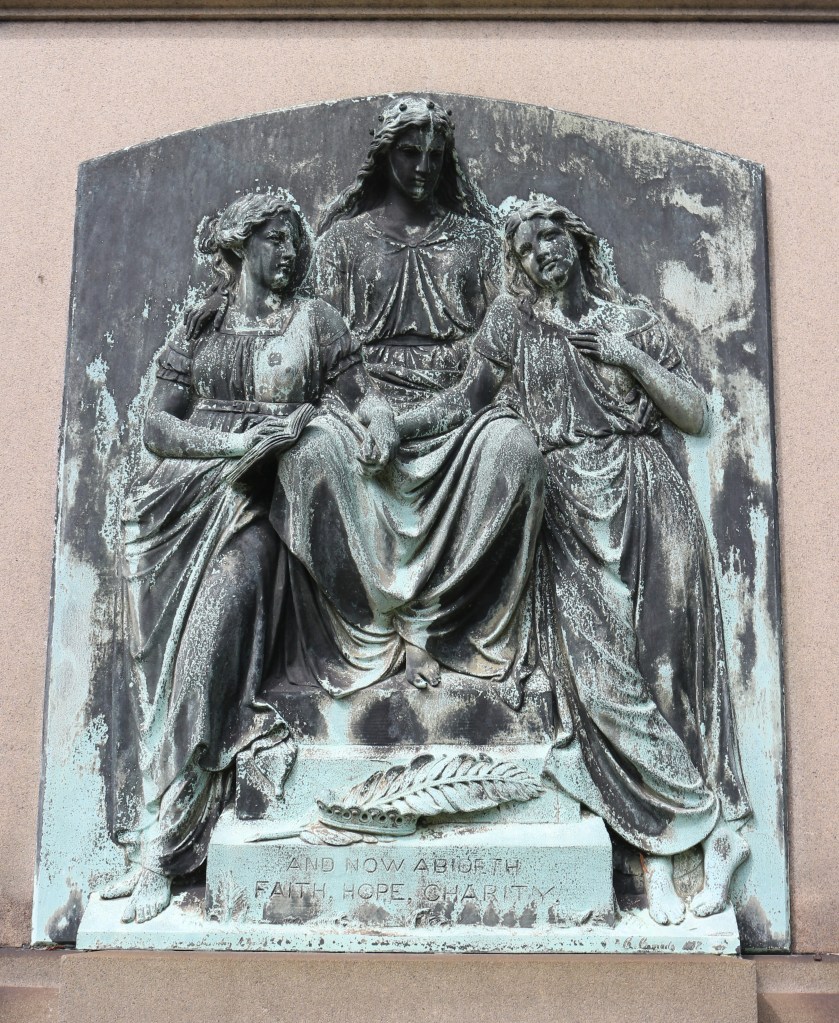
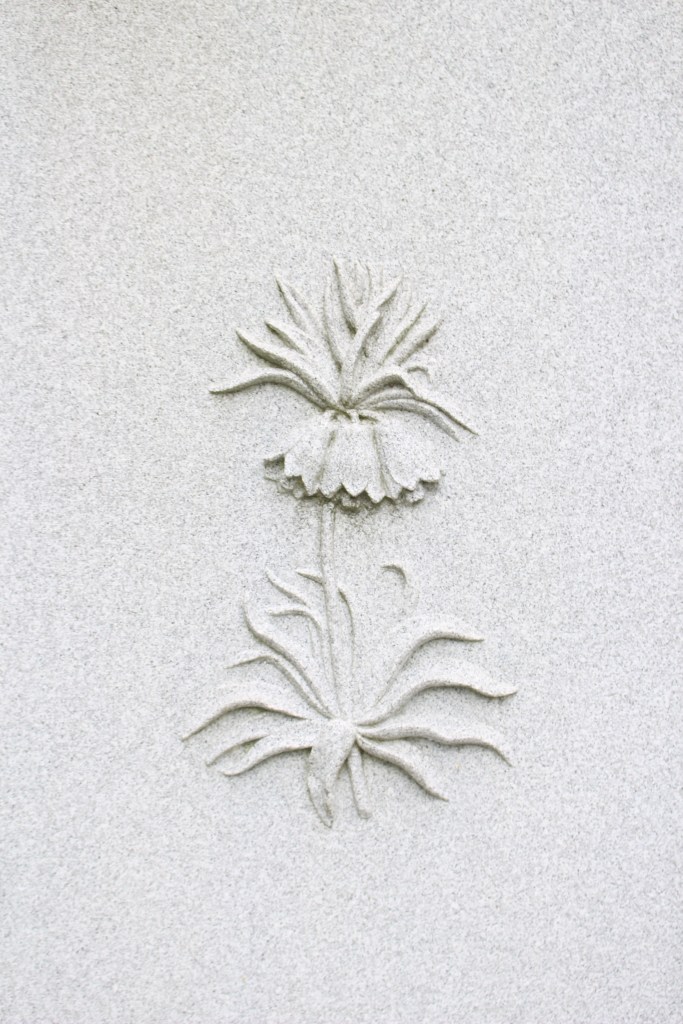
Sometimes, it is just nice to go to a cemetery and see the living.

Allegheny Cemetery, Pittsburgh.

Posted in Uncategorized | 3 Comments

Vigilante Justice

SIMEON RENO

REGT 79 IND INF

CIVIL WAR

AUG 2 1843  DEC 12 1868

WILLIAM RENO

50 REGT IND INF

CIVIL WAR

MAY 15 1838  DEC 12 1868

FRANK RENO

CO H 6 IND INF

CIVIL WAS

JUN 27 1837  DEC 12 1868

In the Old City Cemetery in Seymour, Indiana, there is a small gated plot that contains three graves of the infamous Reno brothers—Frank, William, and Simeon aka “Sim”.  While no one would consider central Indiana the Old West, it is where the first train robbery in US history took place.

The Reno brothers were the nucleus of a gang that terrorized the Midwest.  They were one of the very first gangs that consisted mainly of brothers—others followed, such as, the James Younger Gang, the Dalton Gang, etc.  The Renos perpetrated small petty crimes at first, illegal card games, then burglaries, horse thieving, robberies, and they were suspected of murder.  They grew more violent and eventually held Seymour hostage as they held up in the local hotel.  Then they conducted a series of four train robberies, the first just outside the railroad hub of Seymour in late October 1866.  The crime spree went on for two more years before they were caught.

Many of the gang members were awaiting trial when a group of vigilantes broke into the jail holding them.  Ten members of the gang, including Frank, William, and Sim were strung up and lynched.  None of the members of the vigilante group were ever identified or arrested.

A small plaque notes who they were:

“RENO GRAVES

Frank, William, and Simeon Reno, Leaders of the infamous Reno Gang that committed the world’s first train robbery at Seymour, October 6, 1866 were hanged by vigilantes in the New Albany Jail, December 12, 1868 and interred here December 15, 1868.”

Though the Reno Brothers were the first band of gang members to rob a train, they weren’t last. And even though they had national notoriety at the time, they have been nearly forgotten.

Posted in Uncategorized | Leave a comment

A Mystery

Dr. William Sheridan Flower

January 22, 1871 – June 30, 1924

Sarah Eleanor Lockhart Flower

October 11, 1877 – September 1, 1960

The early 1920s Flower Family Mausoleum in the Allegheny Cemetery in Pittsburgh, Pennsylvania, has a vaguely Egyptian design to it without the convincing detail, such as a torus molding at the bottom of the cavetto cornice and around the corners of the mausoleum to emulate long bundled plants.  Above the doorway, often on Egyptian-styled tomb would feature a winged globe with uroei snakes depicting three sets of falcon wings that symbolize the king, the sun, emanating from a globe representing the Egyptian god, Horus.  Instead, the Flower Family Mausoleum features an acroterion above the doorway.  The acroterion is a classical motif found in Roman and Greek architecture though it has its origins in Egyptian art and architecture. Rosettes adorn the moldings flanking the doorway.  Even without the Egyptian design trimmings, the tomb gives one the sense of solemnity and a sense of eternity.

The Egyptian theme does not continue on the inside but instead is decorated with a stained-glass window with a distinct nautical theme replete with a sailing ship, sea monsters, gulls, dolphins, and tridents.  The mystery: how is the nautical theme connected to Dr. Flower—a dentist?

Posted in Uncategorized | Leave a comment

Fetch, Prince!

TO

THE MEMORY OF

PATRICK HAGAN

DIED JAN. 6. 1912

MAY HE REST IN PEACE

TO

THE MEMORY OF

MARY E. HAGAN

DIED SEPT. 1. 1912

MAY SHE REST IN PEACE

The Hagan Family Plot in the Catholic Cemetery in Savannah, Georgia, features proud and watchful dog named Prince with the words “He loved his master” into the base of his monument.

There has always been a debate between dog and cat lovers about which furry little friend makes the best companion. I have many friends who have cats galore and swear by them, including one of our readers who has nine and another with two! 

Others like myself, have dogs and always have. We see dogs as the old bromide tells us, “as man’s best friend”.  And, dogs have long been considered man’s best friend!

In fact, way back in 1821, the New York Literary Journal, Volume 4, ran a poem by C. S. Winkle extolled just that:

The faithful dog – why should I strive

To speak his merits, while they live

In every breast, and man’s best friend

Does often at his heels attend.

According to the 2024 AVMA Pet Ownership and Demographic Sourcebook, 45.5% of American households have a dog in the family with an average of 1.5 per. That adds up to a whopping 89.7 million dogs living with families in the United States.

(Incidentally, fewer households own cats, only 32.1% but each of those households care for more—1.8 per household for a total of 73.8 million cats.) 

Given that love for our dogs, it is no wonder that dog owners want to honor their love of dogs with carved tributes to them on guarding their graves! 

Posted in Uncategorized | Tagged , , , , | Leave a comment

Here Kitty, Kitty!

Carved atop a gravestone in the Mountain View Cemetery in Altadena, rests a cat basking in the California sun, a tribute, no doubt, to the deceased’s love of the cuddly feline. Though dogs have long been considered man’s best friend, homeowners in America claim over 74,000,000 cats as part of their household—an average of 2.1 per household, while dog lovers only claim an average of 1.6 per household. 

Although cats were revered in Ancient Egypt as deities, Western civilizations attributed more sinister characteristics to the furry creatures.  In the Middle Ages cats were often associated with the dark arts—witchcraft and even the Devil—and were nearly completely exterminated during the Black Death because they were thought to be evil.

Today, though, their reputation has been rehabilitated and they have become a part of millions of homes across America—much loved as part of the family and often spotted being memorialized in cemeteries!

Posted in Uncategorized | 11 Comments

Christian and Egyptian Symbolism Coexisting

Erected by
TERENCE NUGENT
In Memory of
his Esteemed Friend
CORNELIUS CREMIN,
A native of Cork,
IRELAND,
Who departed this life
September 1st, 1854,
Aged 26 years,
May he rest in peace.

Afflictions sore he bore,
Physicians were in vain,
Till God did please that death should come [?]
And cease him of his pain

In the top third of the white marble segmented-top tablet in the Catholic Cemetery in Savannah, Georgia, is a Latin cross in the center of a weeping willow tree.  The cross is nestled into the letter “H” and flanked by twin obelisks.

The initials “IHS” which have been used for centuries by Christians as a monogram, often referred to as a Christogram, for Jesus. The three letters are a Latinized version of the Greek letters ΙΗΣ (iota-eta-sigma), the first three letters of the name “Jesus” in Greek. 

The obelisk is a stone shape that is ubiquitous in American cemeteries and part of the Egyptian Revival Period which was inspired by the French and then the British presence in Egypt in the late 18th and early 19th Centuries. The obelisk is said to represent a single ray of sunlight, petrified from sunlight into stone.  It was thought that the Egyptian sun god Ra lived within the obelisks.  These towering monuments were often placed flanking the entrance to temples. Here the obelisks are combined with the willow, which is a traditional symbol of morning and grief.  

However, the Egyptian and Christian symbolism share an uncomfortable coexistence in this design.  The obelisk is an easily recognized Egyptian symbol, yet, the tablet also displays the Latin cross.  Because many Christians objected to Egyptian motifs and their non-Christian origins, designers softened the impact, by including Christian symbolism, as is the case here.  Eventually the obelisk became a common site in American cemeteries large and small, urban and rural.

Posted in Uncategorized | 1 Comment

A Blinding Light

An iron fence surrounds the John Rourke Family Mausoleum in the Catholic Cemetery in Savannah, Georgia.  The iron gates and fencing around a cemetery were common and imbued with a power—the power to keep the malevolent spirits such as ghosts, fairies, and witches at bay. 

It was thought that iron had a supernatural power.  That belief manifested itself in many Victorian practices.  Hence a horseshoe nailed to a door was thought to be a talisman protecting those inside and repelling evil spirits.  Burying an iron knife in front of the threshold to your home was believed to ward off witches from coming in.  And the iron fencing around a cemetery was believed to contain the souls of the dead. 

The magical powers of the gate and fencing are also found surrounding family plots.  It was thought that once the gate was closed the spirits could not follow you home! 

The Rourke gate, in addition to keeping spirits enclosed, displays other symbols with meaning.   In the top corners above the angel in the center of the gate are poppies embedded in the design.  In the cemetery, this motif represents eternal sleep.  Just as it was portrayed in the movie, The Wizard of Oz, the main characters lie down in a field of poppies where they fall into a deep sleep.  That same imagery is used here.

Also, at the center of the gate, an angel is holding an inverted torch; and that same symbol flanks the angel in the gate.  The flame is symbolic of the soul.  Here the inverted torch represents a life that has been extinguished.

Lastly, the angel holding the inverted torch covers his face.  This act is mentioned in the Bible—Isaiah 6:2. According to theologians, the angels covered their faces as an act of respect and humility as they were not worthy of looking directly at God.  It is also thought that God’s holiness is so bright, that the light was blinding. 

Posted in Uncategorized | 1 Comment

Setting or Rising?

In a mausoleum in the Mountain View Cemetery in Altadena, California, a stained glass window represents a potent symbol throughout the world—ancient and modern.  In funerary symbolism it is depicted in many ways: as a yellow sphere; as spreading rays of light; as a geometric pattern shaped like a many-pointed star; as lines emanating from a single point outward in a fan pattern.  The ancient Egyptians depicted a single ray of the sun as an obelisk in honor of their sun god Ra.

Like many symbols, there is a duality to the sunburst.  For instance, when looking at the symbol, it is difficult to discern if it is a rising sun or a setting sun—which leads to its dual meaning.  The rising sun represents the resurrection, rebirth, and eternal life.  In fact, many Western cemeteries were oriented to bury the deceased facing the rising sun in anticipation of the return of the Savior God Jesus.  The setting sun, however, represented death and the end of the mortal life.

Posted in Uncategorized | 2 Comments

The Ubiquitous Weeping Willow

SACRED

To the memory of

MARY RAFFIAL

Who was born in

St. Augustine, Fla.

in the year of our Lord A.D. 1816

and died in Savannah

June 27th 1859

Aged 43 years

One of the most ubiquitous symbols found in American cemeteries is the weeping willow.  According to James Deetz and Edwin S. Dethlefsen, in their groundbreaking article, “Death’s Head, Cherub, Urn and Willow” the willow first made its appearance in cemeteries in the early 18th century. 

The motif represented a break from the stark and cold reminders that death would bring that the Puritans carved into their gravestones—flying death’s heads, skulls and crossbones, and gravedigger’s equipment. In addition to the grim reminders of the inevitability of death Puritan gravestones often accompanied the haunting imagery with blunt words such as, “Here lies the body.” Nothing subtle there.

The willow, however, represented a more sentimental view of death.  The willow as a symbol is sentimental and hints at the human emotions felt during grief.  The willow motif represents what one might expect; sorrow and grief, it is after all a “weeping” willow. This symbol is found on many gravestones and can be found carved in a variety of styles.  In this example, found in the Catholic Cemetery in Savannah, Georgia, the willow tree is shading the gravestone and footstone presumably of the deceased—the object of the grief.

Posted in Uncategorized | Leave a comment

The Winged Cherub

IN MEMORY OF

TWO CHILDREN OF

Andrew & Catherine

HUGHES:

JOSEPH

DIED MARCH 7, 1853

AGED 3 MO. & 7 DAYS

THOMAS N.

WAS KILLED BY A HORSE

OCT. 13, 1853

AGED 3 YRS & 14 DAYS

I take these little lambs said Christ

And lay them on my breast

Protection they shall find in me

In me be ever blest

The white marble tablet of Joseph and Thomas Hughes is found in the Catholic Cemetery in Savannah, Georgia.  The pointed arch gives the gravestone a slightly gothic look. 

The winged cherub displayed in the arch of the gravestone was a symbol that became popular in the 18th Century.  Winged cherubs replaced the stark and morbid flying death’s heads from our Puritan forefathers.  The cherubs have a childlike countenance of innocence.  The iconography represents the flight of the soul from the body upward to Heaven and the hope of the resurrection. Surely, the cherub also represents the Hughes boys—one an infant and the other only 3 years old.

Posted in Uncategorized | 2 Comments