Cast iron willow

Kingsbury Cemetery, Kingsbury, Indiana

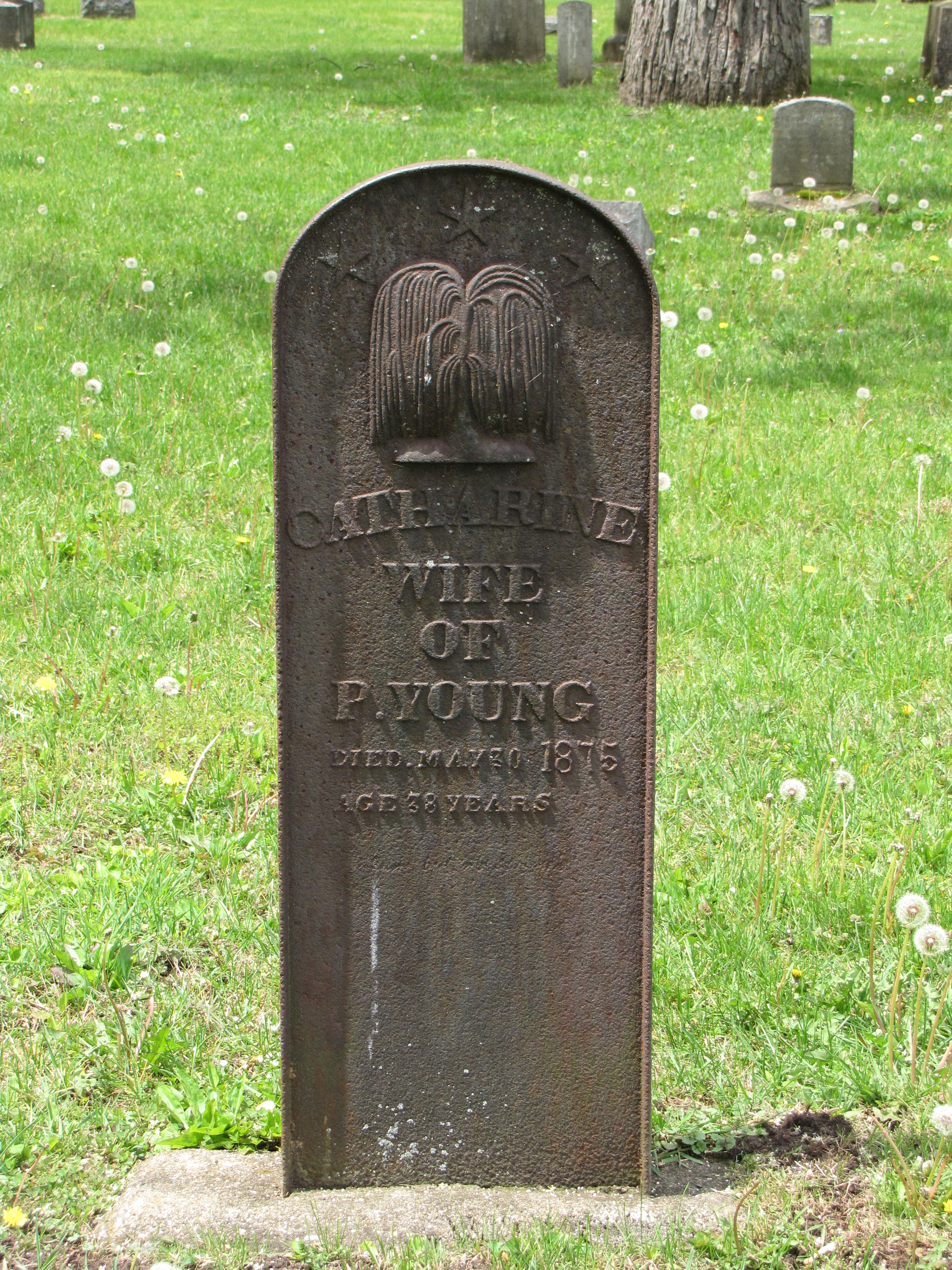
The willow motif on this gravemarker is not unusual, in fact, the willow is one of the most common symbols found in American cemeteries.  What makes this willow special is that it is found on a cast iron gravemarker.  While cast iron can be found as a material for making gravemarkers it is NOT common.

The secular meaning of the willow symbolism represents what one might expect; sorrow and grief, it is after all a “weeping” willow.  However, in Christian symbolism, the willow represents immortality because of the tree’s ability to shed so many limbs and survive.

Posted in Materials, Symbolism | 2 Comments

The Edmund Ball Mausoleum

Beech Grove Cemetery, Muncie, Indiana

Edmund Burke Ball, with his brother, Frank, borrowed $200 from their Uncle George Ball to purchase a can company.  A few years later the brothers added glass jars to their product mix and founded the Ball Brothers Glass Manufacturing Business, which became the Ball Corporation.  Those glass fruit jars made the family a fortune.  The Ball family shared the wealth with the community in which they built their business.  The Ball family’s legacy of philantrophy in Muncie includes Ball State University, Ball Memorial Hospital, and a city museum to save and protect the history and heritage of the community.

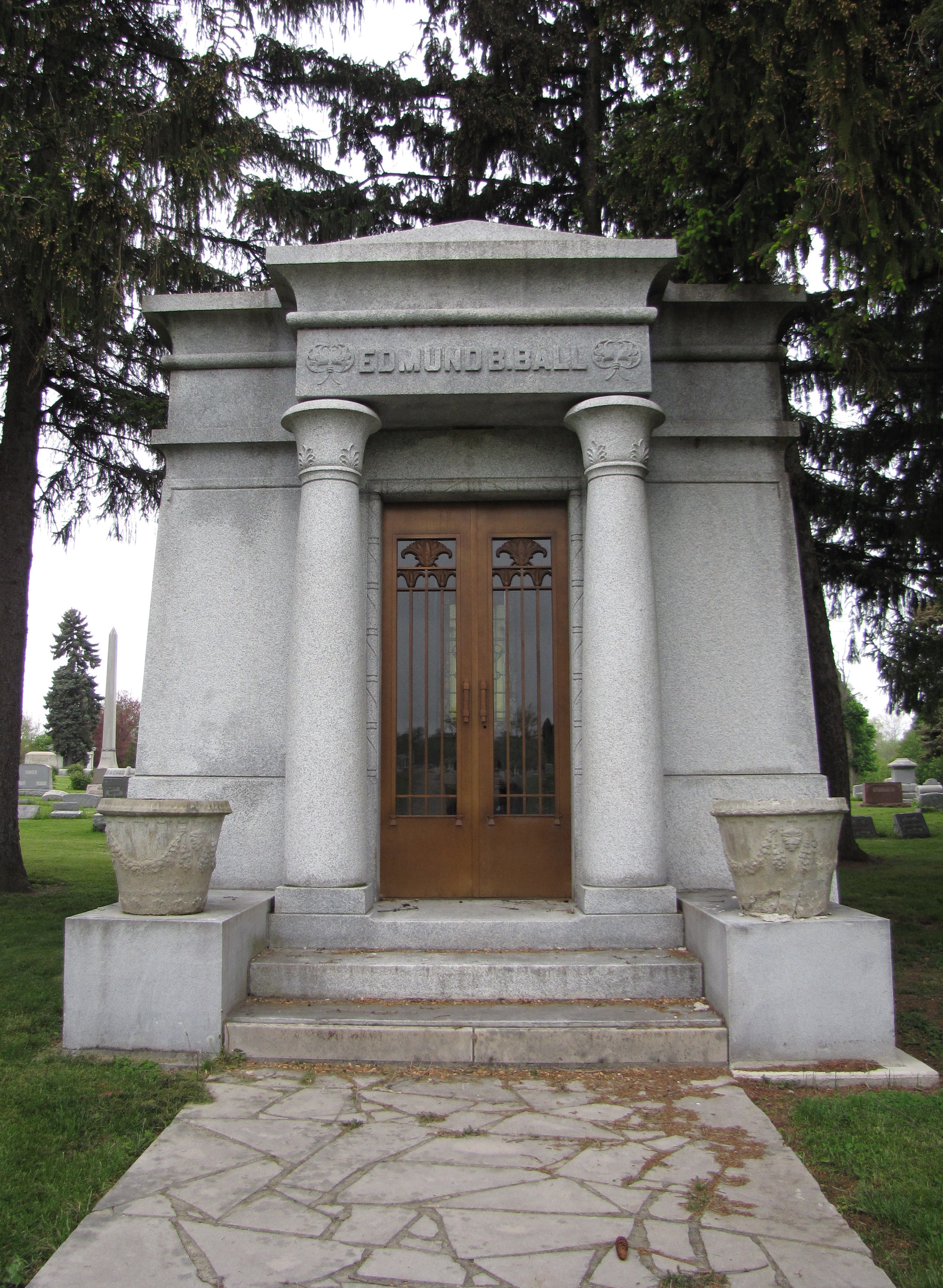
The wealth amassed by the family can also be seen in the Beech Grove Cemetery where the brothers built large mausoleums.  The Edmund B. Ball Mausoleum, in what is called “mausoleum row”, is an example of Egyptian Revival architecture found in many large urban cemeteries.

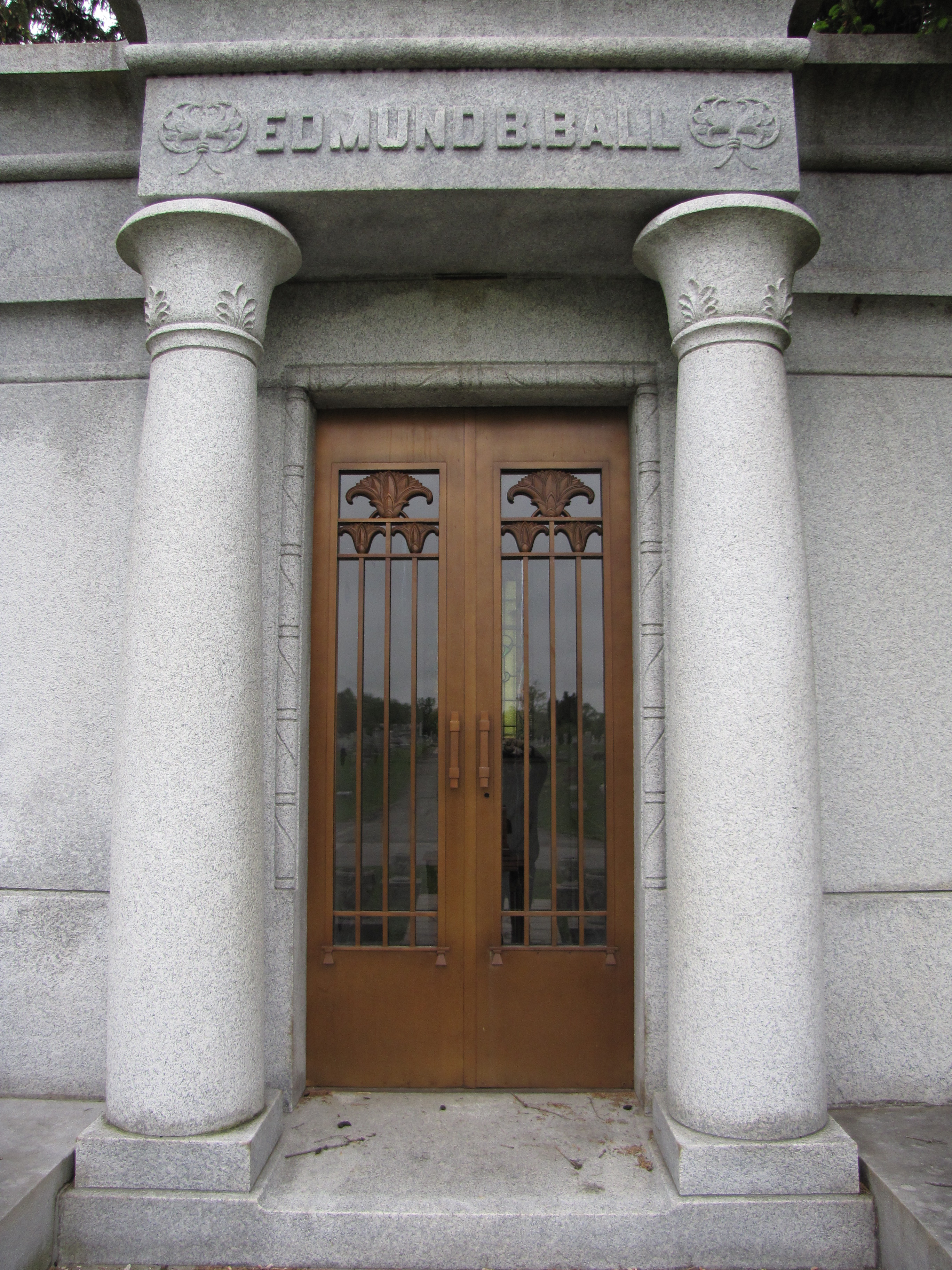
The light gray granite mausoleum has many features of Egyptian temples–the cavetto cornice that curves into a half circle at the top of the tomb, the torus molding around the door that are designed to emulate long bundled plants, the heavy tapered columns, and the mausoleum walls that slant inward. Flanking Edmund Ball’s name are a pair lotus flowers bundled together.  In Egyptian Mythology, the lotus was seen to be linked to the sun god Ra, because it’s tender flowers opens at sunrise and follows the path of the sun during the day, closing only after the sun goes down.  Three steps lead up to a pair of bronze doors that, again, feature lotus flowers.

The Egyptian Revival tomb gives one the sense of solominity and a sense of eternity, just as the temples of the pharaohs did.

.

Posted in Mausoleums | 3 Comments

Mother’s Day

Grove Lawn Cemetery, Pendelton, Indiana

The weathered square-top white marble tablet in the photograph above is nothing special.  This kind of marker is ubiquitous in American cemeteries.  Not the kind of gravestone that draws attention because it is plain and not adorned with any remarkable features or ornamentation.  But at closer inspection, this particular white marble tablet hints at a sad and poignant story—one that was all too common in the United States in the 1800s.  It speaks to the danger of becoming a mother.

According to the American Journal of Clinical Nutrition, Volume 72, Number 1, 241s-246s, July 2000, “There are few reliable data on maternal mortality rates in the United States before 1915, but thereafter, the United States had the highest rates of maternal mortality of any developed country.”  One can assume that it wasn’t lower in the 1800s, at least, not substantially.  According to that same article, a chart that maps out maternal deaths from 1900 to 1997, indicates that there were nearly 900 maternal deaths per 100,000 live births in the first year of the 20th Century.

The young mother on this gravestone, Sarah, was only 34 years old when she died on March 9, 1845, and she had already given birth to 6 children!  Her epitaph reads: The mother of six children, 2 lies by her side.  The epitaph gives a hint about the dangers of not only giving birth but of the newly born.  Each one of her births increased the statistical likelihood that she would die in childbirth.

While we celebrate Mother’s Day this weekend, it is good to remember the sacrifices made by our mothers and the risks they took to bring us into the world.

Posted in Epitaphs | 3 Comments

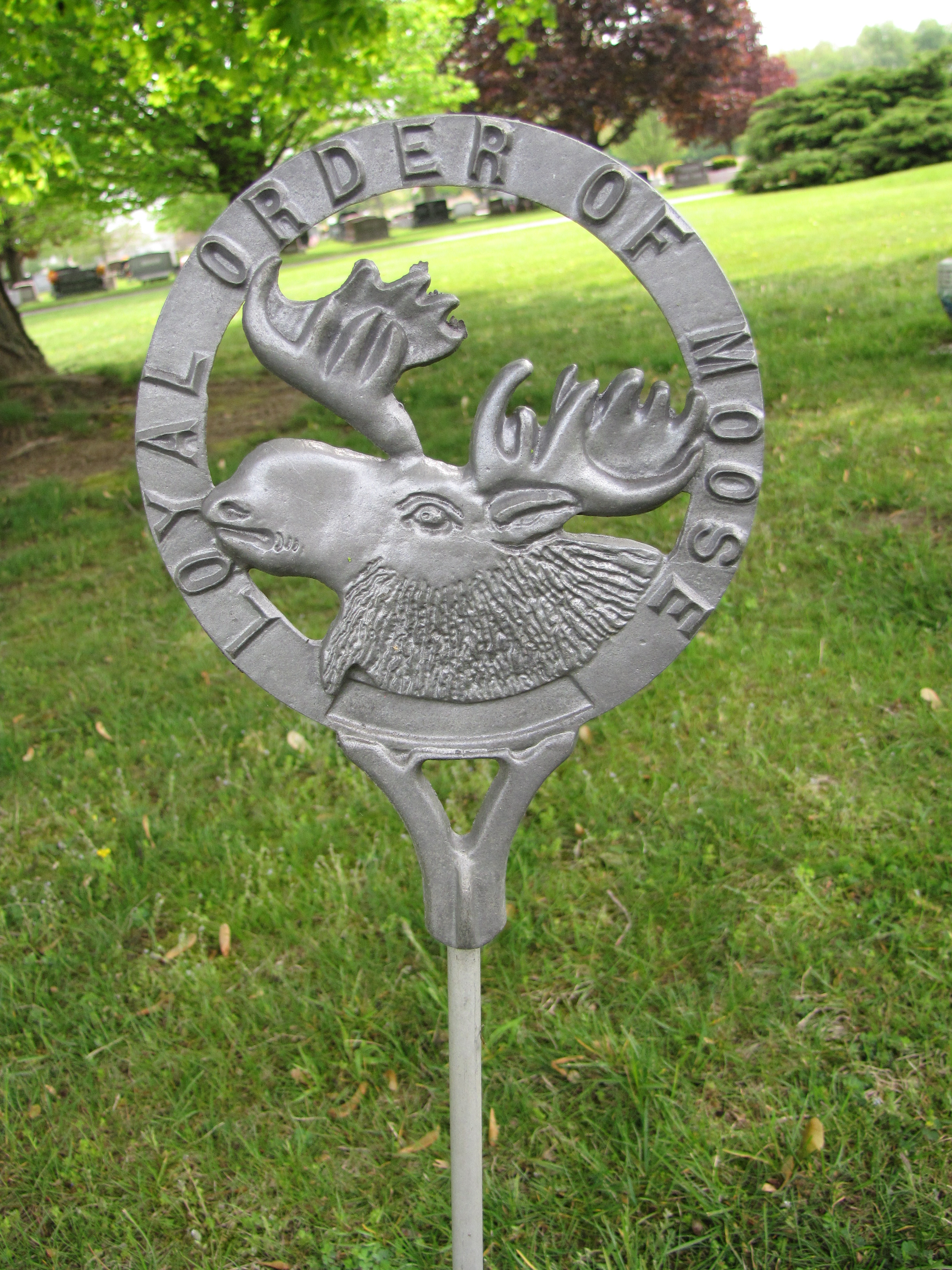
The Loyal Order of Moose

Chesterton Cemetery,Chesterton, Indiana

The Loyal Order of Moose was founded in a doctor’s living room in Louisville, Kentucky, in the spring of 1888.  Dr. John Henry Wilson organized the order as a place for men to get together to socialize.  By the early 1890s several lodges had been formed in cities close to Louisville, such as, Cincinnati, St. Louis, and small towns in Kentucky and Indiana.

However, the order languished until a bright, energetic government employee, James J. Davis, from Elwood, Indiana, who believed that he could build the organization’s membership was given the challange and the title–Supreme Organizer.  Membership soared when the organization offered an insurance program with membership dues of $5 and $10 for men who if they became disabled or died would provide a “safety net” to their widows and children.

When James Davis joined in 1906, membership was a spartan 247 members.  With his membership drive, the organization had grown to nearly a half a million members in over a thousand lodges.

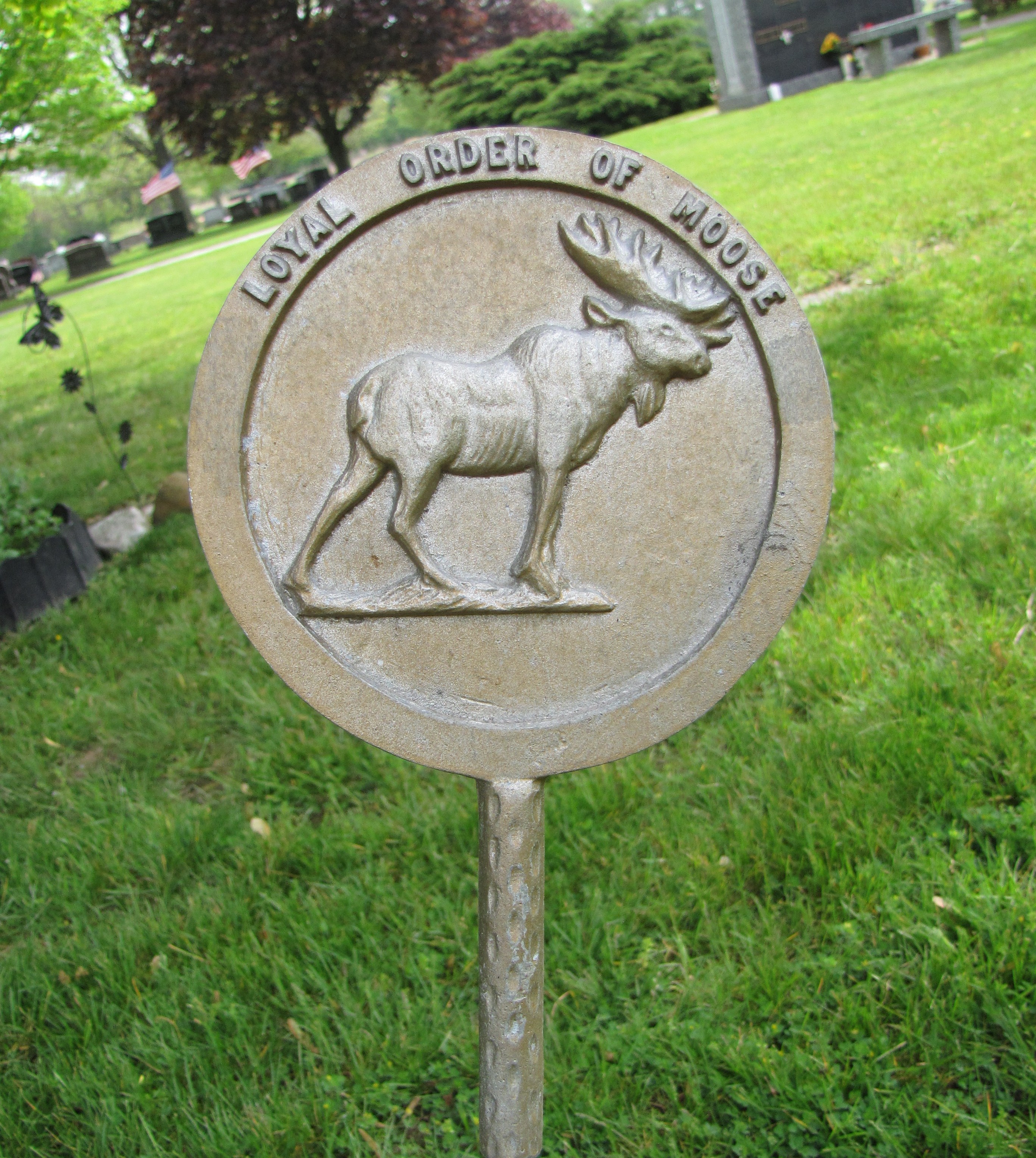
Most of the metal markers that designate that the deceased was a member of the Loyal Order of Moose only show a moose head, but this marker displays the entire moose!

Chesterton Cemetery, Chesterton, Indiana

Posted in Metal Markers | Leave a comment

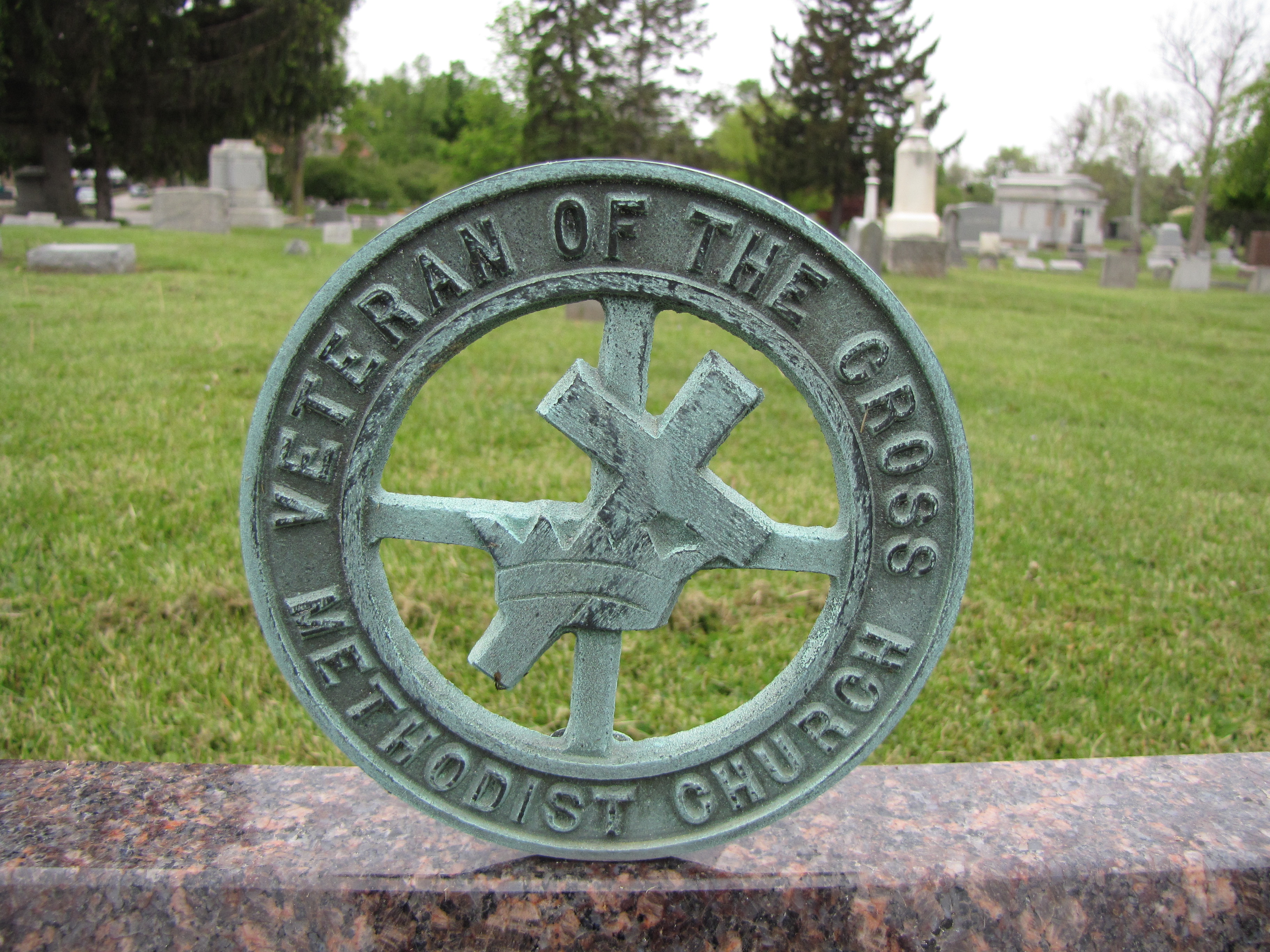
Veteran of the Cross

Beech Grove Cemetery, Muncie, Indiana

Some of the lowest paid professionals of the Twentieth Century were men and women of the cloth who served congregations across the country.  Pastors work long hours, stay up with families in joyous times and some of the most trying times of illness and death.  Ministers are there when people get married and buried.  In many cases the pastors provide the religious education and inspiration for entire communities.  Many of them then retired from service without pensions or with very small ones.

Veterans of the Cross is a collection (sometimes called the Christmas Fund) that was started to help pastors and their spouses and children.  The fund augments retirees with pension supplements, health premium subsidies, emergency assistance, and to help families pay for utilities.

Posted in Metal Markers | 1 Comment

The Boat to the Other Side

Lake View Cemetery, Seattle, Washington

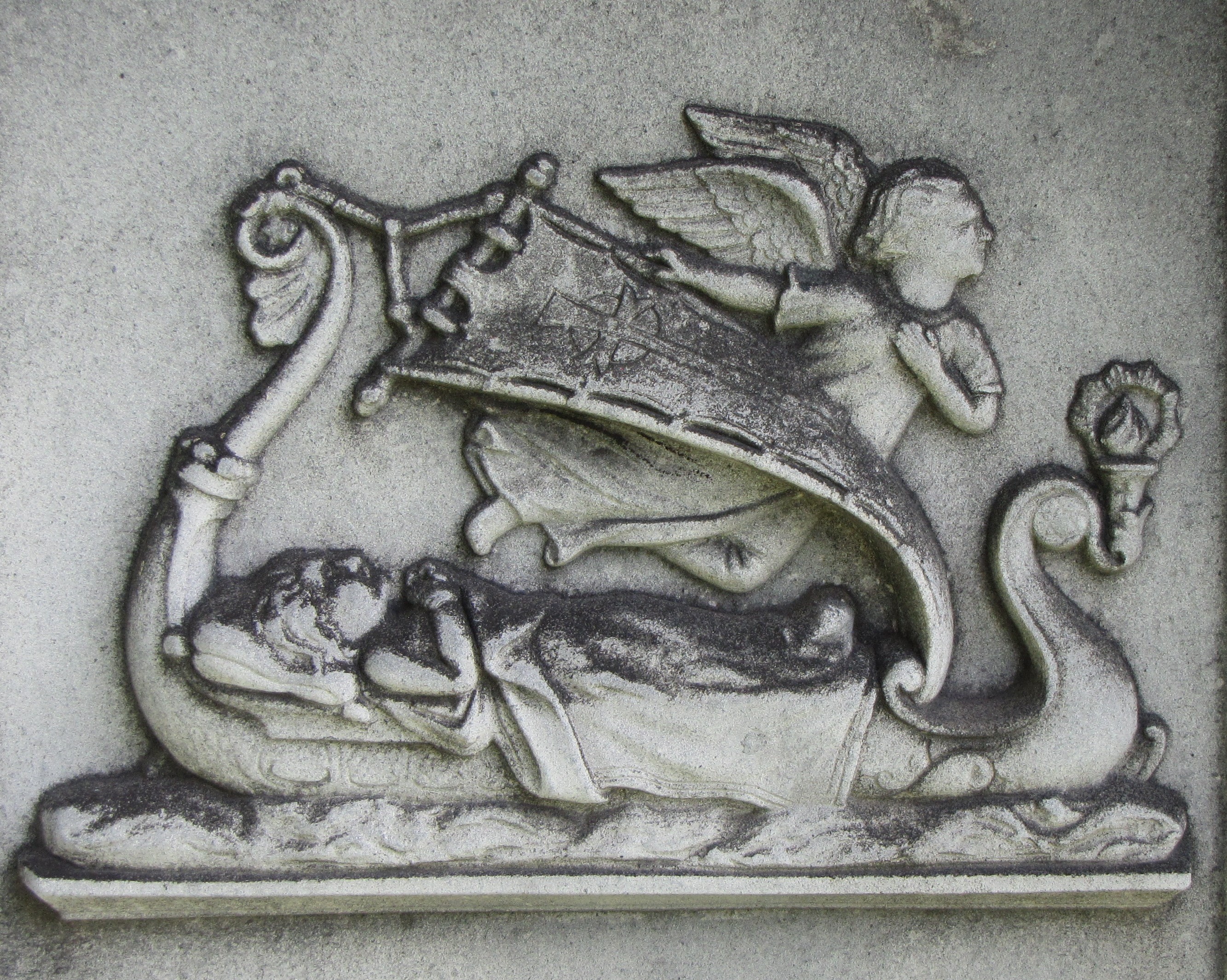
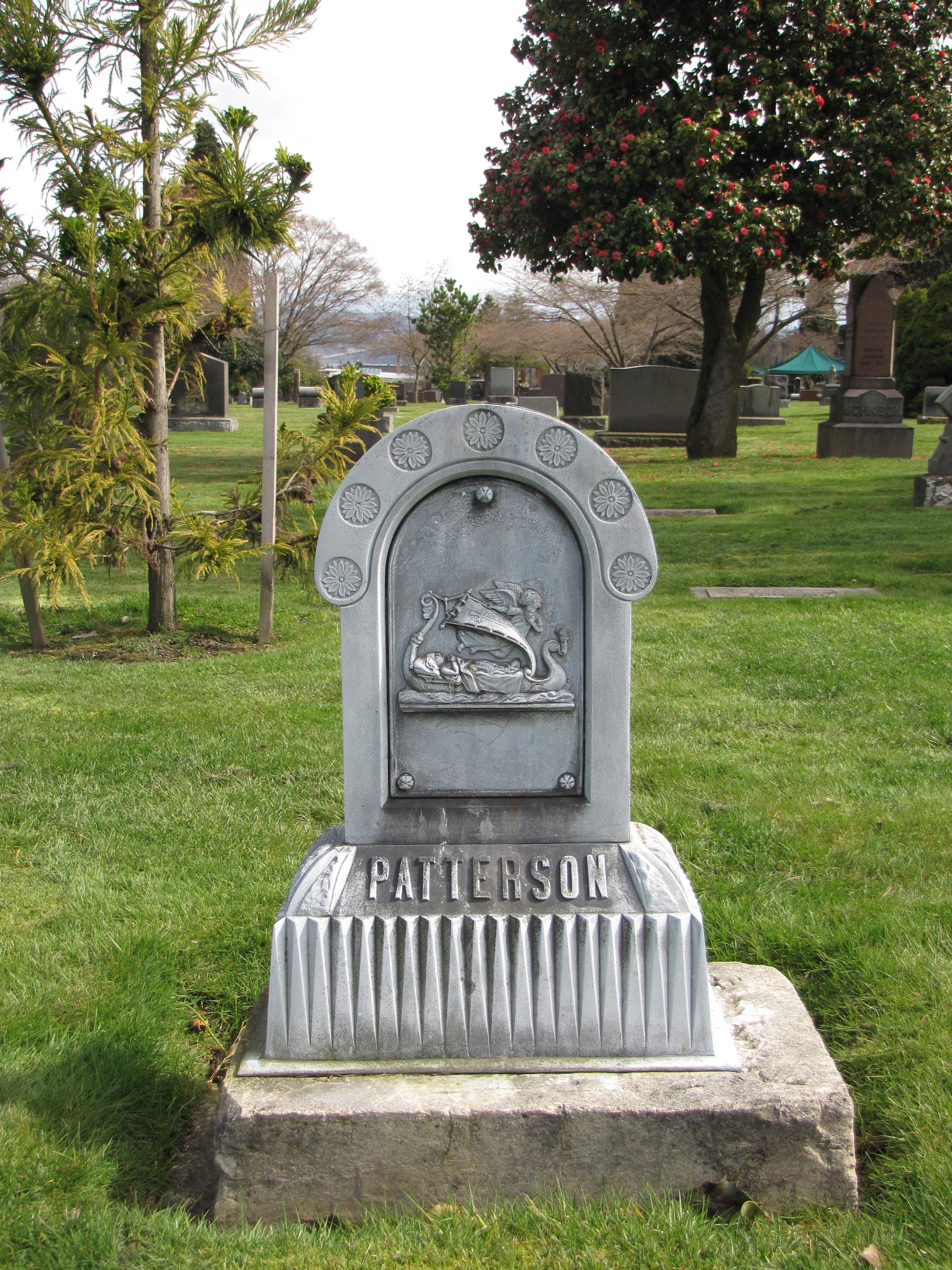
Since ancient times, the imagery of the boat to ferry a soul from one realm to the other has been a part of the symbolism of death.  In Greek mythology, the River Styx wrapped its way around Hades (the Underworld) nine times.  To cross from this life to the next, the dead had to pay with a coin to be ferried from the realm of the living to the realm of the dead.  The toll was placed in the mouth of the deceased to pay Charon, the ferryman.  It was said that if the dead person did not have the coin, he was destined to wander the shores of the River Styx for a century.  The “boat” was one of the images found on Victorian graves to represent the crossing from one world to the next.

In the case of the marker above, it is not Charon ferrying the soul to the other side but a winged angel, whose way is lit by a torch radiating light on the front of the boat.

Posted in Symbolism | 1 Comment

Knights of Pythias

Chesterton Cemetery, Chesterton, Indiana

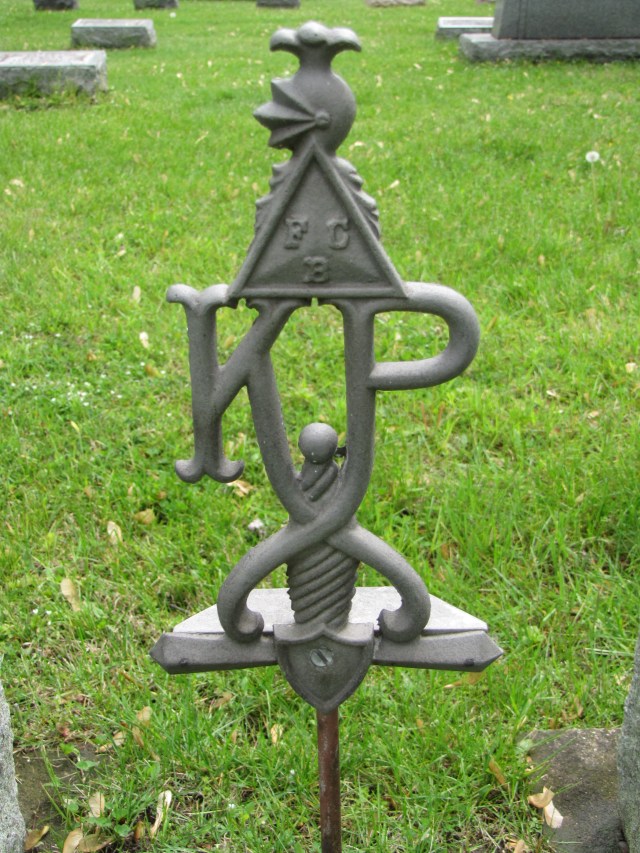
In 1864, the Knights of Pythias was founded by Justus H. Rathbone, making it the very first fraternal organization to receive a charter under an Act of the United States Congress.  The society is based on the Greek story of friendship from 400 B. C. between Damon and Pythias, members of a school founded by Pythagoras.

According to their Website, Pythians: promote cooperation and friendship between people of good will, find happiness through service to mankind, believe that friendship is essential in life, view home life as a top priority, show an interest in public affairs, enhance their home communities, respect and honor the law of the land, and expand their influence with people of like interests and energy.

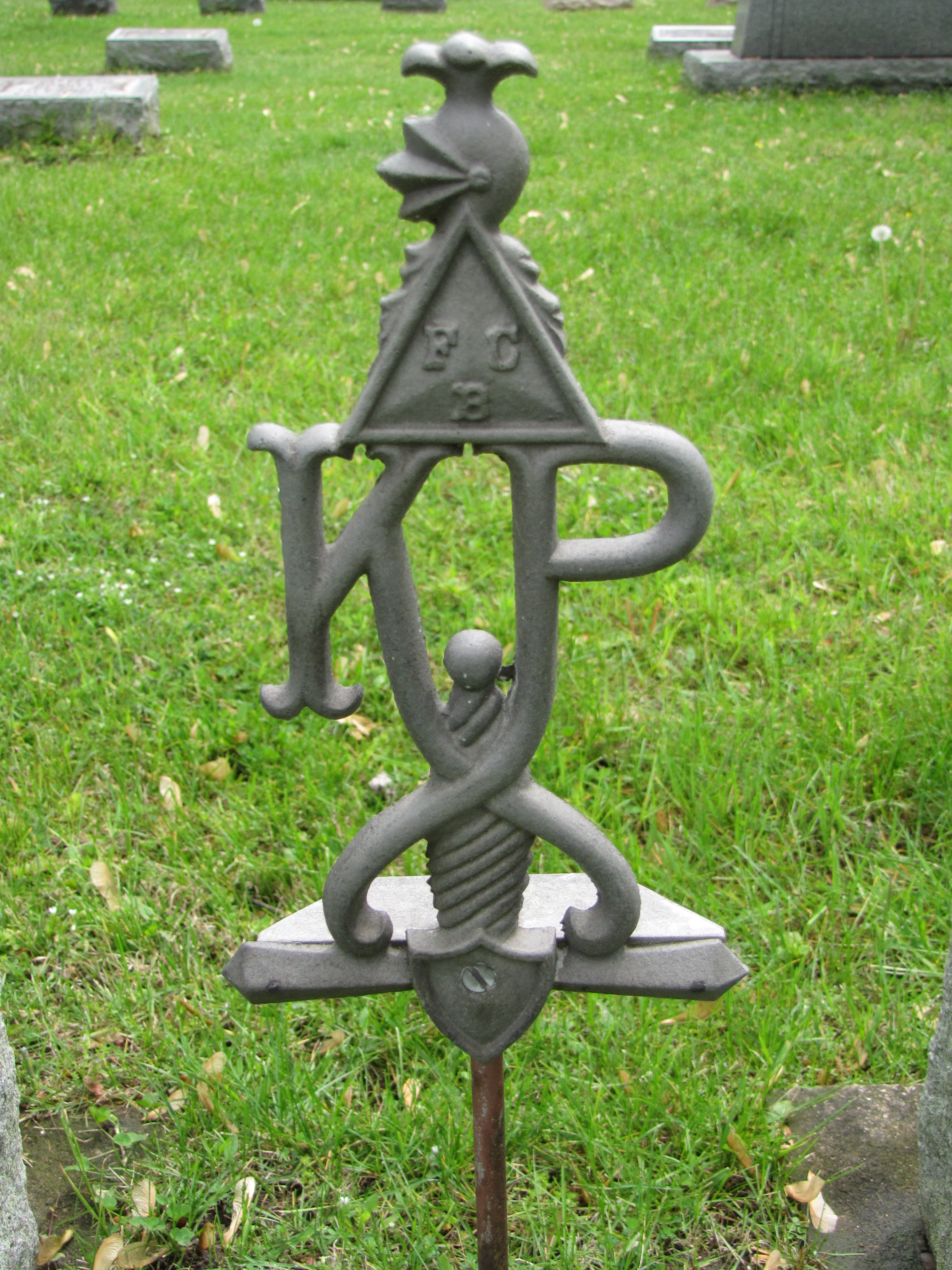
The metal marker above features many of the symbols that are significant to the Knights of Pythias.  A knight’s helmet sits atop a pyramid-shaped shield with three letters, “F”, “C”, and “B”, which stand for their motto, FRIENDSHIP, CHARITY, and BENEVOLENCE.  This sits on the letters “K” and “P” which swirl downward around the pommel and the grip and rests on the cross-guard of the shield-bearing rapier.

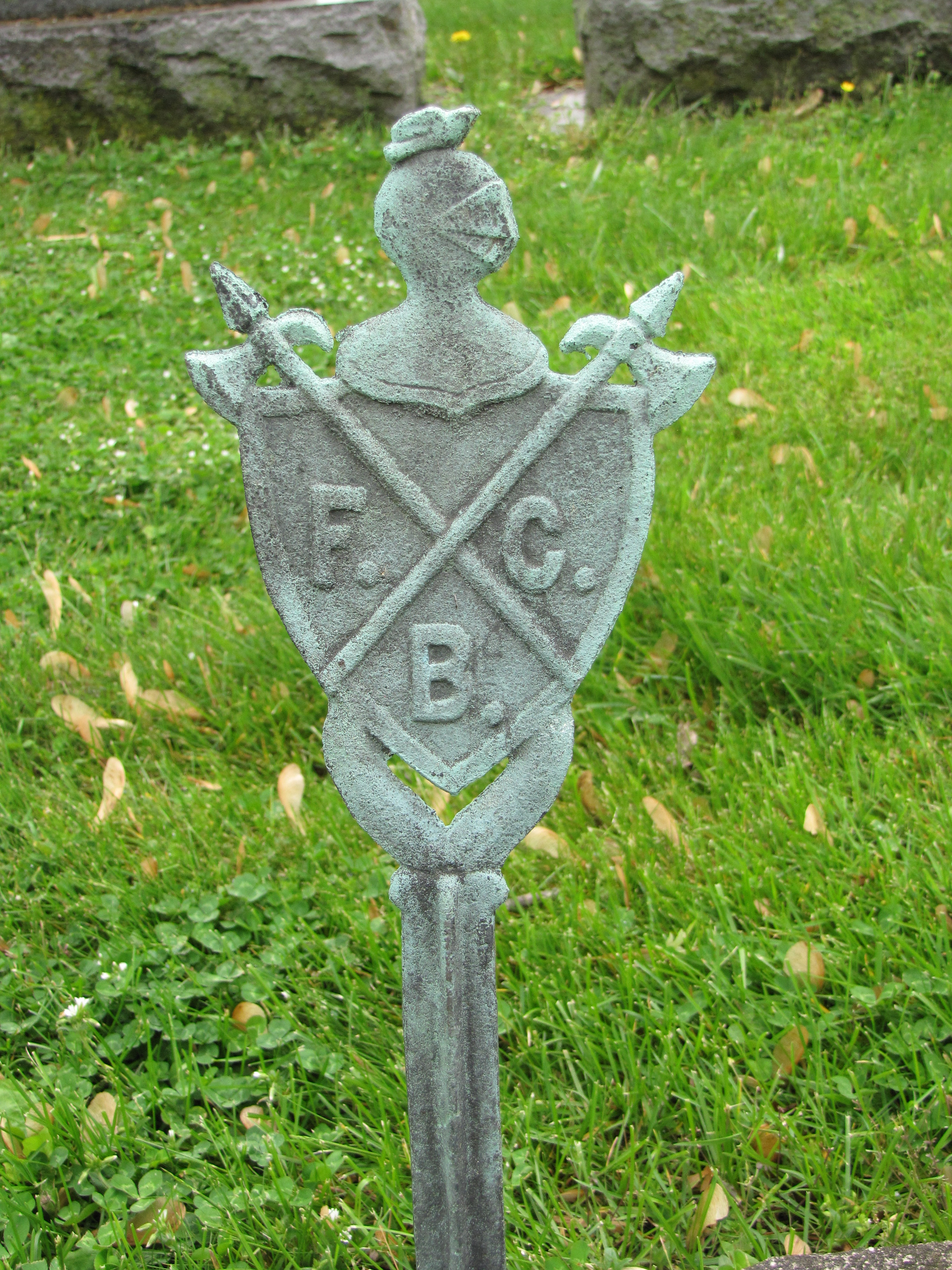
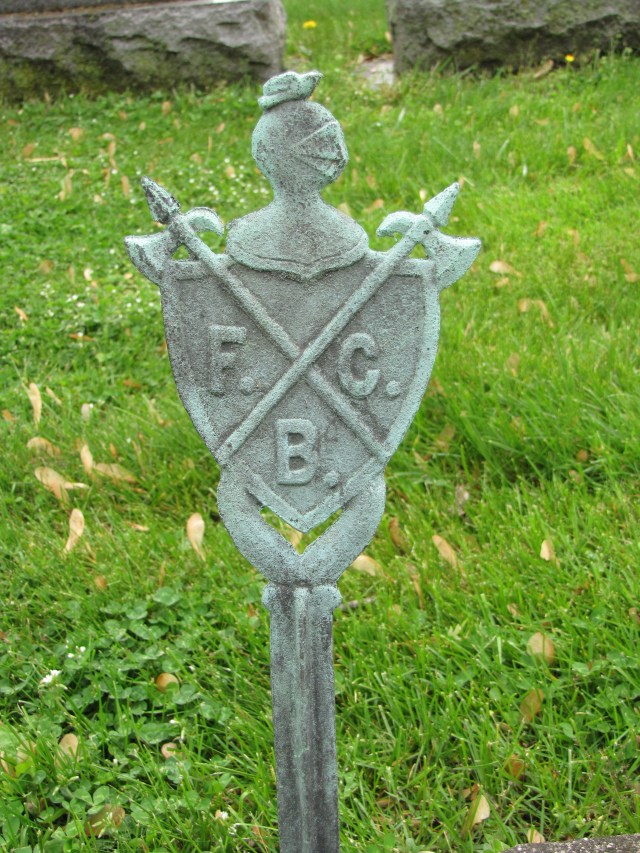
The marker below, slightly pitted, has a light green patina, sporting a few of the Knight’s symbols:

  • a shield with the letters–“F”, “C”, and “B”
  • crossed battle axes
  • a knight’s helmet topped by a falcon (a symbol of vigilance)
Chesterton Cemetery, Chesterton, Indiana

Posted in Metal Markers | Leave a comment

The American Flag


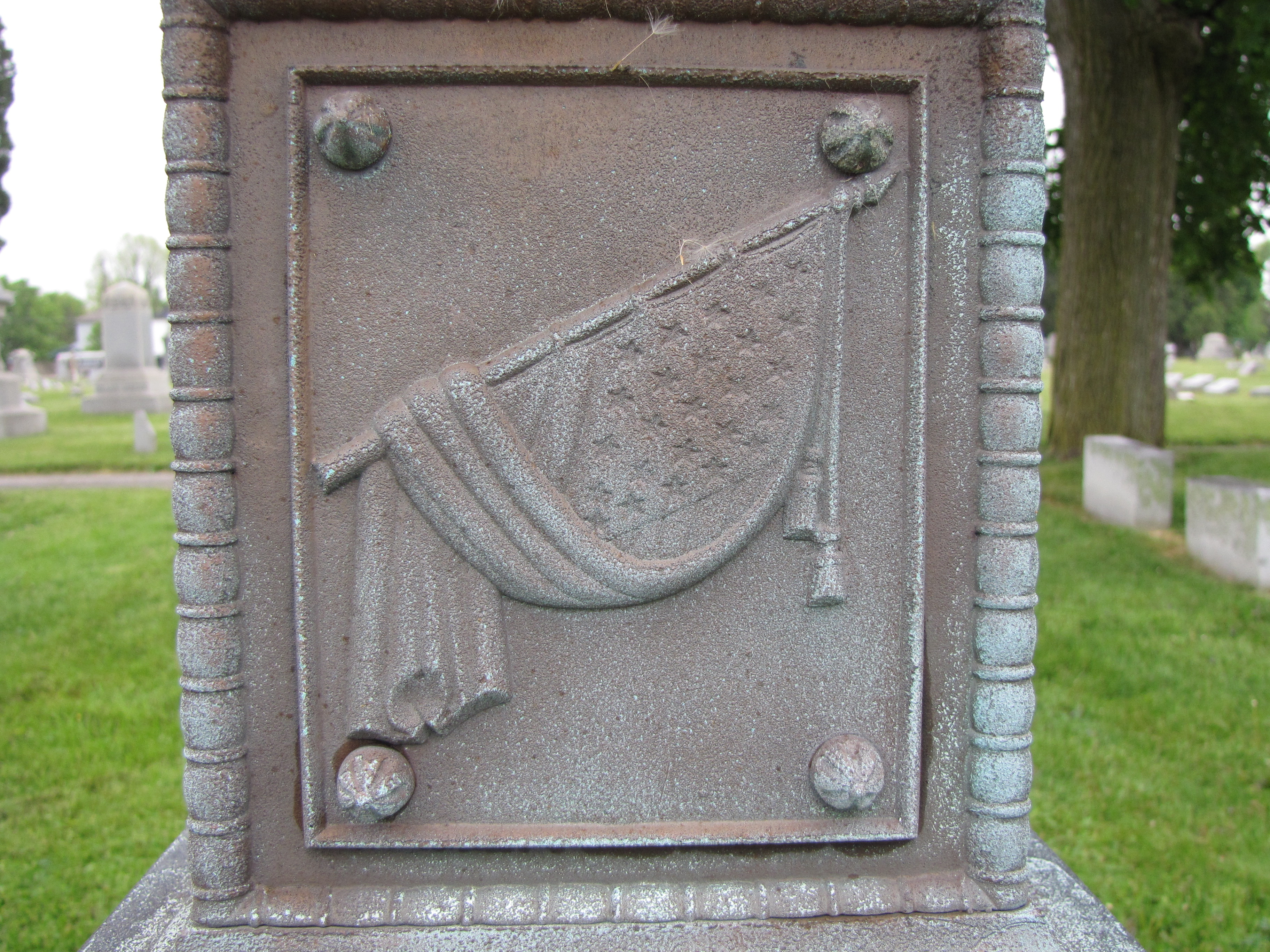
The flag is often found on the graves of soldiers.  In this case, the flag marks the service of English-born immigrant Chaplain Reverend W. B. Linell of Muncie, Indiana, who served during the Civil War in the 10th Illinois Regiment.  Camp life was hard on his constitution and Linell, after a year of service, returned to his home in Indiana, tired, weak, and sick.  Misfortune struck when his wife, who had a long-suffering illness, died.  Linell recovered and served churches in Vevay and Muncie.  The Universalist Register, in Linell’s biography, that he had set out for a convention in Terra Haute when “he was taken sick of typhoid fever, in Indianapolis, and was unable to reach his place of destination. He lay in a stupor, for several days, at the house of a friend, from, which he never awoke, till his eyes beheld the beatific world.”

Beech Grove Cemetery, Muncie, Indiana

Posted in Symbolism | 3 Comments

Dum Tacet Clamat

Beth Israel Cemetery, Portland, Oregon

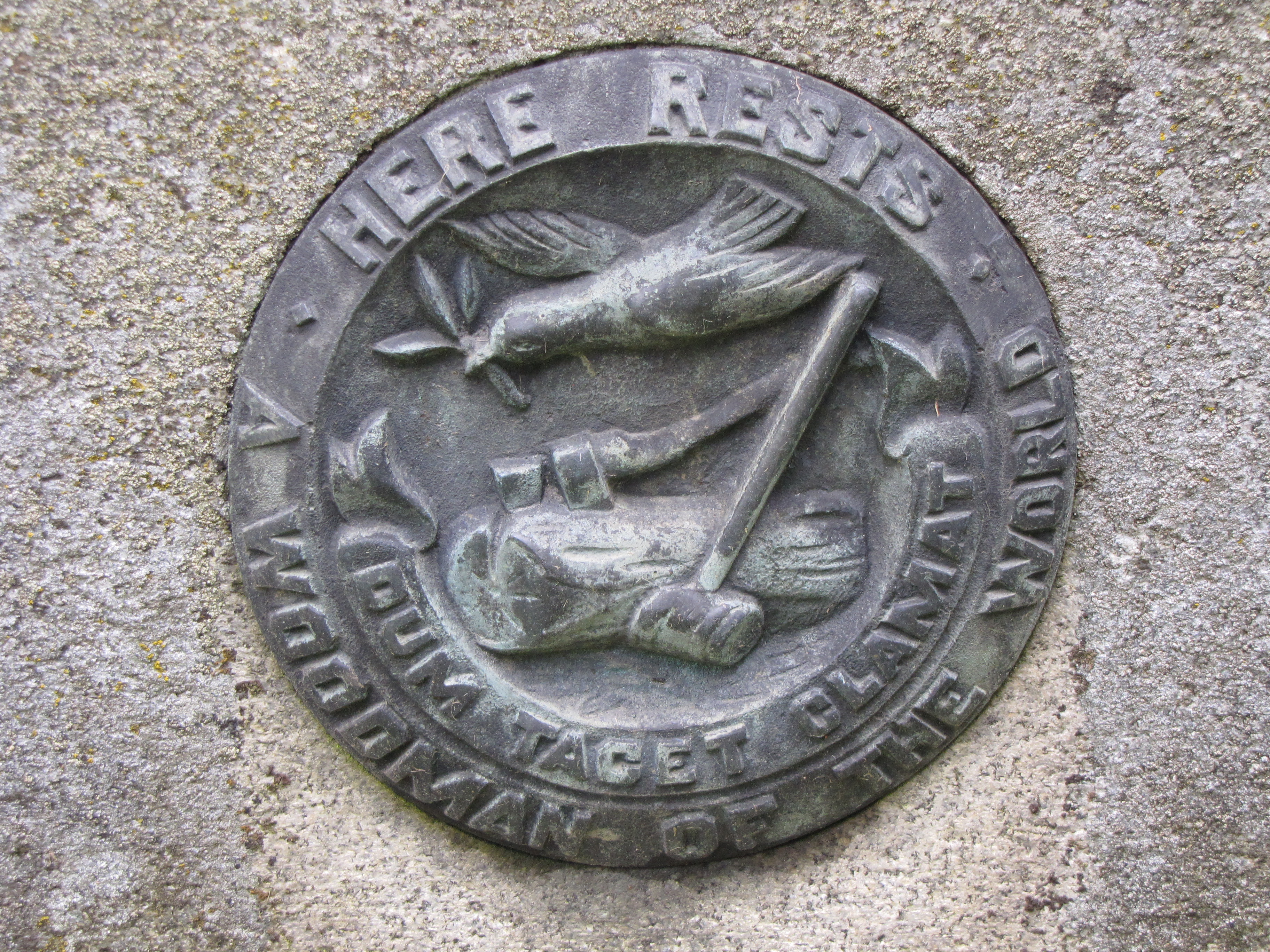
The metal medalion from a gravestone in the Beth Israel Cemetery at Portland, Oregon, marks the grave of a member of the Woodman of the World Organization.

The organization was founded by Joseph Cullen Root.  “During a Sunday sermon in Lyons, Iowa, Root heard the pastor tell a parable about the good that came from woodmen clearing away the forest to build homes, communities, and security for their families. He adopted the term Woodmen.”

The influence of that sermon can also been seen in the metal marker above that has the symbols of the organization – axe, beetle (a sledge hammer or maul) and wedge – symbolizing industry, power and progress.  The Latin phrase DUM TACET CLAMAT which means “though silent, he speaks” adorns the medalion.

Root wanted to make sure that after the death of the breadwinner that the family would be protected through a death benefit payout, which was one of the goals of providing insurance to the members of the society.


Posted in Metal Markers | 9 Comments

Art Deco

Beech Grove Cemetery, Muncie, Indiana

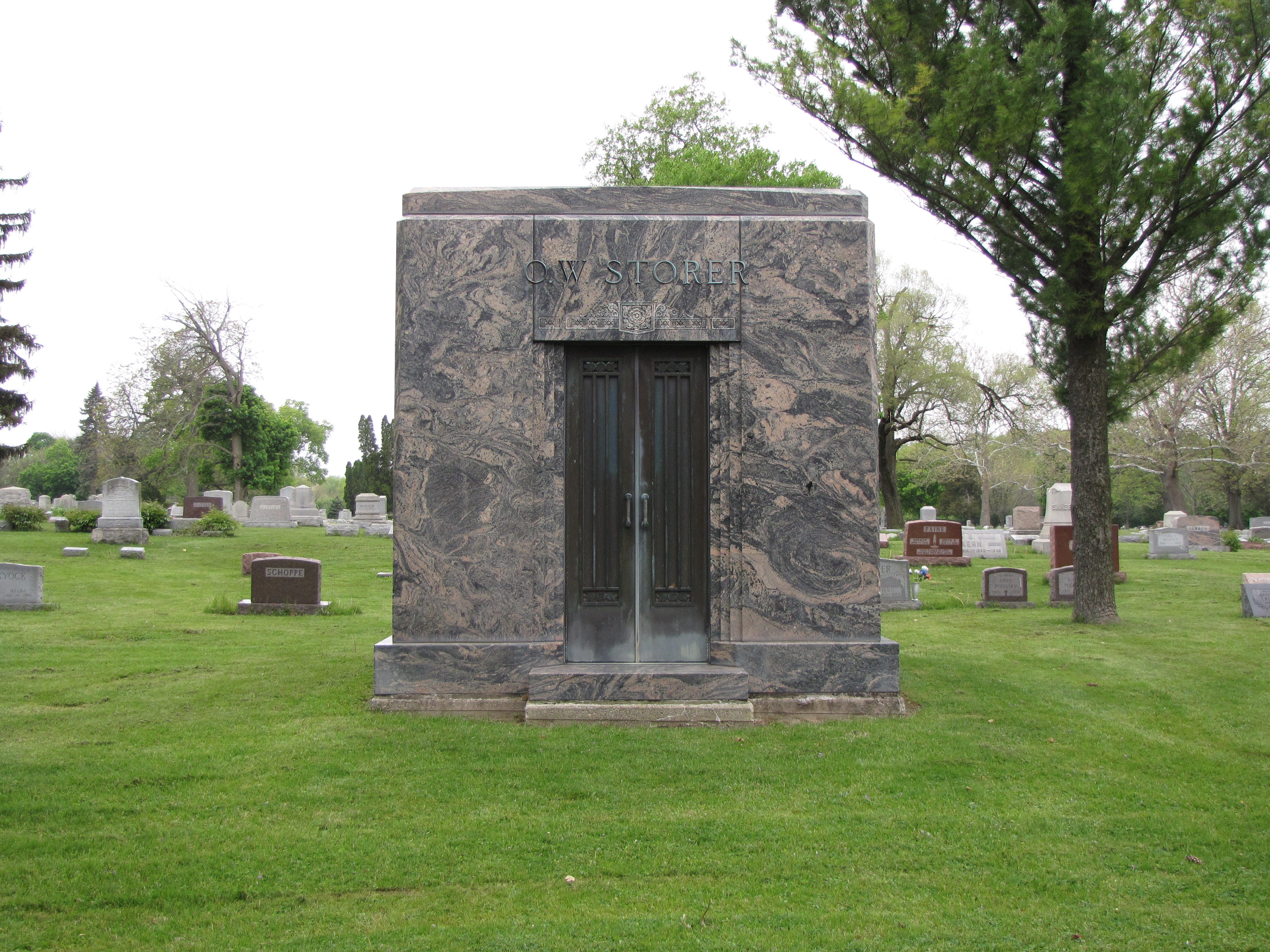
Art Deco is a design movement from the 1920s that marked a break from the fluid and flowing Art Nouveau designs of the 1890s.  The term ‘Art Deco’ is derived from the Exposition Internationale des Arts Décoratifs et Industriels Modernes, an exhibition of artists that showed their work in Paris in 1925.   Arts Décoratifs was eventually truncated to Art Deco. The O. W. Storer Mausoleum, built in 1925, constructed with a highly-polished granite, exhibits the clean, straight lines characteristic of the Art Deco designs from the 1920s.  While this looks much like the Mitchell Anthony Mausoleum, it differs in its orientation.  The lines that frame the doorway of the O. W. Storer Mausoleum are vertical, not the horizontal lines that dominate the Mitchell Anthony Mausoleum.  That difference can also be seen in the lines on the bronze doors of each of the mausoleums.

Posted in Mausoleums | Leave a comment