
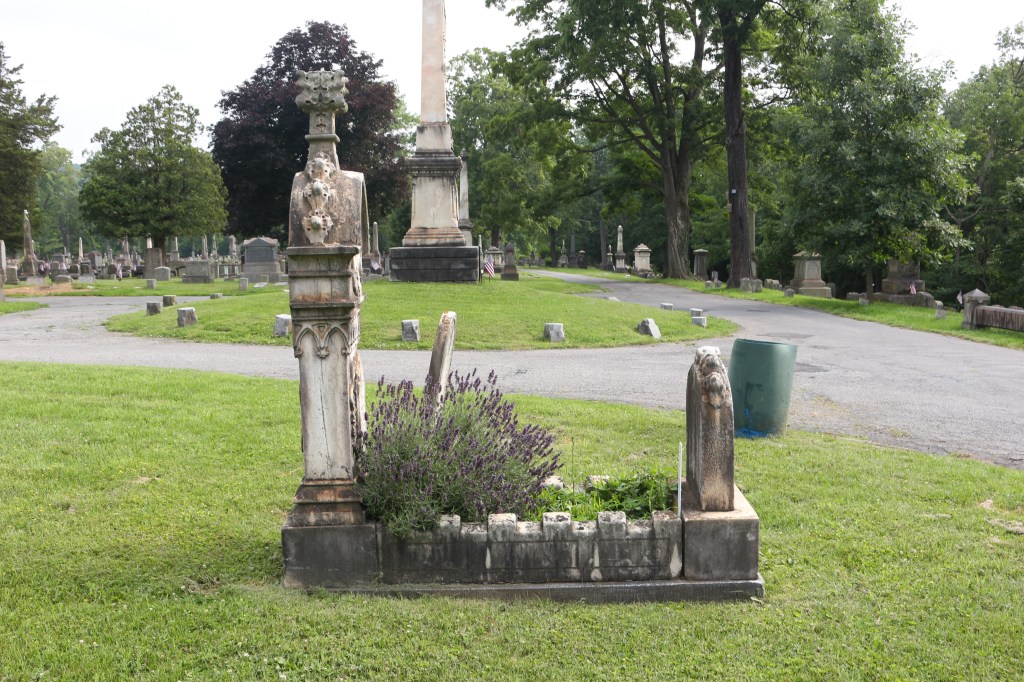
Most cemeteries, especially historic cemeteries that no longer have room for new burials, rely on volunteers for the upkeep. In the historic Easton Cemetery in Easton, Pennsylvania, volunteers create gardens in cradle graves!
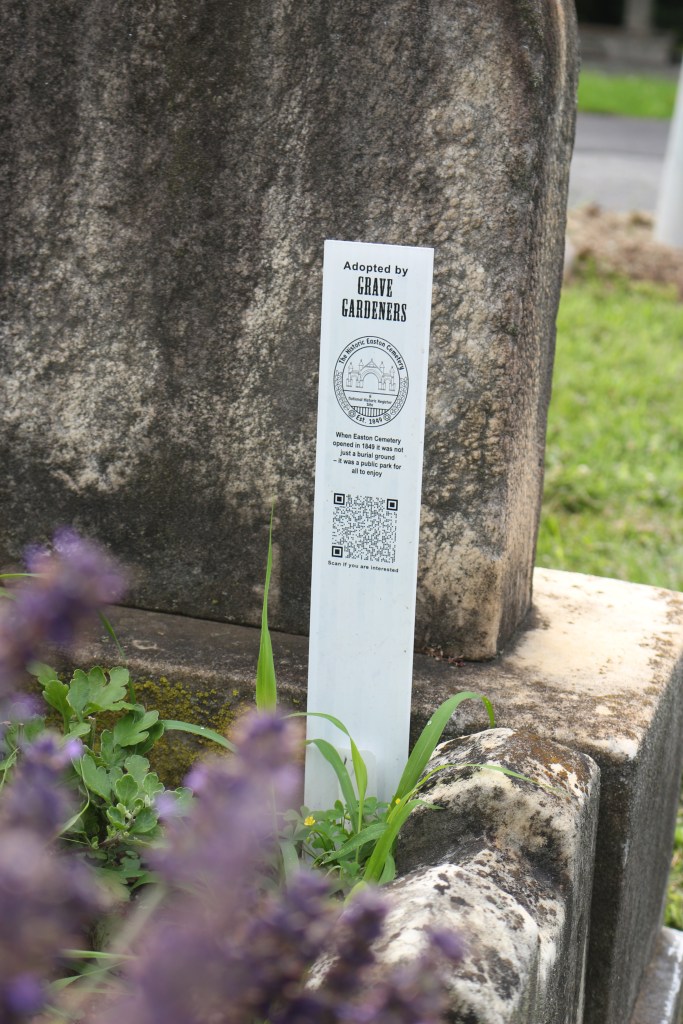
Most cemeteries, especially historic cemeteries that no longer have room for new burials, rely on volunteers for the upkeep. In the historic Easton Cemetery in Easton, Pennsylvania, volunteers create gardens in cradle graves!
There are many superstitions that surround the supernatural and consequently burial practices, many of which have been long forgotten.
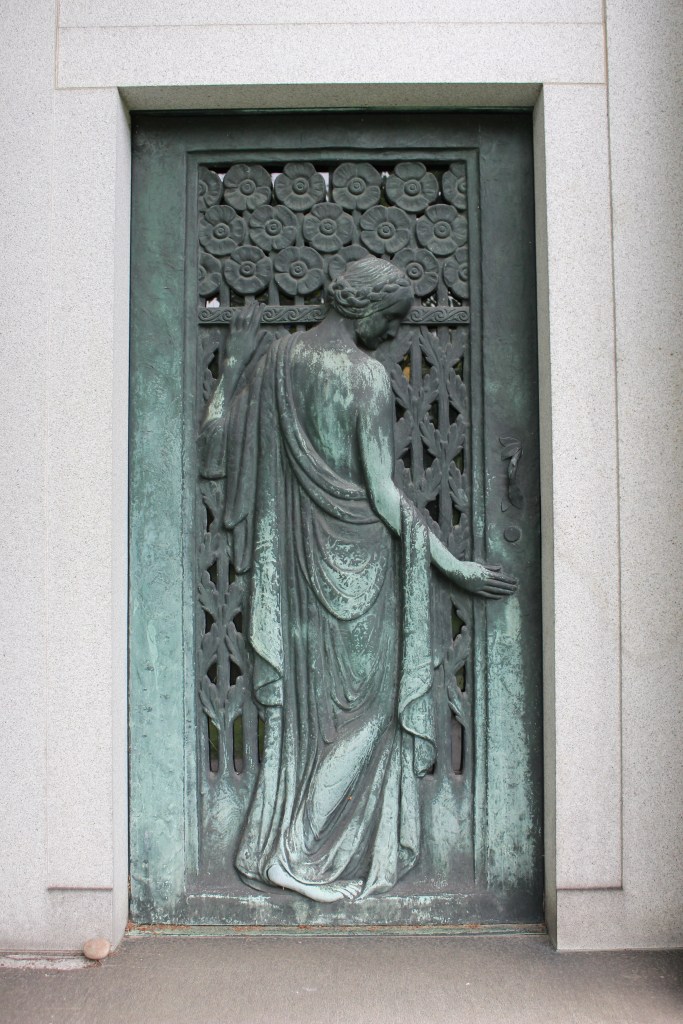
For instance, the doors to mausoleums are often imbued with symbolism. In fact, the door itself represents a portal. Portals come in many forms—a door, a gate, a window, even your eyes and your mouth are considered portals. Many superstitions about death concern portals, many of which come from the Victorian Age.
The eyes, for instance, are considered the windows to the soul. Victorians believed the eyes were powerful, almost magical, even in death. When a person died therefore, the body had to be removed from the home feet first (most people died at home in the 19th Century). In that way, the eyes of the deceased could not look back and lure a live person to follow the dead through the passageway to death.
The Victorians also believed that as you passed by a cemetery that you needed to hold your breath. The fear was that if one opened one’s mouth, that a spirit from the dead residing in the cemetery would enter your body through the portal—the open mouth.
Another superstition had to do with the mirrors in the home. After a death, the family very quickly covered the mirrors. It was believed that mirrors were false portals in a sense. The Victorians believed that the spirit of the dead could enter a mirror and become trapped in the mirror. If the spirit did so, it would not be able to complete its trip through the passageway from the Earthly realm to the Heavenly realm, or in some cases, to warmer climes.
The door as a motif in funerary art symbolizes mystery. The door is the portal from the Earthly realm to the next. In Christianity, the door is usually viewed with hope, charity, and faith. The next life in the hereafter will be better than the one experienced here on Earth.

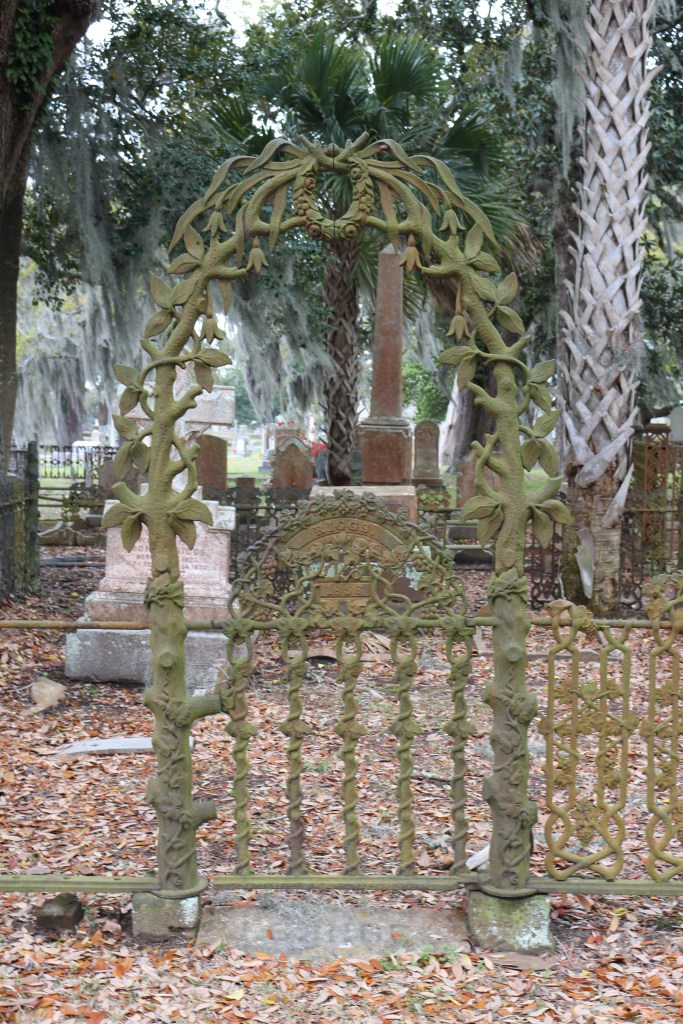
Even the iron gates and fencing around the cemetery were imbued with a power—the power to keep the malevolent spirits such as ghosts, fairies, and witches at bay. It was thought that iron had a supernatural power. Hence a horseshoe nailed to a door was thought to be a talisman protecting those inside and repelling evil spirits. Burying an iron knife in front of the threshold to your home was believed to ward off witches from coming in. And the iron fencing around a cemetery was believed to contain the souls of the dead. The magical powers of the gate and fencing are also found surrounding family plots. It was thought that once the gate was closed the spirits could not follow you home! Keep those gates closed!
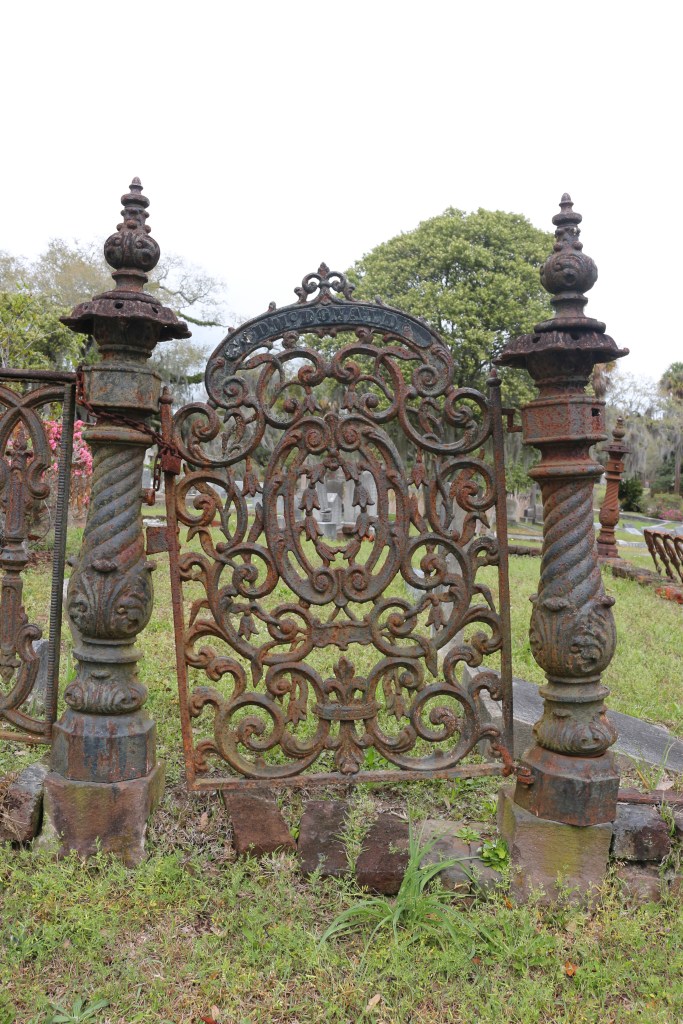
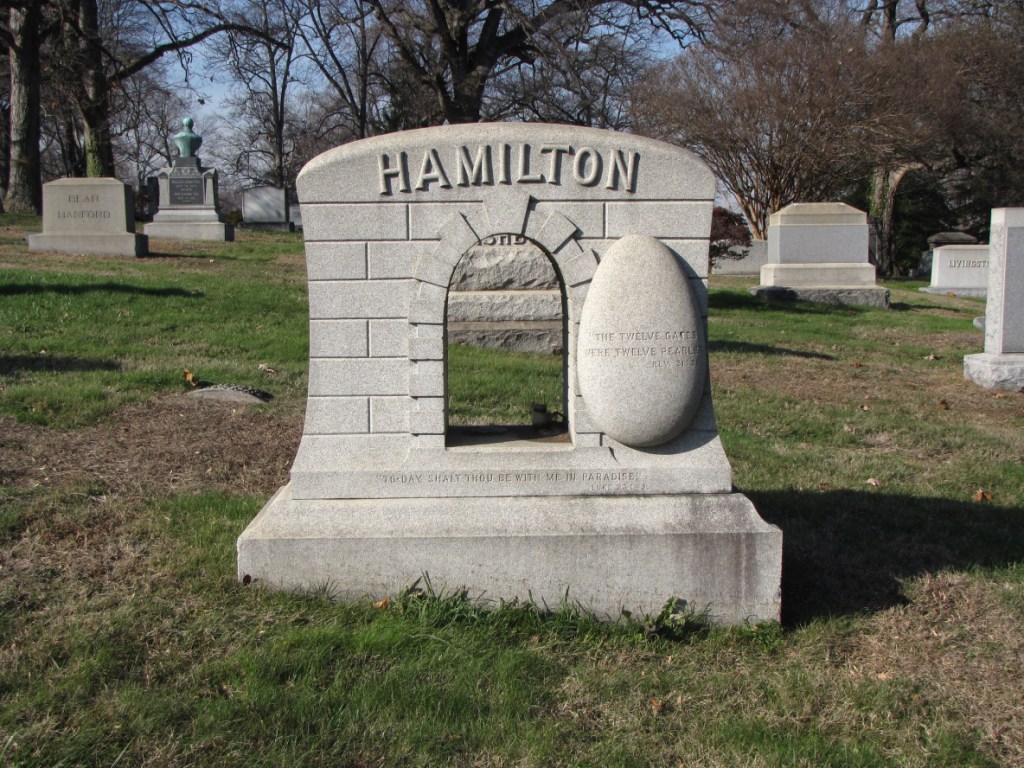
THE TWELVE GATES WERE TWELVE PEARLS, REV. 21:21
“TO-DAY SHALT THOU BE WITH ME IN PARADISE.” LUKE 23:43
FRANK HAMILTON, 1853 – 1947, RESTING
CARRIE HAMILTON, 1852 – 1908, RESTING
ELBERTINE R. HAMILTON, 1862 – 1958, DEVOTED DISCIPLE
Two monuments, one in the Rock Creek Cemetery at Washington D.C. and the other in Cave Hill Cemetery at Louisville, Kentucky, depict an opening or gateway with a rock rolled away from the opening.
The Hamilton Tomb has two Bible verses carved into the face of it that indicate that the opening of that monument is meant to portray Jesus’s entry into Heaven, “To-day shalt thou be with me in paradise.” The second Bible verse, Revelation 21:21, goes on to describe the destination, “And the twelve gates were twelve pearls; every several gate was one pearl; and the street of the city was pure gold, as it were transparent glass.”
The second monument, that of Zachariah Madison Sherley, a prominent riverboat fleet owner and pilot and his wife Susan Wallace Cromwell Sherley, also depicts a rock next to an entryway. This one, too, depicts the Resurrection of Jesus.
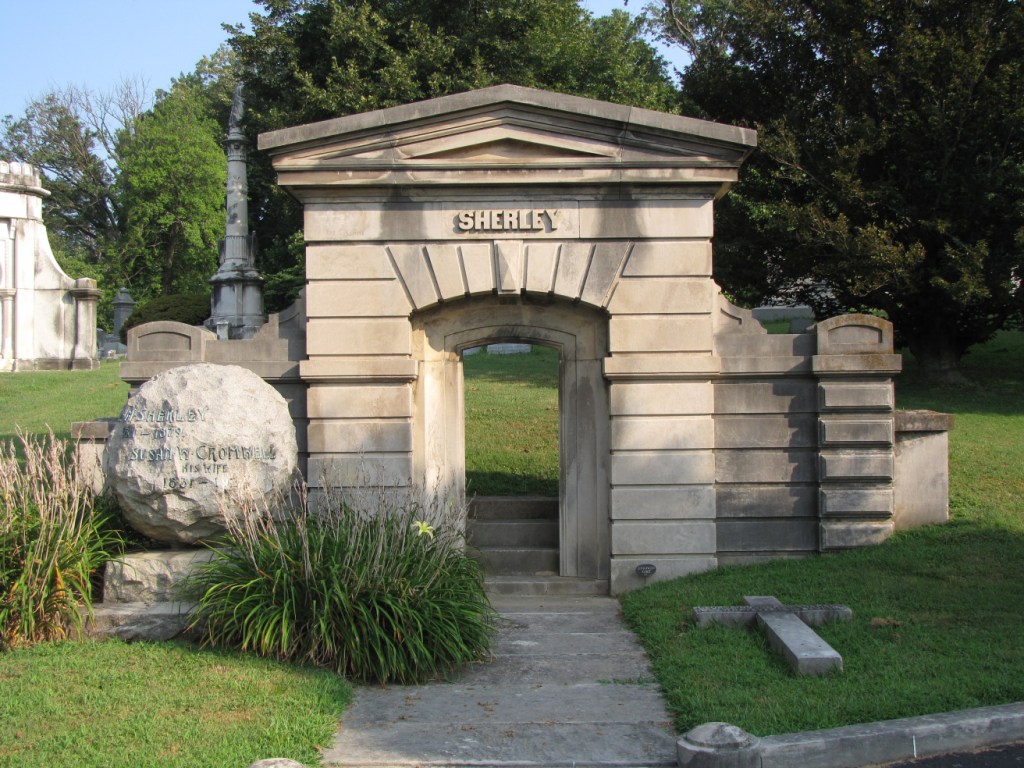
Many places in the Bible describe the Holy event, as does John 20:1 – 2, “The first day of the week cometh Mary Magdalene early, when it was yet dark, unto the sepulcher, and seeth the stone taken away from the sepulcher. 2. Then she runneth and cometh Simon Peter, and to the other disciple, whom Jesus loved, and saith unto them. They have taken away the Lord out of the sepulcher, and we know not where they have laid him.”
SHERLEY
Z. M. SHERLEY, 1811 – 1879
SUSAN W. CROMWELL, HIS WIFE, 1831 – 1928
However, the Bork Family monument in St. Joseph’s Cemetery in Tiffin, Ohio, depicts Jesus’s ascension to Heaven. Here Jesus leaves the Earthly realm for the Heavenly realm—this is the Resurrection of Christ.

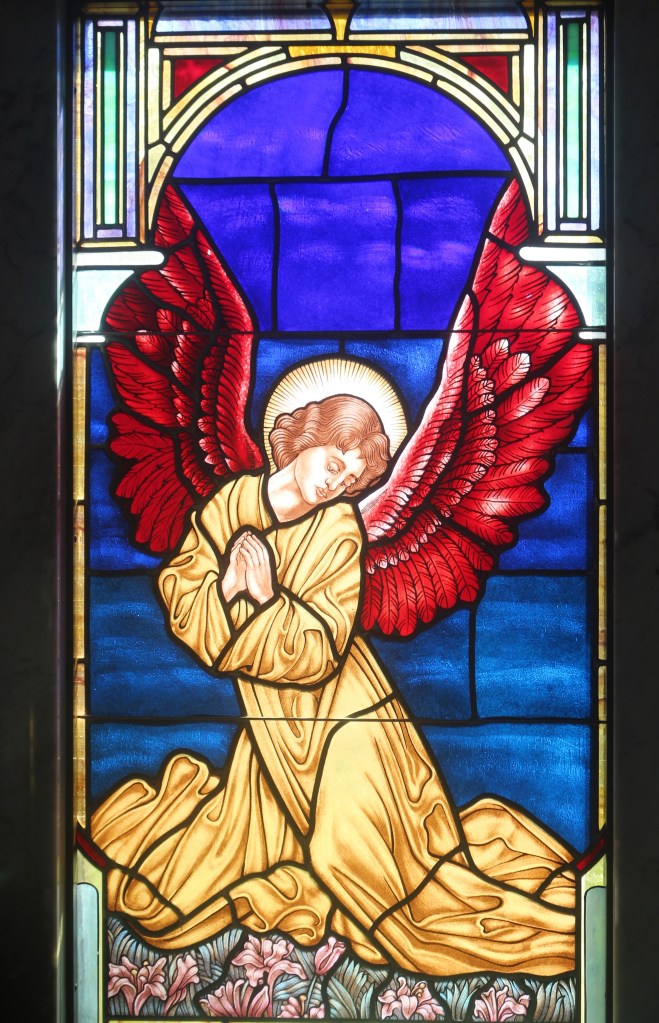
In a mausoleum in the Metairie Cemetery in New Orleans, the stained-glass window in the back of the tomb depicts an angel with red wings. Angel’s are known as God’s messenger from the Hebrew root meaning send.
This angel is thought to be a Seraphim. Seraphim are one of nine orders or choirs of angels which are organized into three spheres or orders, with three choirs in each. According to Christian tradition, the First Order, is made up of the Seraphim, Cherubim, and Thrones; the Middle or Second Order is made up of Dominions, Virtues, and Powers; and the Lowest or Third Order is made up of Principalities, Archangels and Angels.
Seraphim are mentioned in Isaiah 6:2-3 (King James Version): 2) “Above it stood the Seraphim; each one had six wings; with twain he covered his face, and with twain he covered his feet, and with twain he did fly.” 3) “And on cried unto another, and said, Holy, holy, holy, is the Lord of hosts: The whole earth is full of His glory.”
According to tradition, the Seraphim have red wings because they are the closet to God.
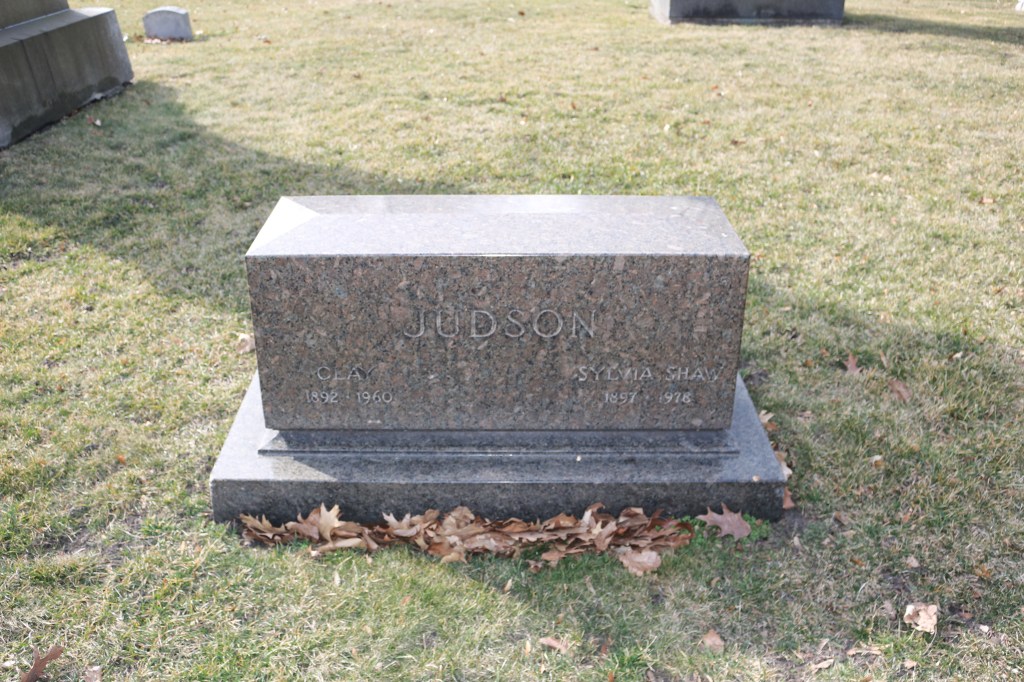
JUDSON
CLAY 1892 – 1960 SYLVIA SHAW 1897 – 1976
Alongside one of the avenues in the historic Graceland Cemetery in Chicago is a plain and unadorned polished granite block marking the grave of Sylvia Shaw Judson. There is nothing about the stone that gives a hint to the artistic talent of the woman buried beneath or the fact that she created one of the most famous sculptures marking a family plot in the famed Bonaventure Cemetery in Savannah, Georgia.
The photo on the cover of the book Midnight in the Garden of Good and Evil by John Berendt made the statue, Bird Girl, by Sylvia Shaw Judson a sensation. So much so that readers of the book flocked to the Bonaventure Cemetery to see it, which caused the family to move the sculpture marking their family plot to the Telfair Museum. Bird Girl now has her own room in the museum.
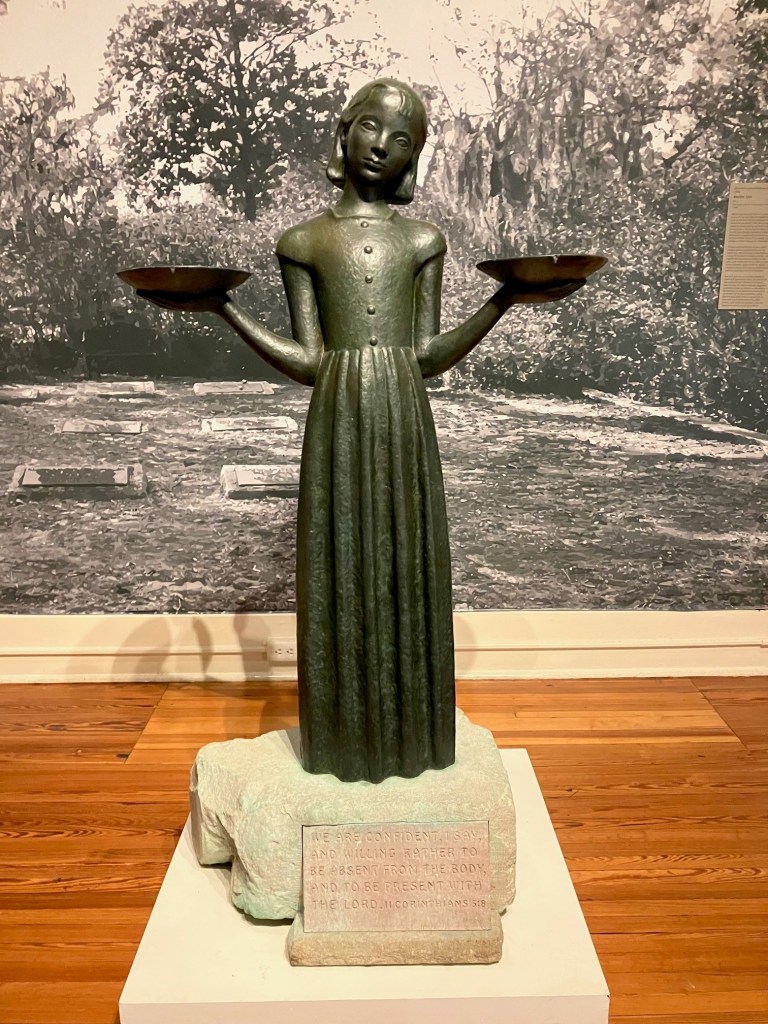
The image is intriguing. The statue is plain. The girl is expressionless as she stands there, with her head titled slightly. There she stands with her arms out holding a bowl in each hand like scales—weighing, I thought—good and evil. —not knowing whether it is a nod to the virtuous or the villainous. But it turns out the sculptor intended the statue to adorn a garden—not a cemetery. The two bowls were to have water in one and bird feed in the other. Bird Girl is Shaw Judson’s most famous sculpture, but her works can be found in many places including botanical gardens, libraries, museums, schools, and churches.
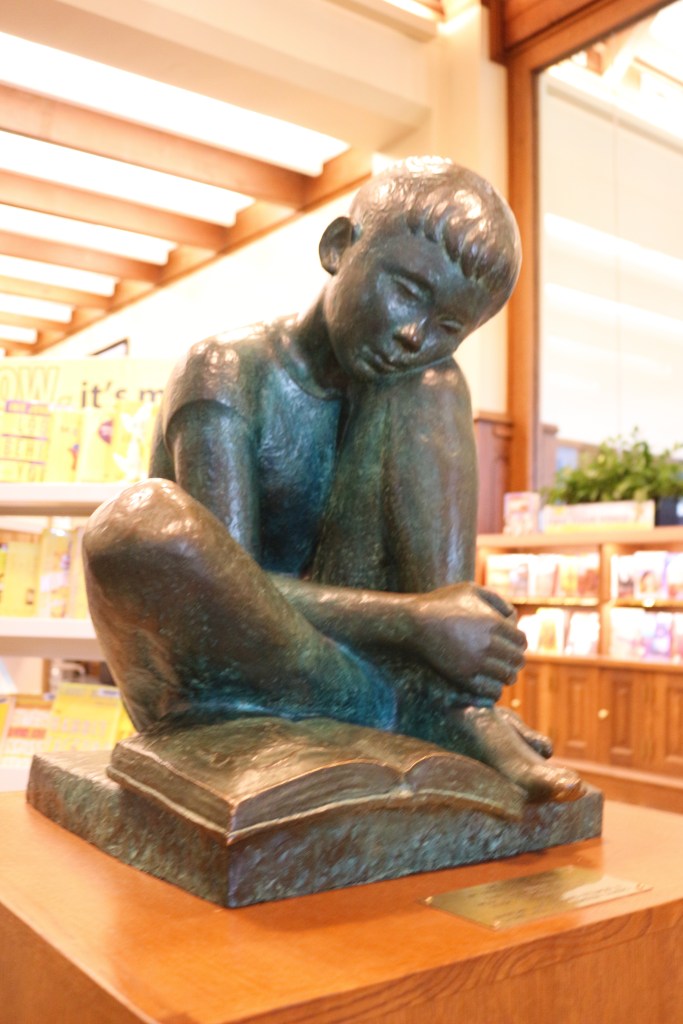
Ironic that her sculpture Bird Girl should have received such fame as a grave marker while her own stone is plain and devoid of her talent as a sculptor.

Tucked in the back of a mausoleum in the Forest Hills Cemetery in Chattanooga, Tennessee, is a stained-glass window that depicts Christ carrying the Cross along the Via Dolorosa in Jerusalem on His way to Crucifixion.
This dramatic portrayal shows Christ bent and crawling up steps with the Cross on his back. He is surrounded by two Roman soldiers with spears and clubs drawn. At the top of the steps Simon of Cyrene appears to be getting read to help Christ carry the heavy burden.
King James Version, Luke 23: 27 “And as they led Him away, they laid hold upon one Simon, a Cyrenian, coming out of the country, and on him they laid the Cross, that he might bear it after Jesus.”
In this depiction, Christ carries the entire Cross. However, many modern Biblical scholars believe that Christ carried only a patibulum or crossbar which was affixed to a pole or stipe that was already driven into the ground at Golgotha, also known as Calvary or the Hill upon which Christ was crucified.

TO THE MEMORY OF
BELLE ACHER
BORN IN EASTERN PA SEPT 5. 1858
DIED IN WARREN PA SEPT 19.1900
BY HER BRILLIANT ACCOMPLISHMENT
AND RARE-GRACES OF MIND AND PERSON
SHE GAVE DISTINCTION
TO THE HISTORIC ARTS.
TO THE NAME OF BELLE ARCHER
THE MASTER LEANING REACHED A HAND AND
WHISPERED IT IS FINISHED
W. CLARKE NOBLE SCULPTOR
In the Easton Cemetery in Easton, Pennsylvania, is a large 6-foot-tall granite monolith with a bronze insert with an inscription to and a bas-relief sculpture of actress Belle Archer. Belle Archer started her acting career under the name of Belle Mackenzie on the Baltimore and Washington, D.C. stages. Her first role was in the play “The Mighty Dollar.” In 1880, Belle married fellow actor, Herbert Marshall Archer, and changed her name. They soon began to play opposite of each other in a play titled, “The Highest Bidder”. Though her marriage failed in 1889, Belle’s career took off and for the next ten years she appeared in stage productions of “Uncle Tom’s Cabin,” “Hazel Kirke,” “The Foresters”, “The Three Musketeers”, and “Lord Chumley” among others.

On September 16th, 1900, Belle Archer took a bad fall on the train station platform in Jamestown, New York. Though it was thought she was recovering, she died the following Wednesday, September 19th. Her funeral was held in the Episcopal Church in Easton. She was buried in the Easton Cemetery.
The monument marking her grave includes a bronze plaque sculped by Maine-born artist William Clarke Noble (February 10, 1858 – May 10, 1938). The medallion portrait is said to be a reproduction of her favorite. Her beauty is best described by The Easton Daily Express, September 21, 1900, that noted “her beautiful face and form and the grace and ease of her carriage captivated her audiences wherever she appeared.” The portrait, sculpted by Noble, captured her notable beauty.

Noble’s many works can be found at the Gettysburg Battlefield, the Soldiers and Sailors Monument in Newport, Rhode Island,; Mount Moriah Cemetery in Philadelphia; New York City; Doane Park, Newark, New Jersey; the Maine Statehouse; as well as many other places throughout the country.
Lewis Raul
October 12, 1855 – July 18, 1924
Jane Elinor Morely Raul
August 21, 1860 – April 8, 1930
Marie Edna Raul Haytock
1881 – 1964
Benjamin Haytock, Jr.
March 17, 1882 – May 21, 1933

Harry Lewis Raul
October 2, 1883 – May 26, 1960
FRSA
The Raul family plot in the Easton Cemetery in Easton, Pennsylvania, includes the gravestone of Harry Lewis Raul, sculptor. Raul was a member of the Fellow of the Royal Society of Artists, and his works can be found in the D.C. area and in many cities, museums, and private collections. That includes several sculptures in the Easton area, including a memorial to the sailors and soldiers who served in WWI in the Wilson Borough.

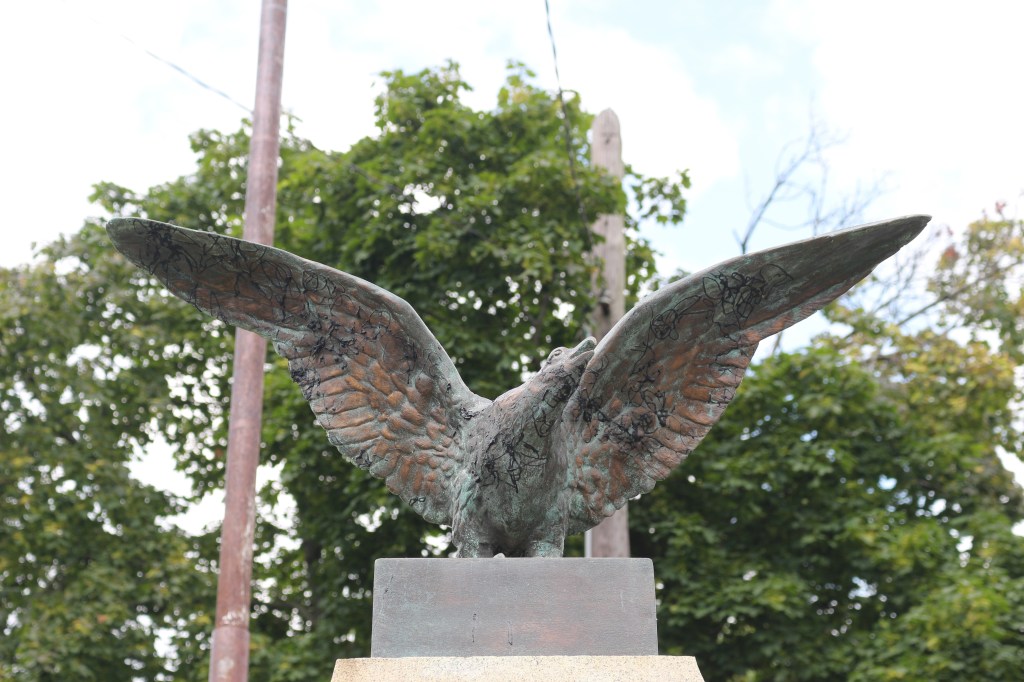
The Raul family plot also includes a sculpture titled “The Guardian” created by Harry Lewis Raul himself.

The statue is a stylized angel standing guard with the Biblical verse below emblazoned on the face of the shield.
HE THAT DWELLETH
IN THE SECRET
PLACE OF THE
MOST HIGH
SHALL ABIDE
UNDER THE
SHADOW OF THE
ALMIGHTY
FOR HE SHALL
GIVE HIS
ANGELS CHARGE
OVER THEE
TO KEEP
THEE IN ALL
THY WAYS.
Psalm 91: 1-11

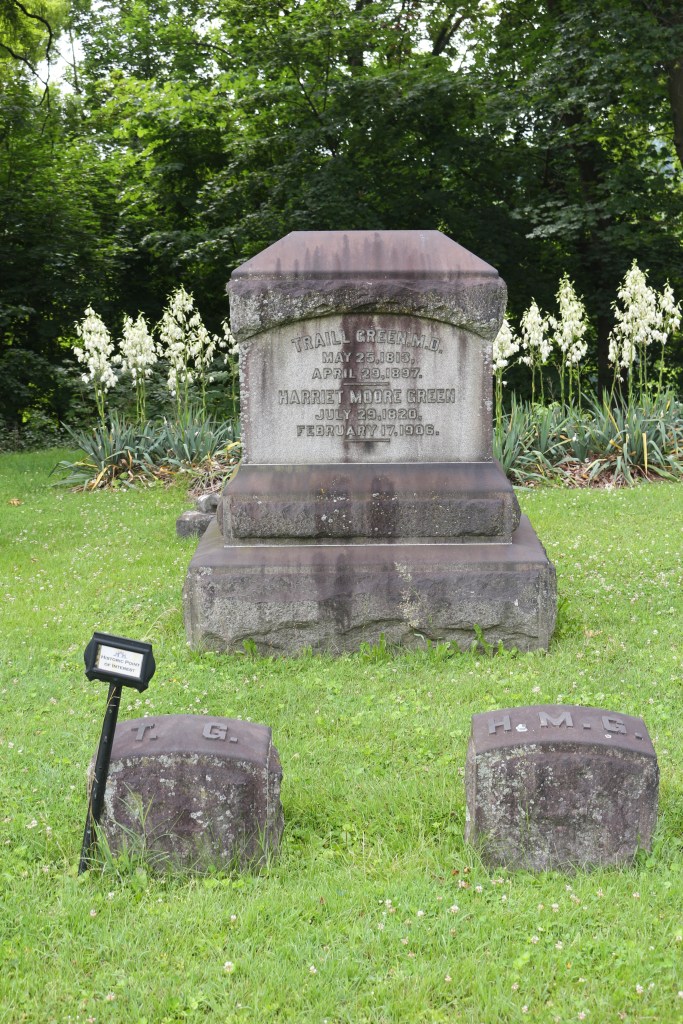
Dr. Traill Green, M.D.
May 25, 1813 – April 29, 1897
Harriet Moore Green
July 29, 1820 – February 17, 1906
Dr. Traill Green was an important figure in Easton, Pennsylvania. According to the April 30, 1897 edition of The Washington D.C. Star, he was an “eminent physician and famous scientist.” In addition to that, Green was a prominent professor of chemistry at Lafayette College, as well as, a trustee and for a short time an acting president.
Nationally he served as the first president of American Academy of Medicine. One of his many contributions to the community of Easton was as serving on the school board. He was one of the first, too, to believe that graveyards should be away from population centers which led to the founding of the Easton Cemetery. Green served as the first board president, a position he held for nearly 40 years.
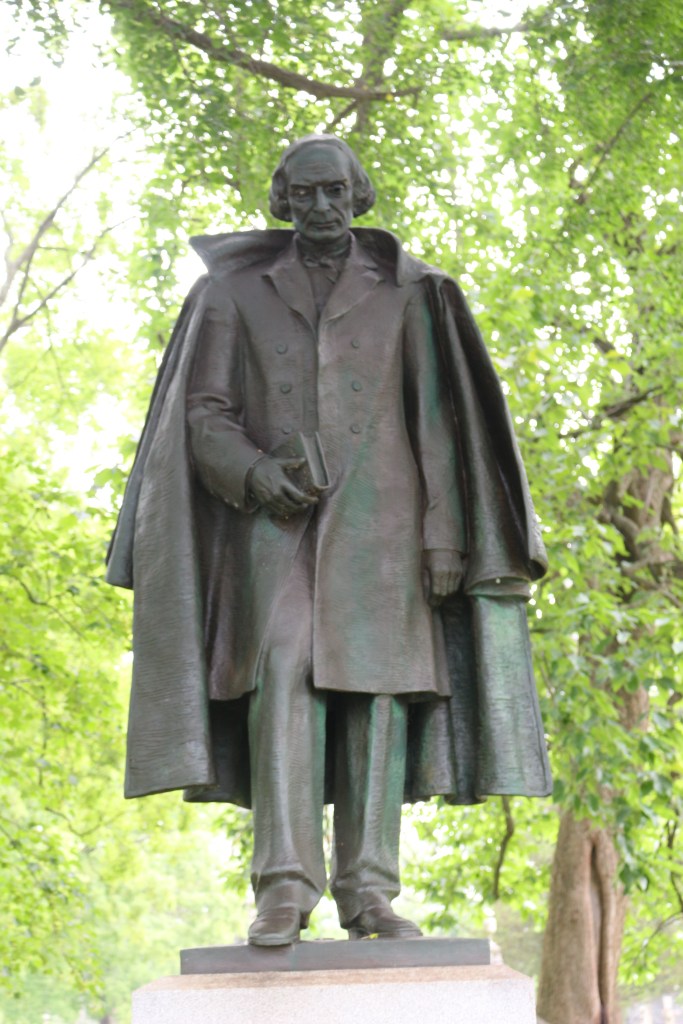
In honor of Green’s service to the college, community, and cemetery, Harry Lewis Raul was commissioned to create a statue of Dr. Traill Green dedicated May 30, 1911, which stands just inside the gates of the Easton Cemetery bearing the inscription, “M.D.L.L.D. First President of the Easton Cemetery Company, Physician – Scientist – Educator – Patriot – Christian.”

Charles Koffman Williams
January 31, 1862 – October 12, 1944
Ida L. Wilson Williams
December 17, 1866 – December 29, 1940
The Williams Family monument, titled “Vision,” in the Easton Cemetery in Easton, Pennsylvania, is a private commission created by sculptor Harry Lewis Raul and cast in 1908.

Raul (October 2, 1883—May 27, 1960) was a native of Easton, who studied the classics first at Lafayette College, then transferred to study with noted artists in New York and Philadelphia. His work can be found throughout the cemetery and other places in Northampton County, Pennsylvania. For a time, Raul had his own art studio and created public and private commissions.
An example of his public work, similar to the classically draped allegorical figure in the Williams Family monument, can be found in front of the Northampton County Courthouse created in 1912 and cast in 1913 to honor the sailors who died in the Maine and the soldiers and sailors who served and died in the Spanish-American War.

IN MEMORY OF
THE
MARTYS OF THE MAINE
AND THE SOLDIERS
SAILORS AND MARINES
OF THE SPANISH-AMERICAN WAR
1898 – 1902
ERECTED UNDER THE AUSPICES OF
THE COUNTY OF NORHTAMPTON AND
COL. CHARLES WIKOFF CAMP NO 43
UNITED SPANISH WAR VETERANS
OF EASTON PENNSYLVANIA
DEDICATED JUNE 24, 1914
 | gravelyspeaking on The Lowly Fern |
 | C Hinderlider on The Lowly Fern |
| gravelyspeaking on Student, Lawyer, Senator, and… |
 | spooky9ea275a092 on Student, Lawyer, Senator, and… |
 | chestercemeteries on The Buffalo |
 Gravely Speaking