A Cooper’s Grave

Goodwill Cemetery, Loogootee, Indiana

Coopers are those artisans who made barrels, wine casks, buckets, and firkins out of wooden staves that are held together with hoops.  The containers they made were of four distinct types:

  • “Dry” or “slack” containers which were made to hold and ship dry goods such as nails or tobacco.
  • “Dry-tight” containers which were made to keep the materials inside the container dry and keep the moisture out.  This was important with flour and especially important with gunpowder!
  • “White cooper” containers which were made to hold butter or liquids like milk or water for carrying but not for shipping.  These containers were usually tubs, bucket, or churns.  The staves in these containers were almost never curved.
  • “Wet” or “tight” containers which were made to hold and transport liquids often for long periods of time like beer or wine.

Today, coopers, like wainwrights, have mostly become obsolete with the exception of barrels and casks made for the wine industry.

Over a hundred years ago, however, being a cooper was a trade at which a man could make a living.  The gravestone in the Goodwill Cemetery at Loogootee, Indiana, bears witness.  The limestone monument is carved to resemble two barrels stacked on one another with a cooper hand adze still resting on the top barrel almost as if Mr. Hyman left it there himself.

A cooper by trade

HENRY J. HYMAN

BORN

Dec. 3, 1819

DIED

July 1, 1898

The sun is the Source of all

animal and vegetable life.

Posted in Uncategorized | Leave a comment

The Morning Glory

Mt. Calvary Cemetery, Columbus, Ohio

The Victorian Era lasted from about 1832 until Queen Victoria’s death in 1903.  The era was an eclectic period in the decorative arts with several styles—Gothic, Tudor, Neoclassical—vying for dominance.  The period was marked by ornamentation.  This was true in architecture, furniture, and funerary arts.  In cemeteries gravestones became taller, ornamented, and sentimental.

In Victorian times, flowers took on significance as a way to send coded messages; this was known as floriography from the Latin combining flora—“goddess of flowers” and graphein—“writing”.  Each flower had a meaning that was conveyed to the viewer or receiver of the flower or bouquet of flowers—the lily of the valley represented humility, the coral rose represented desire and passion, the white lily represented purity, and so on.

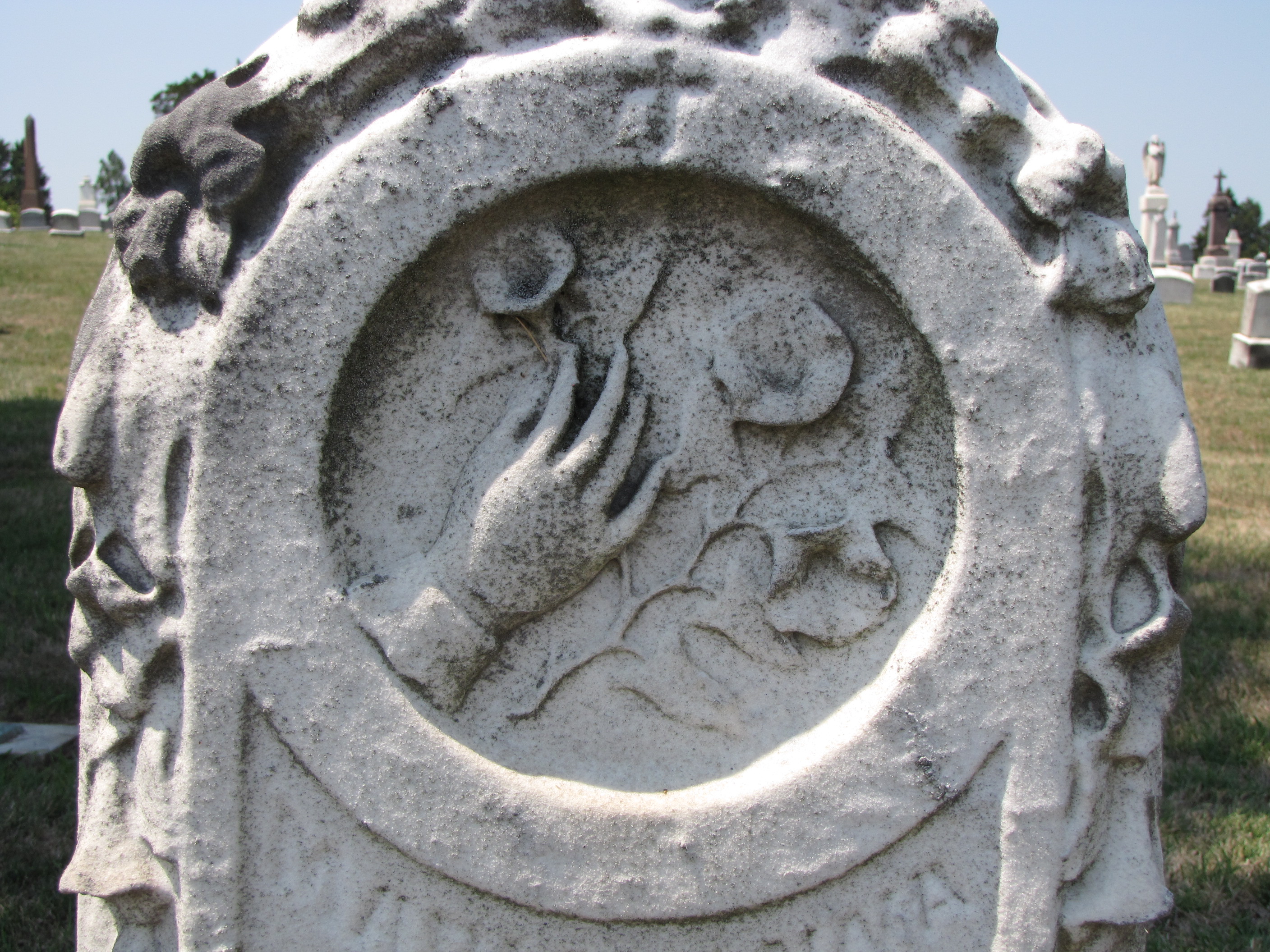
To the Victorians the morning glory, twining around fence rows and trellises, their delicate tendrils gently clinging, holding up their fragile flowers to open up to the summer sun, represented love in vain.

But to the Christians, there was a different meaning.  Because of the morning glories ephemeral blooming during the early morning, unraveling its bloom directly to the sun and its blossom withering shut each night, the flower came to symbolize mortality and the brevity of life—a poet’s metaphor in the form of a flower. Also because of its attention to the sun, the morning glory represents the Resurrection.

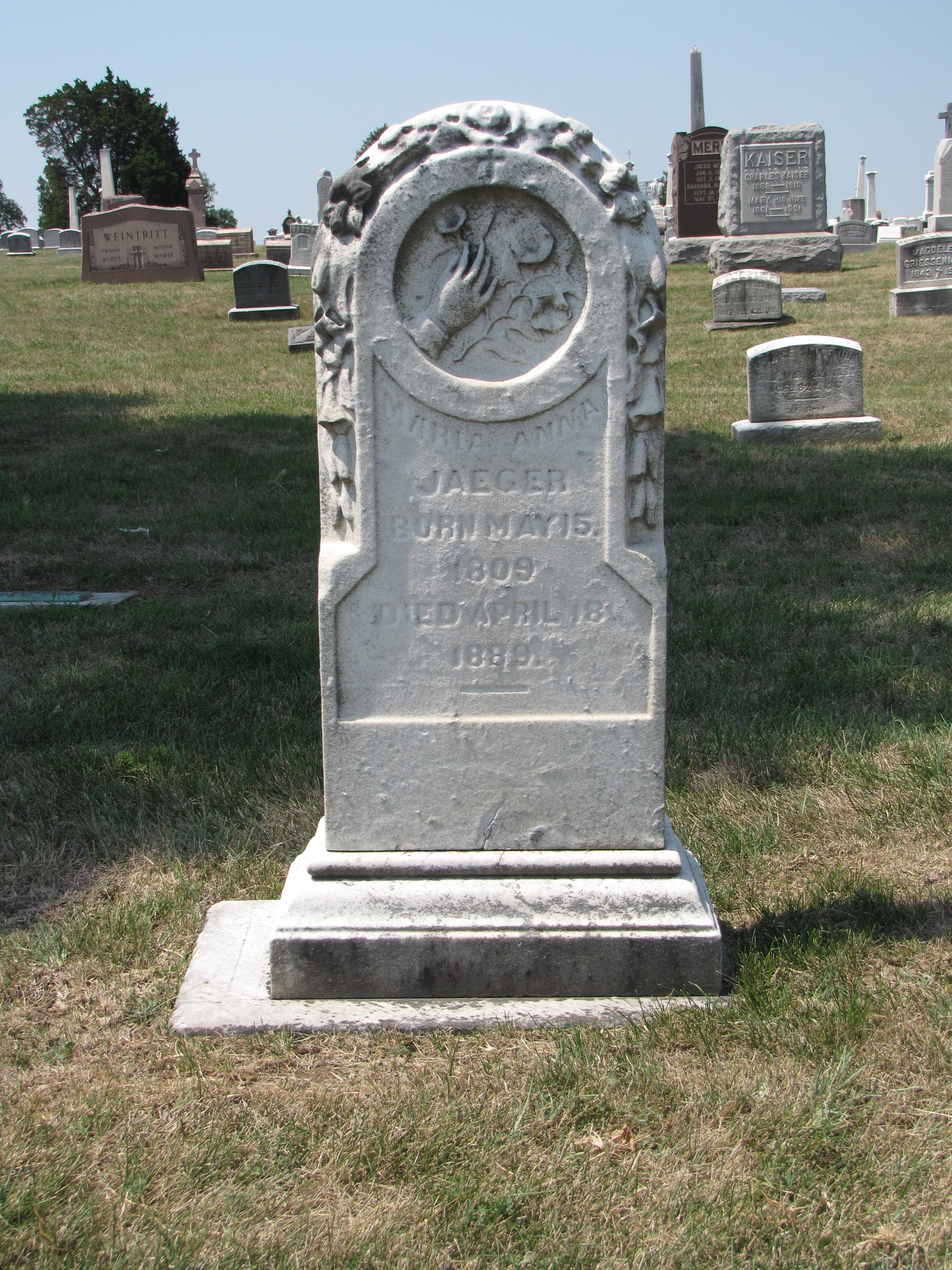
Maria Anna Jaeger’s gravestone in the Mt. Calvary Cemetery, at Columbus, Ohio, was erected at nearly the height of the Victorian Era and displays the high ornamentation that characterized that time period.  Her gravestone is festooned with flowers, though, the white marble rounded-top tablet has eroded and much of the detail has been lost.  The circle inset, however, clearly displays a woman’s delicate hand holding a sprig of morning glories.

MARIA ANNA

JAEGER

BORN MAY 15,

1809

DIED APRIL 18,

1889

Posted in Uncategorized | 1 Comment

The Commodore, Steamboats, and Onion Domes

Green-Wood Cemetery, Brooklyn, New York

The Commodore, steamboat builder and pilot, Cornelius Kingsland Garrison (March 1, 1809-May 1, 1885) started building his fortune by building steamboats and operating his St. Louis steamboat company.  He went on to make another fortune in banking.  Garrison also served as mayor of San Francisco for a brief time in 1853 before he moved to New York City.

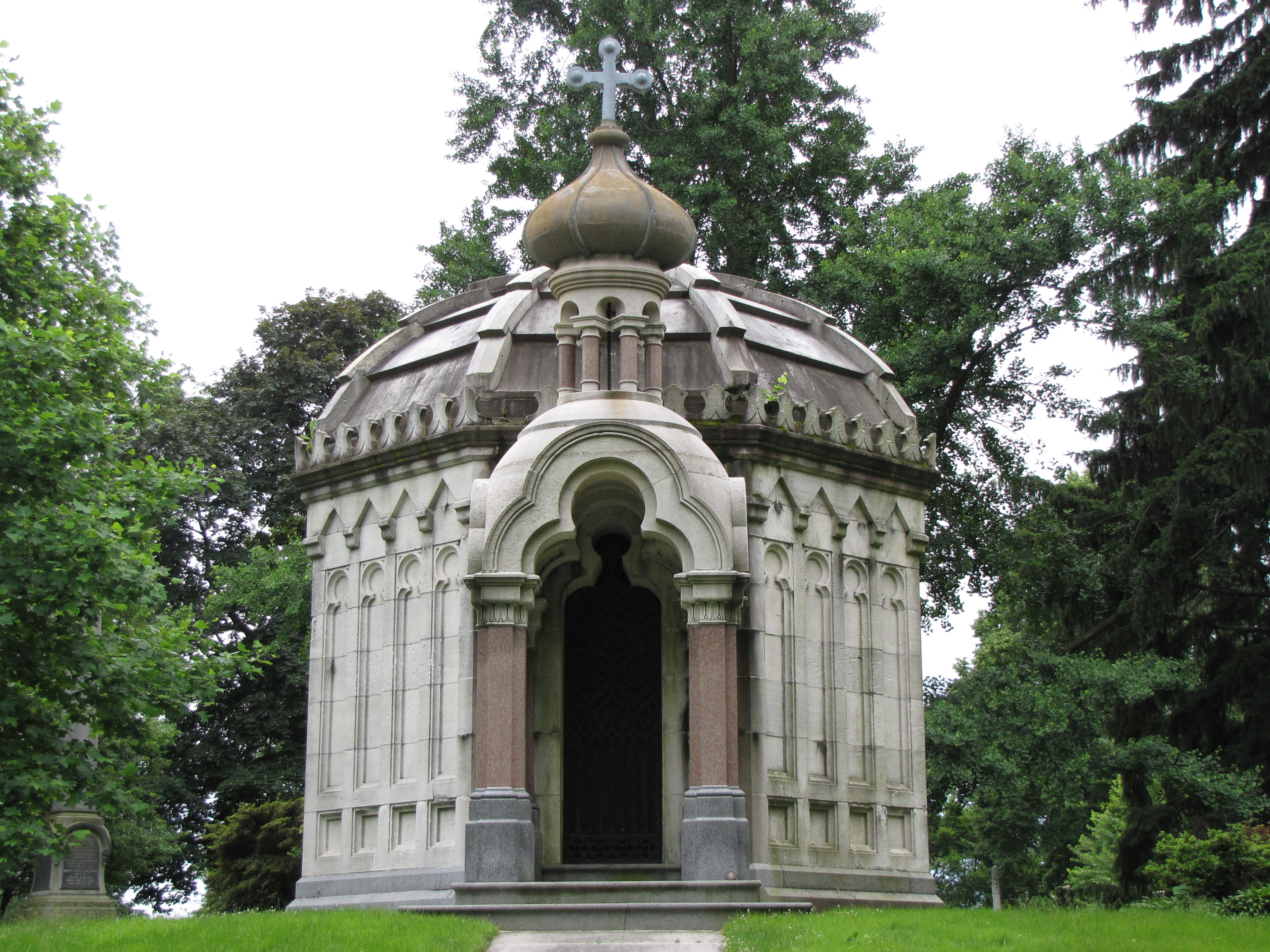
Garrison died in 1885 and the famed architect Griffith Thomas designed his Green-Wood Cemetery mausoleum at Brooklyn, New York.  Thomas was a notable and prolific architect with many buildings in New York City as part of his legacy including the Arnold Building, the old New York Life Insurance Building and the Gunther Building.

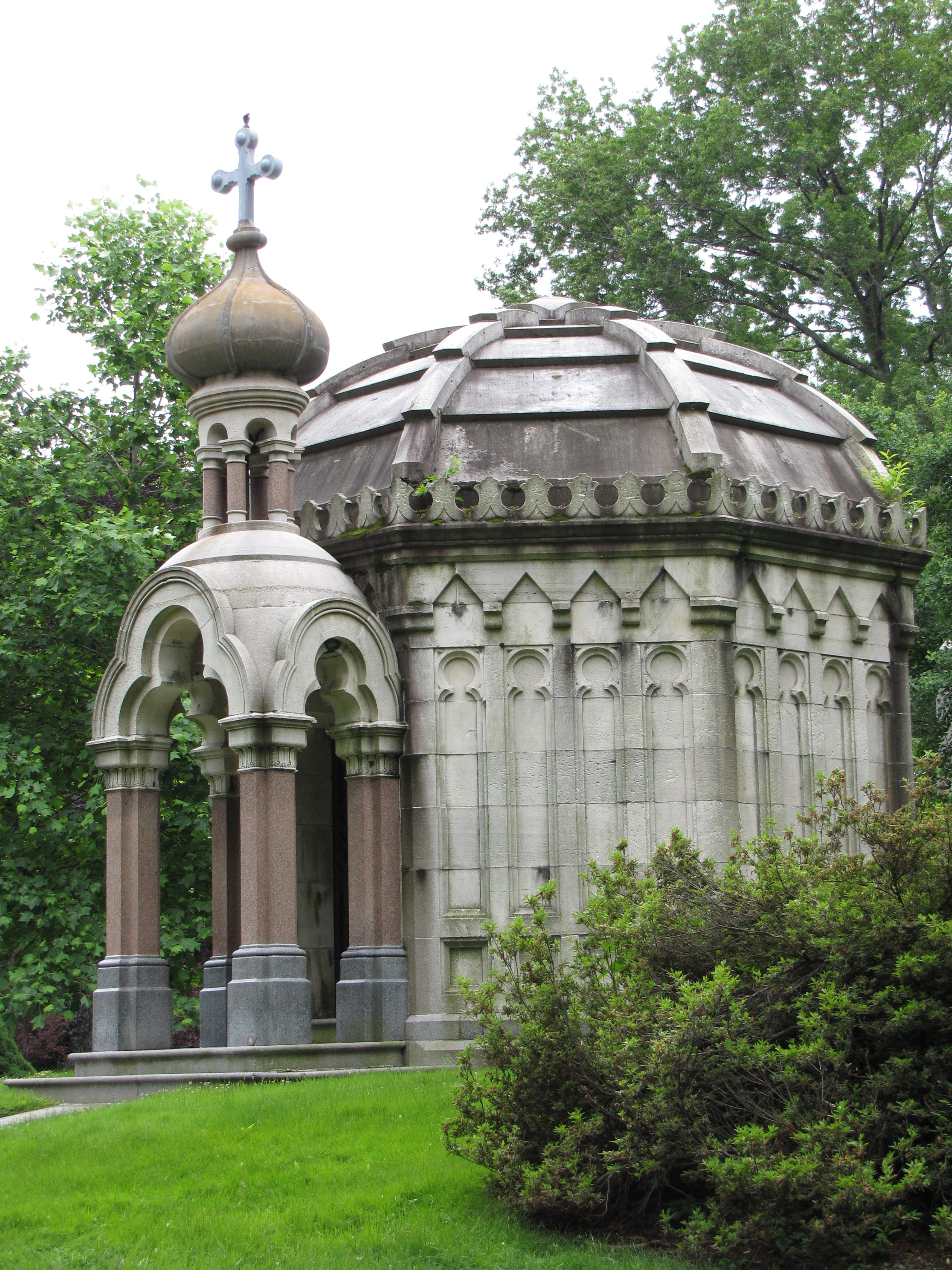
For the Commodore’s mausoleum, Thomas combined several architectural styles—Byzantine, Moorish, and Islamic—to create a striking tomb with an onion dome topped with a cross over the entrance.  Onion domes are characterized by having a bulbous onion shape which is larger than the drum on which it sits.

The Cornelius Kingsland Garrison Mausoleum

Posted in Mausoleums | 2 Comments

Three Leaves and a Hanging Bud

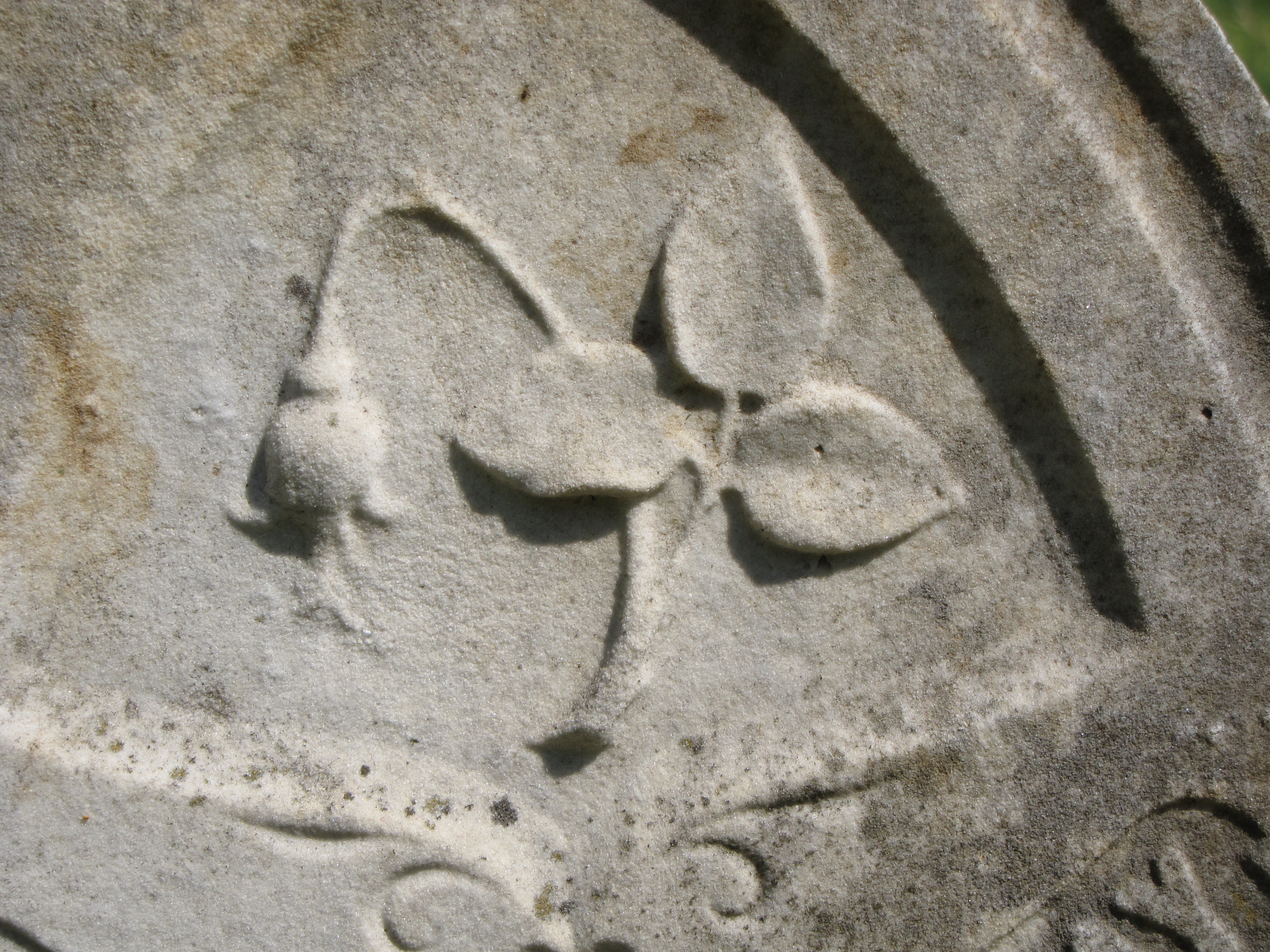
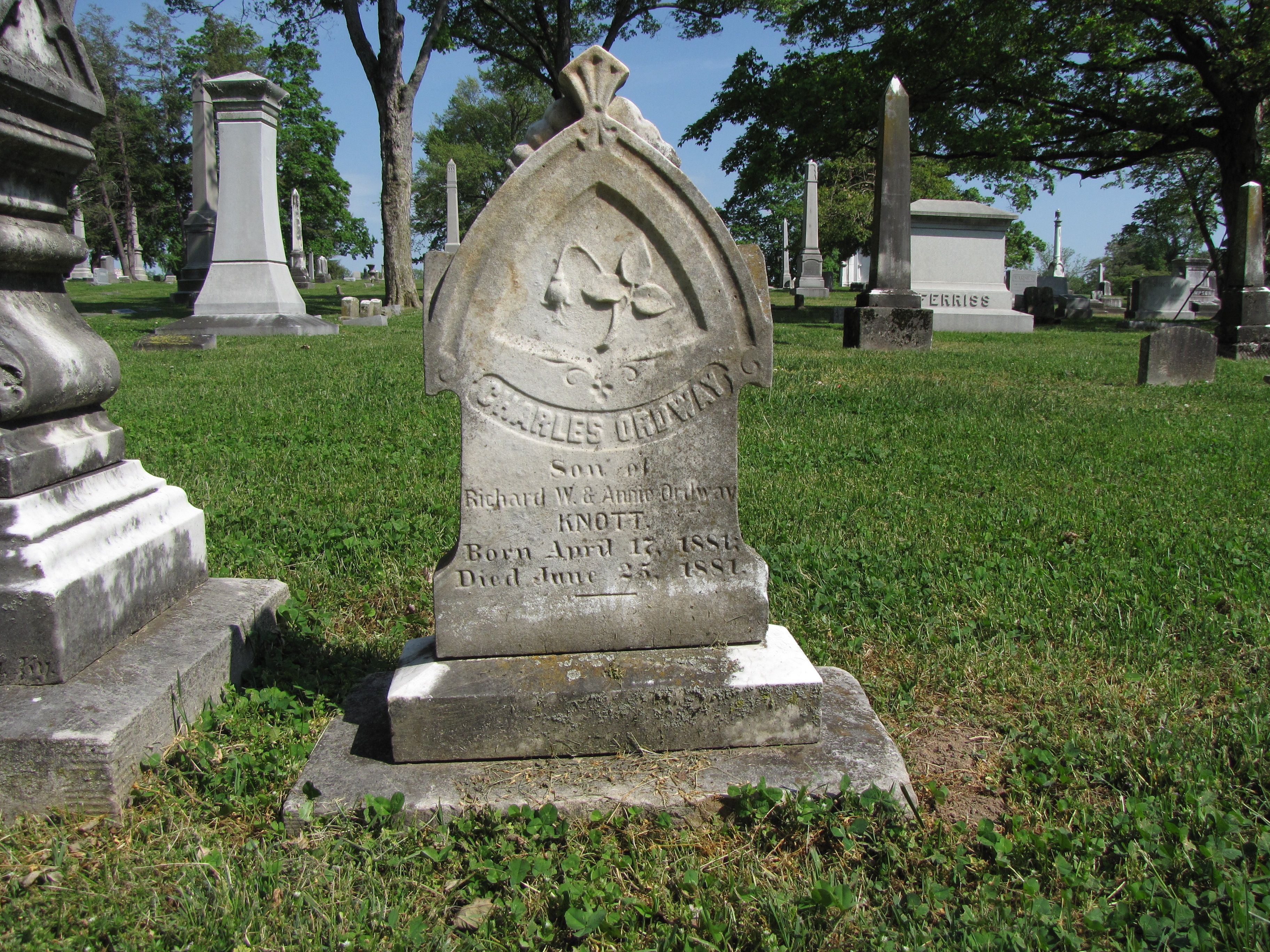
Many funerary motifs represent children–shoes, seedpods, cribs, cherubs–but one of the most common is the hanging bud. The broken bud represents the flower that did not bloom into full blossom, the life that was cut short before it had a chance to grow to adulthood.

The white marble ornamented top tablet gravestone of Charles Ordway in the Mount Olivet Cemetery at Nashville, Tennessee, displays the bud hanging from a sprig with three leaves.  Charles only lived a little more than two months.  The hanging bud represents his short life and that he did not live into adulthood—full bloom.  The leaves here represent the Trinity—the Father, the Son, and the Holy Ghost.

CHARLES ORDWAY

Son of

Richard W. & Annie Ordway

KNOTT

Born April 17, 1881

Died June 25, 1881

Mount Olivet Cemetery, Nashville, Tennessee

Posted in Symbolism | Leave a comment

Steamboat Captains and Evangelists

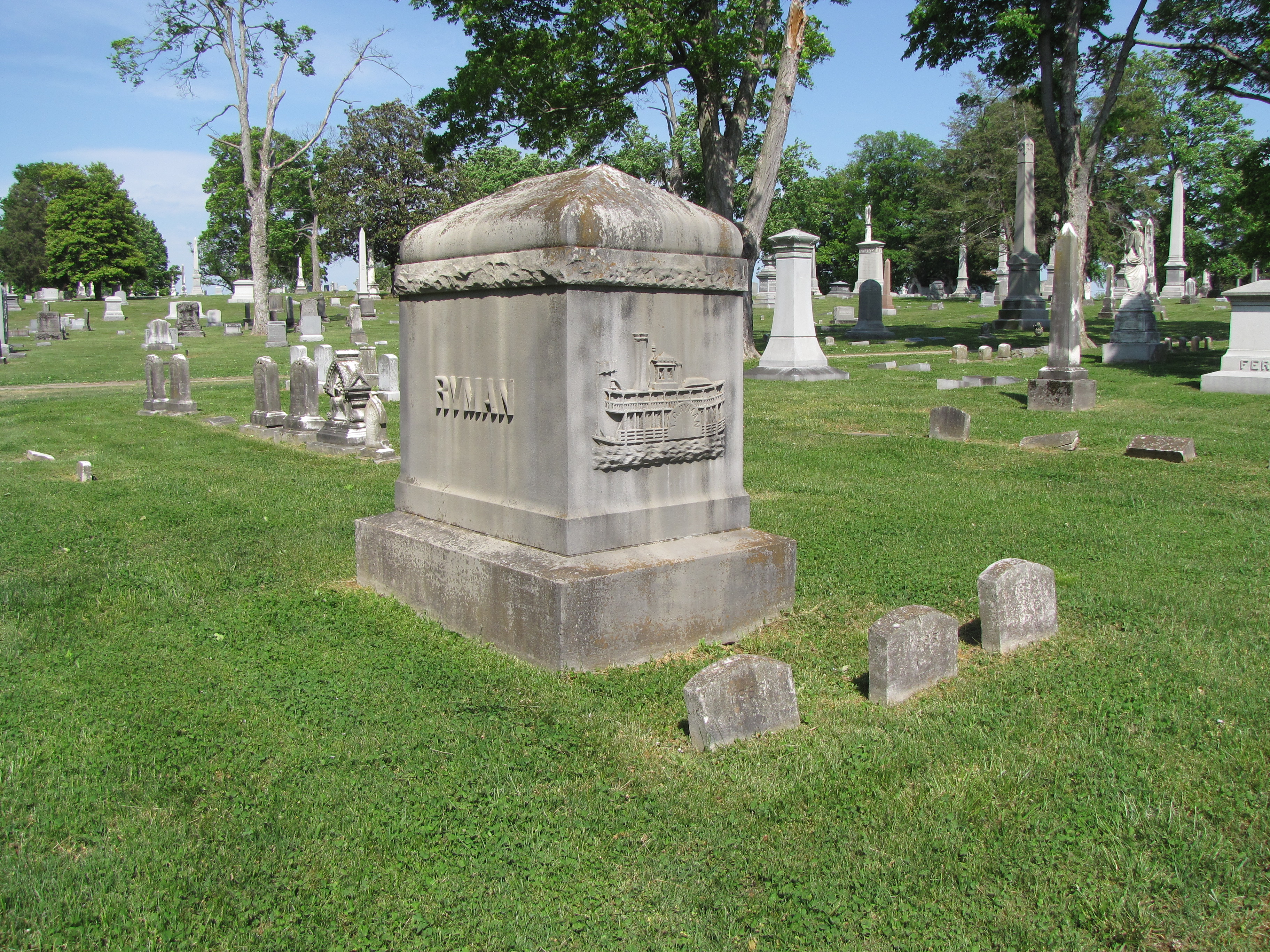
A large gray monument displaying a steamboat in the Mount Olivet Cemetery at Nashville marks the grave of Thomas Green Ryman, (October 12, 1841-December 23, 1904) one of the most successful steamboat captains in Tennessee history.

Ryman built a fleet of 35 steamboats to carry goods and people on the Cumberland and Tennessee Rivers. Though he had a very successful career as a steamboat operator, few, other than historians, remember his name for his fame on the river but instead for the tabernacle he built.

In 1885, Ryman went to an old fashioned tent revival to hear evangelist and preacher Sam P. Jones of Cartersville, Georgia, deliver one of his spellbinding sermons to a crowd of 7,000.  Ryman was a skeptic and had the intention of going to heckle the minister.  But something else happened that night—the salty steamboat captain “got religion”.  Captain Ryman was so moved by what he heard that night that he converted and as a demonstration of his faith agreed to build a large auditorium—the Union Gospel Tabernacle at Nashville.  Construction began in 1889 and was finished in 1891.

Thirteen years later, on December 23, 1904, Captain Thomas Green Ryman died.  The headline in the Nashville Banner read, “CAPT.  RYMAN’S LAST VOYAGE, Crossed the Dark River Yesterday Afternoon, FUNERAL IN TABERNACLE”.  In an obvious nod to his days as a steamboat pilot, the newspaper described his death as “crossing the dark river.”  The very same preacher Sam P. Jones who moved Ryman to convert delivered his stirring eulogy and suggested that the tabernacle be renamed the Ryman Auditorium to honor his friend.

The story didn’t end there.  In 1943, the Grand Old Opry, a very popular radio program that featured famous and those who wanted-to-be-famous country and western singers and musicians, began to broadcast from the Ryman.  For the next 31 years the Ryman Auditorium featured country and gospel singing legends such as Patsy Cline, Jim Reeves, Johnny Cash and June Carter, Loretta Lynn, and Porter Wagoner.  Even though, the Ryman Auditorium is no longer the home of the Grand Old Opry, it is still known as the Mother Church of Country Music built by a saved steamboat captain over a century ago!

Posted in Famous graves | 1 Comment

Lily of the Valley

Mount Olivet, Nashville, Tennessee

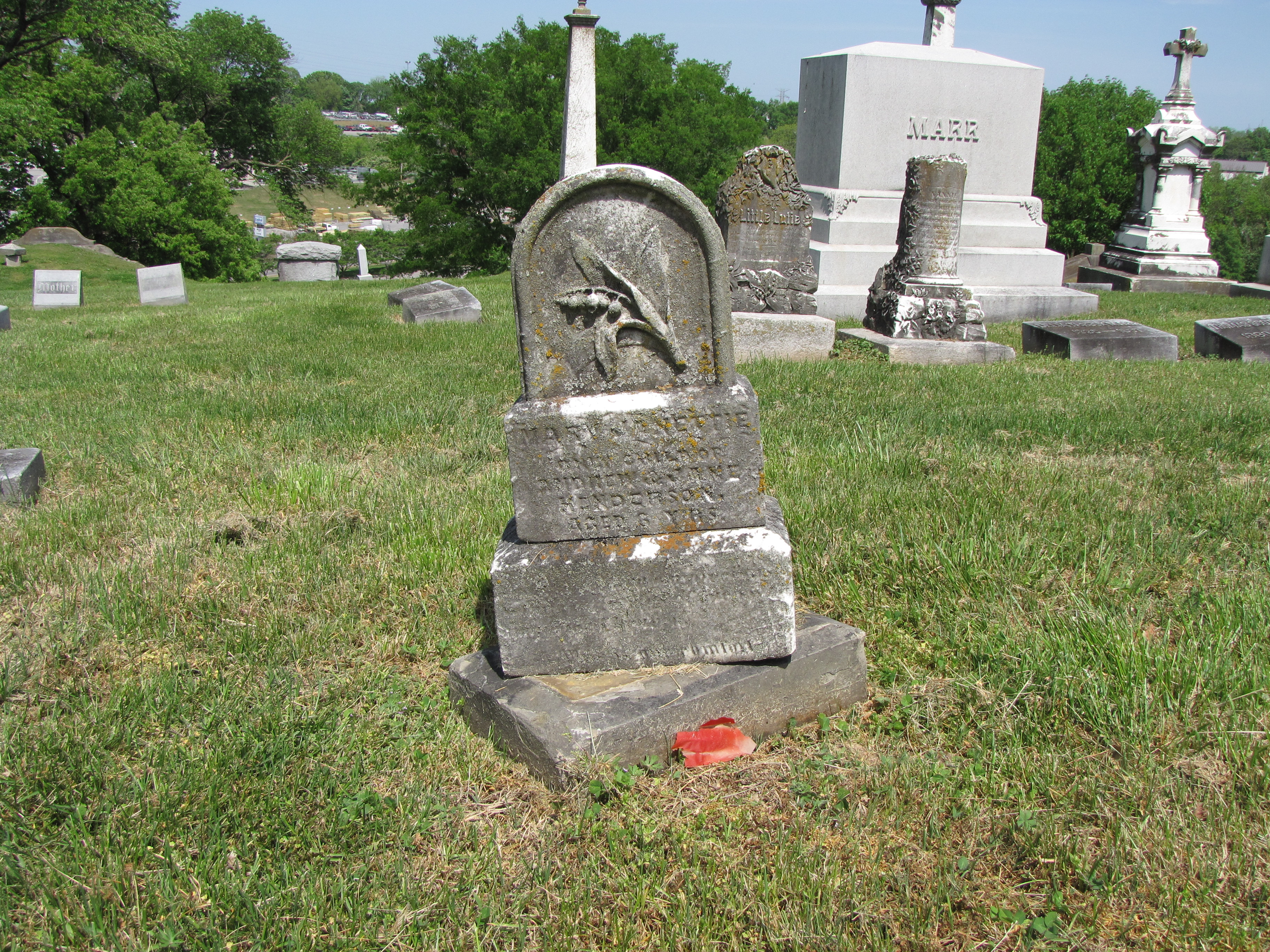
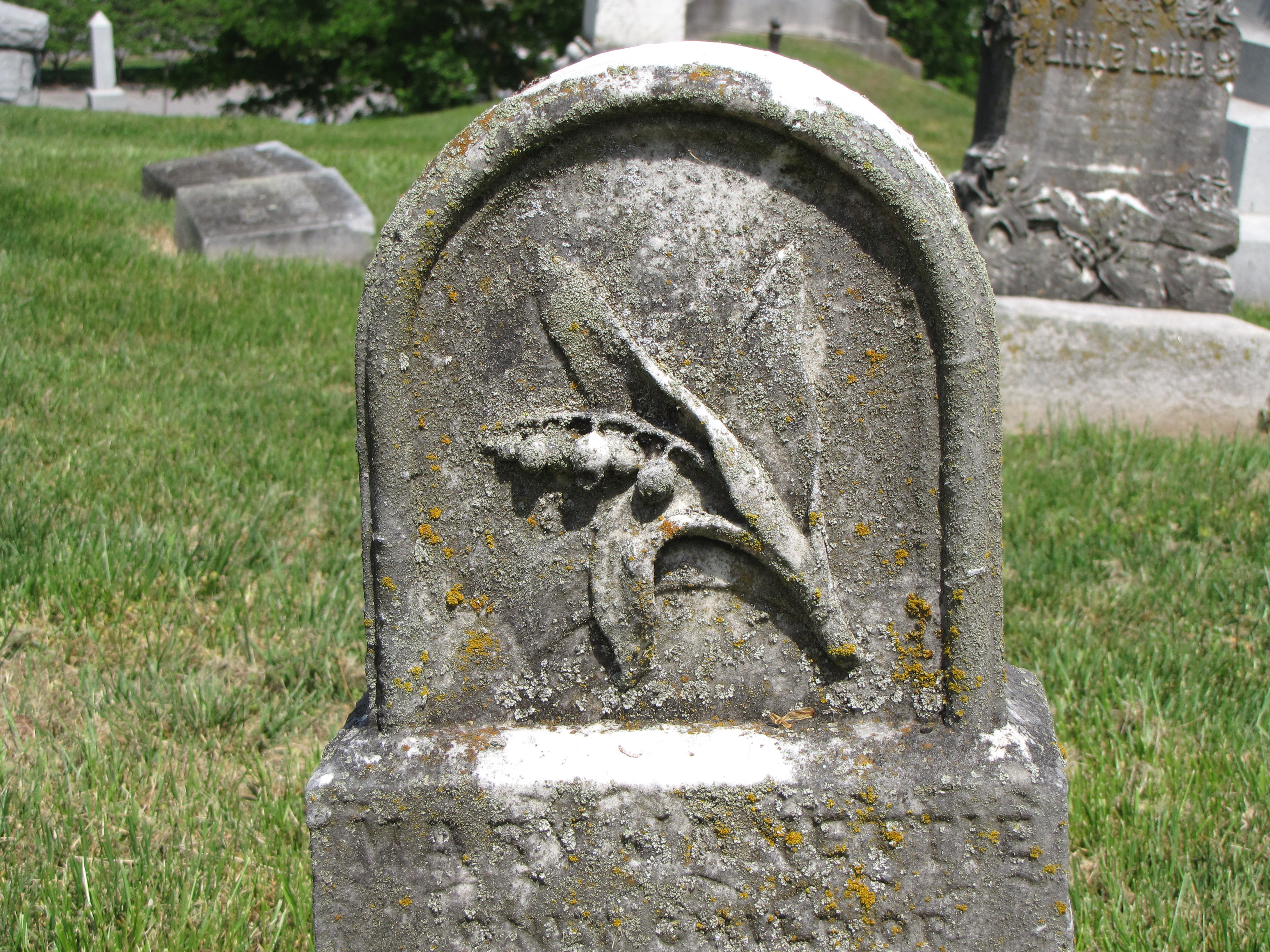
The lily of the valley is much like other lilies in funerary art and viewed as a symbol of innocence and purity.  Because of the lily of the valley’s symbolic meanings of innocence and purity it is likely the reason the motif adorns the grave of six-year old Mary J. Nettie Henderson who is buried at the Mt. Olivet Cemetery at Nashville, Tennessee.

Lichens eat away at the soft white marble gravestone, but the lily of the valley is still clearly visable.  Like so many floral symbols found in our cemeteries, they had multiple meanings to the Victorians.  The lily of the valley also symbolized happiness and humility.

MARY JANETTIE

only child of

ANDREW and JANE

HENDERSON

AGED 6 Y’RS

Posted in Symbolism | Leave a comment

Lamb


The McGavock Family Cemetery lies on the Carnton Plantation.  The cemetery is the resting place for many McGavock family members including Randall McGavock who built the family home.  After the battle of Franklin, Tennessee, the McGavocks set aside two acres of their land for the fallen Confederate soldiers from the battle.  Nearly 1500 Confederate soldiers were disinterred from their temporary graves after the battle and reinterred on the McGavock farm creating what is the largest private military cemetery in the United States.  For decades the McGavock family cared for the graves.

The McGavock Cemetery lies adjacent to the Confederate Cemetery.  John Randall McGavock’s grave is marked by a lamb resting atop his monument.

The lamb is the symbol of the Lord, the Good Shepherd. It also represents innocence, likely the reason why this motif usually adorns the tombstones of infants and young children. Most often the lamb is lying down, often asleep and sometimes with a cross behind the lamb.

JOHN RANDALL

Infant Son of

JOHN & CAROLINE

E. McCAVOCK

BORN June 5, 1854

DIED

Sept. 11, 1854

Posted in Uncategorized | Leave a comment

Clasping Hands

Clear Creek Christian Church Cemetery, Bloomington, Indiana

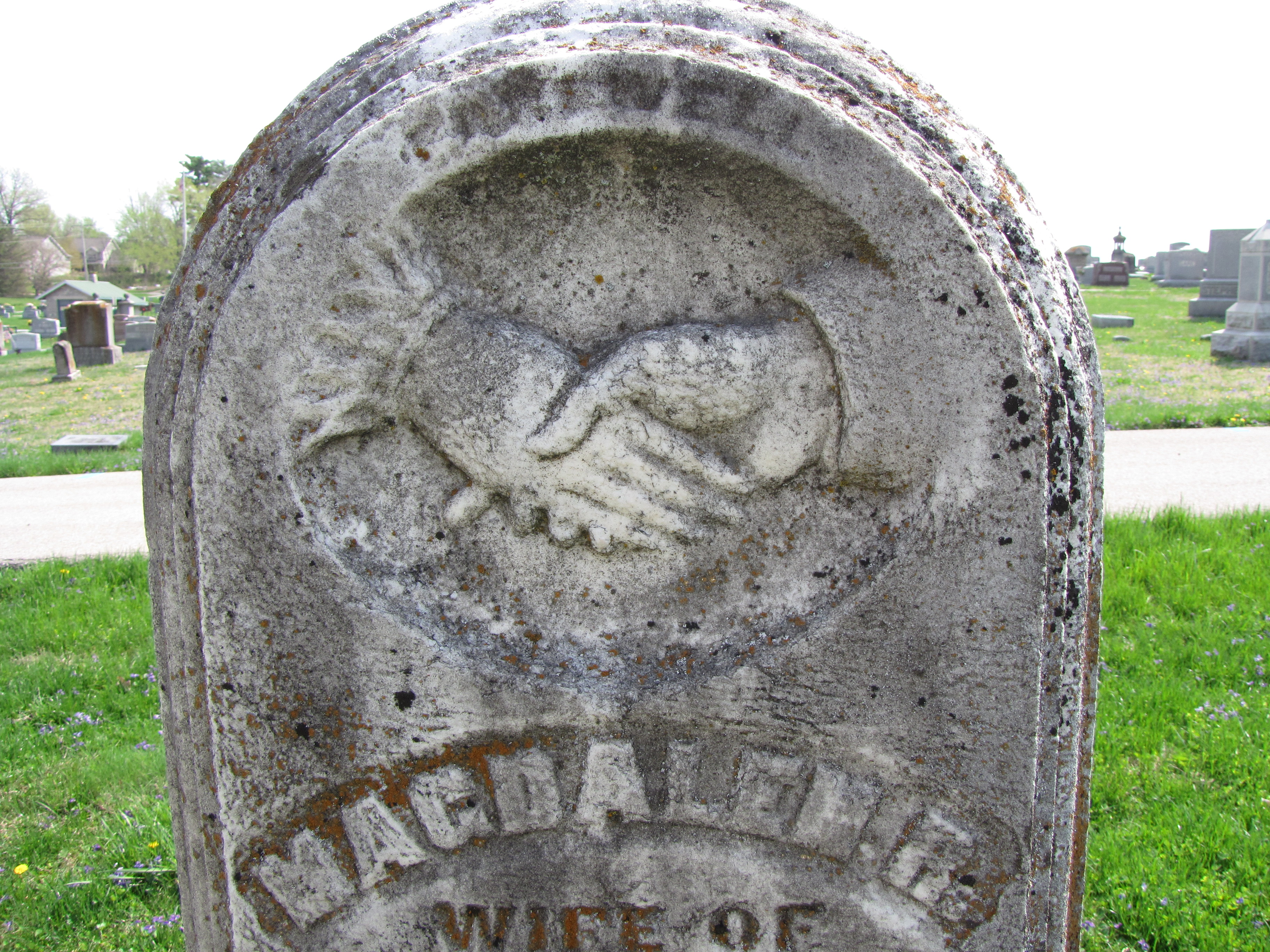
The gravestone of Magdalen Blakely at the Clear Creek Christian Church Cemetery at Bloomington, Indiana, displays one of the most common motifs found in American cemeteries—clasping hands.  The clasping hands on this gravestone represent holy matrimony, symbolizing the holy union between a man and a woman. The hand on the left side of the motif is clearly the hand of the female, her cuff is ruffle. The hand on the right side is the male’s, with a shirt’s cuff  barely visible from underneath a suit jacket.

MAGDALEN R.

WIFE OF

JOHN BLAKELY

DIED

July 23, 1871

AGED

52 Ys. 10M & 9Ds.

Posted in Symbolism | Leave a comment

Pieta, Indiana Style

Clear Creek Church Christian Cemetery, Bloomington, Indiana

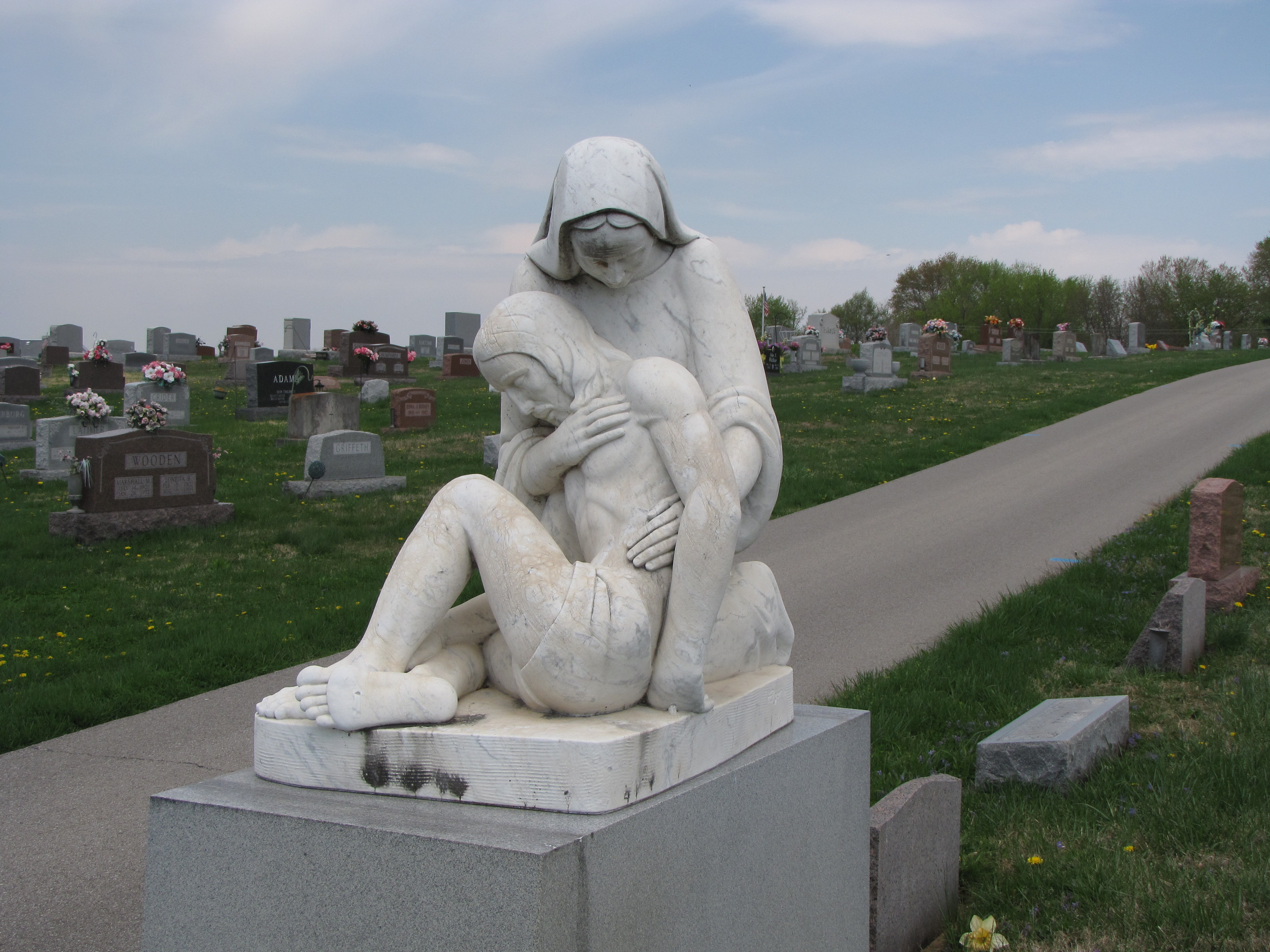
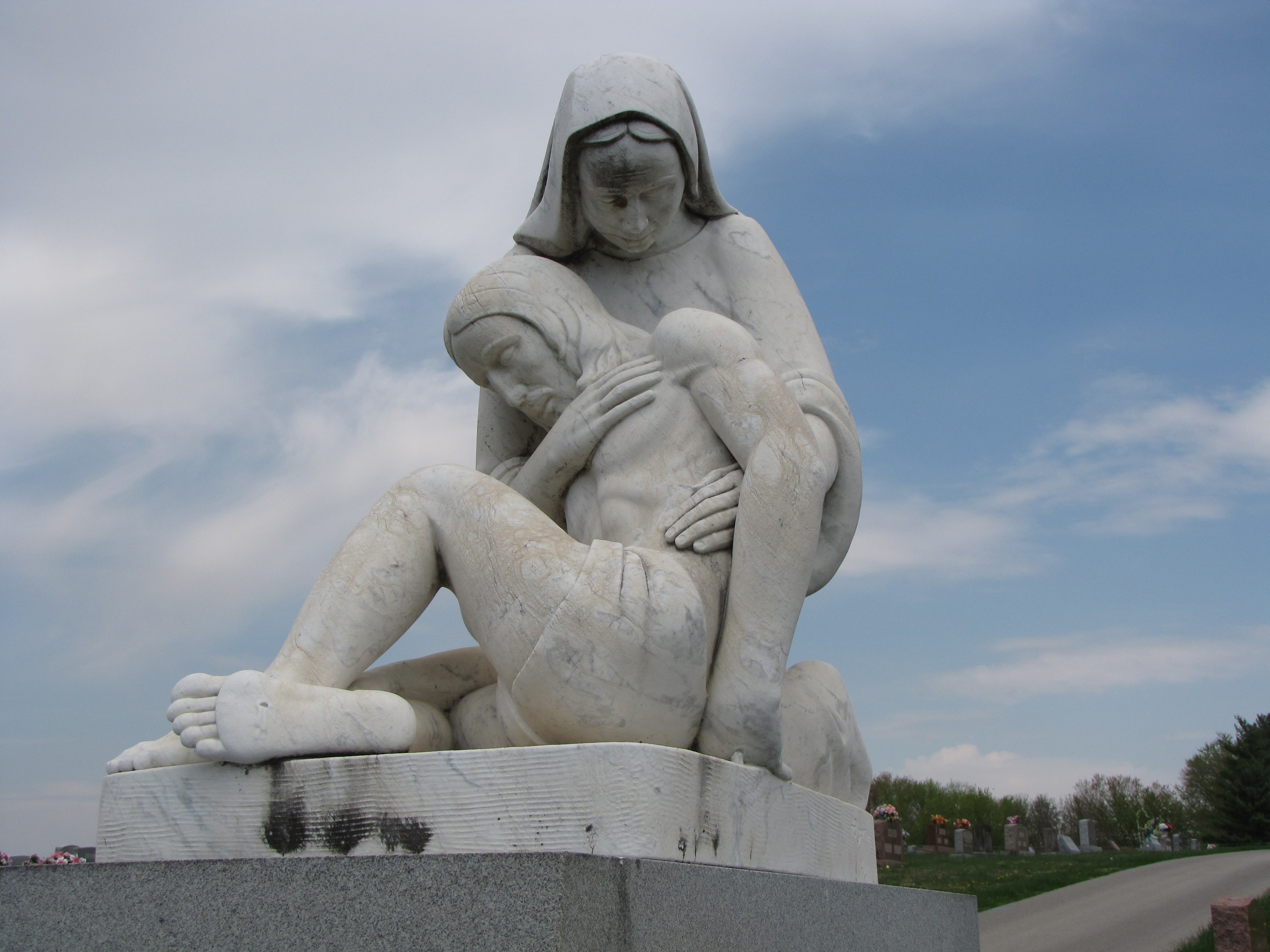
The Harold and Pauline Elgar monument in the Clear Creek Christian Church Cemetery at Bloomington, Indiana, features an example of a pieta.  Here The Virgin Mary tenderly holds the limp and dead body of Jesus Christ, clutching Him close, her head bowed in sorrow.  The white marble sculpture is reminiscent of the sculptures that were first popularized in Germany depicting the Lamentation.

In the Heilbrunn Timeline of Art History (http://www.metmuseum.org/toah/works-of-art/2001.78 (October 2006)) a Bohemian Pieta on display at the Metropolitan Museum of Art is described in details that as easily could apply to the monument at Clear Creek, “Images of the Virgin with the dead Christ reflect late medieval developments in mysticism that encouraged a direct, emotional involvement in the biblical stories… The sculptor exploits the formal and psychological tensions inherent in the composition…Christ’s broken, emaciated body, naked except for the loincloth, offers a stark contrast to the Virgin’s youthful figure, clad in abundant folds.”

The sculptor, Harold Dugan Elgar, carved this statue in 1968, as it turns out for his own grave.  Elgar was far from the origin of this type of religious artwork but was schooled successfully in the art of stonecarving.

Posted in Uncategorized | Leave a comment

The Pieta

Calvary Cemetery, Nashville, Tennessee

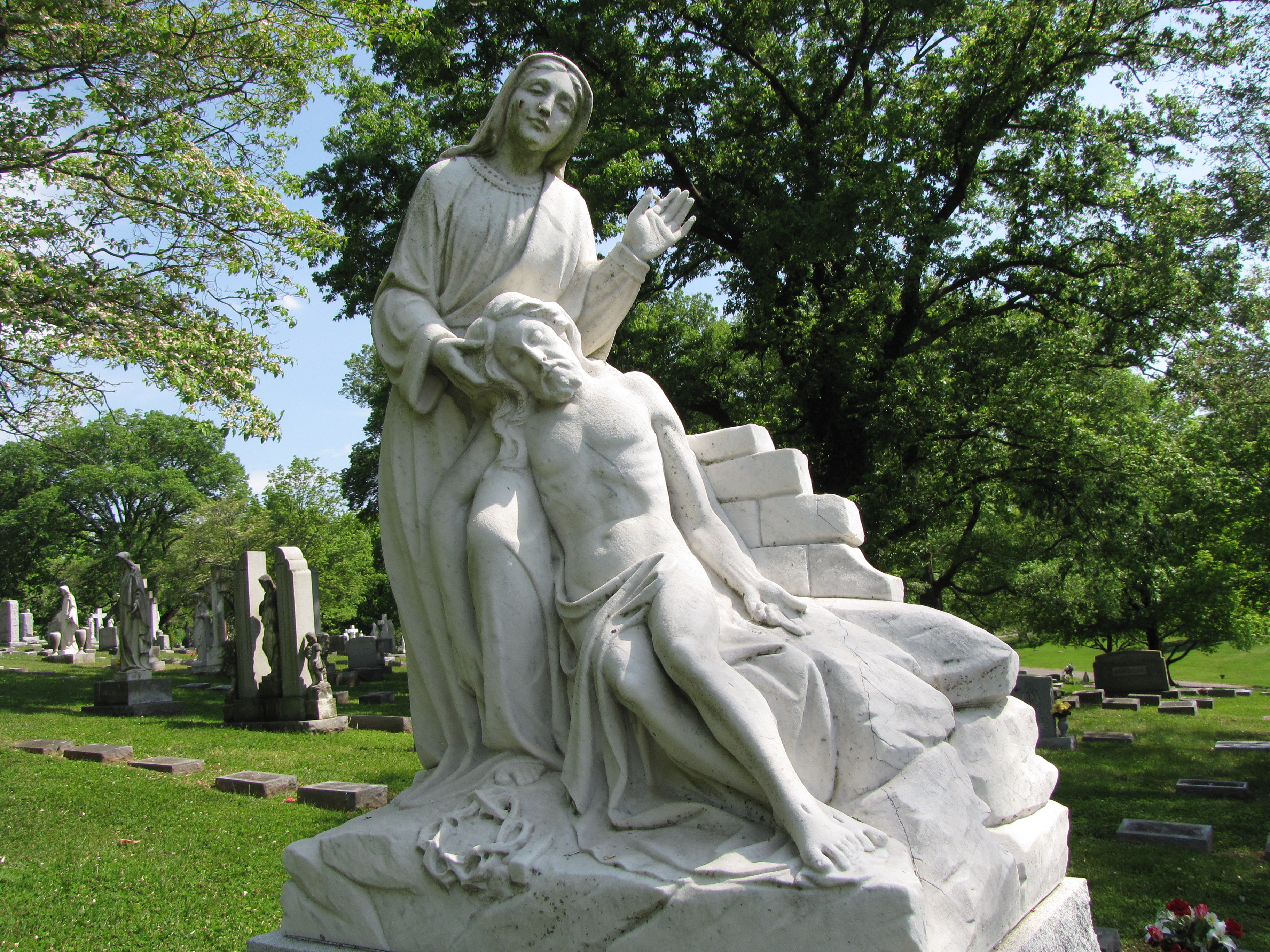
The Pete and Annie Riley monument in the Calvary Cemetery at Nashville, Tennessee, features a white marble sculpture of the Virgin Mary and the dead body of Jesus Christ.

Works of art, usually sculptures, depicting this subject first began to appear in Germany in the 1300s and are referred to as “vesperbild” in German.

Images of Mary and the dead body of Jesus began to appear in Italy in the 1400s.  The most famous of these sculptures is Michelangelo’s pieta which he sculpted for St. Peter’s Basilica in the Vatican, carved when he was only 24 years old.

Pieta is Italian for “pity.”

Posted in Uncategorized | Leave a comment