

Dr. William Sheridan Flower
January 22, 1871 – June 30, 1924
Sarah Eleanor Lockhart Flower
October 11, 1877 – September 1, 1960
The early 1920s Flower Family Mausoleum in the Allegheny Cemetery in Pittsburgh, Pennsylvania, has a vaguely Egyptian design to it without the convincing detail, such as a torus molding at the bottom of the cavetto cornice and around the corners of the mausoleum to emulate long bundled plants. Above the doorway, often on Egyptian-styled tomb would feature a winged globe with uroei snakes depicting three sets of falcon wings that symbolize the king, the sun, emanating from a globe representing the Egyptian god, Horus. Instead, the Flower Family Mausoleum features an acroterion above the doorway. The acroterion is a classical motif found in Roman and Greek architecture though it has its origins in Egyptian art and architecture. Rosettes adorn the moldings flanking the doorway. Even without the Egyptian design trimmings, the tomb gives one the sense of solemnity and a sense of eternity.
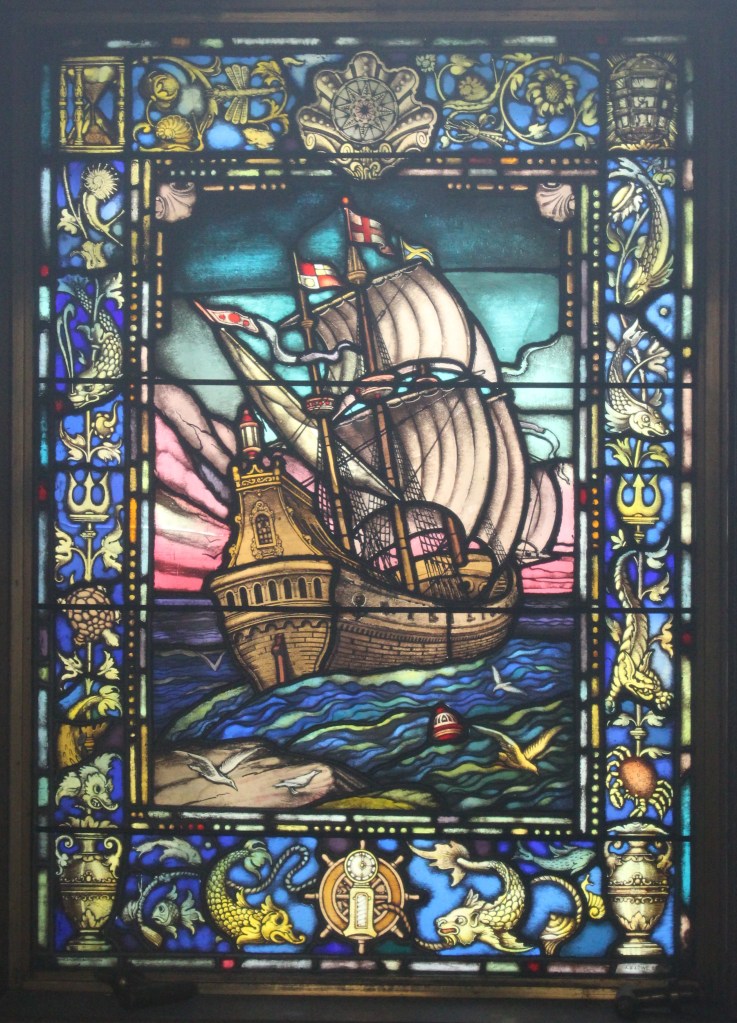
The Egyptian theme does not continue on the inside but instead is decorated with a stained-glass window with a distinct nautical theme replete with a sailing ship, sea monsters, gulls, dolphins, and tridents. The mystery: how is the nautical theme connected to Dr. Flower—a dentist?






 Gravely Speaking