Variations on a boat theme

Fairview Cemetery, Council Bluffs, Iowa

Fairview Cemetery, Council Bluffs, Iowa

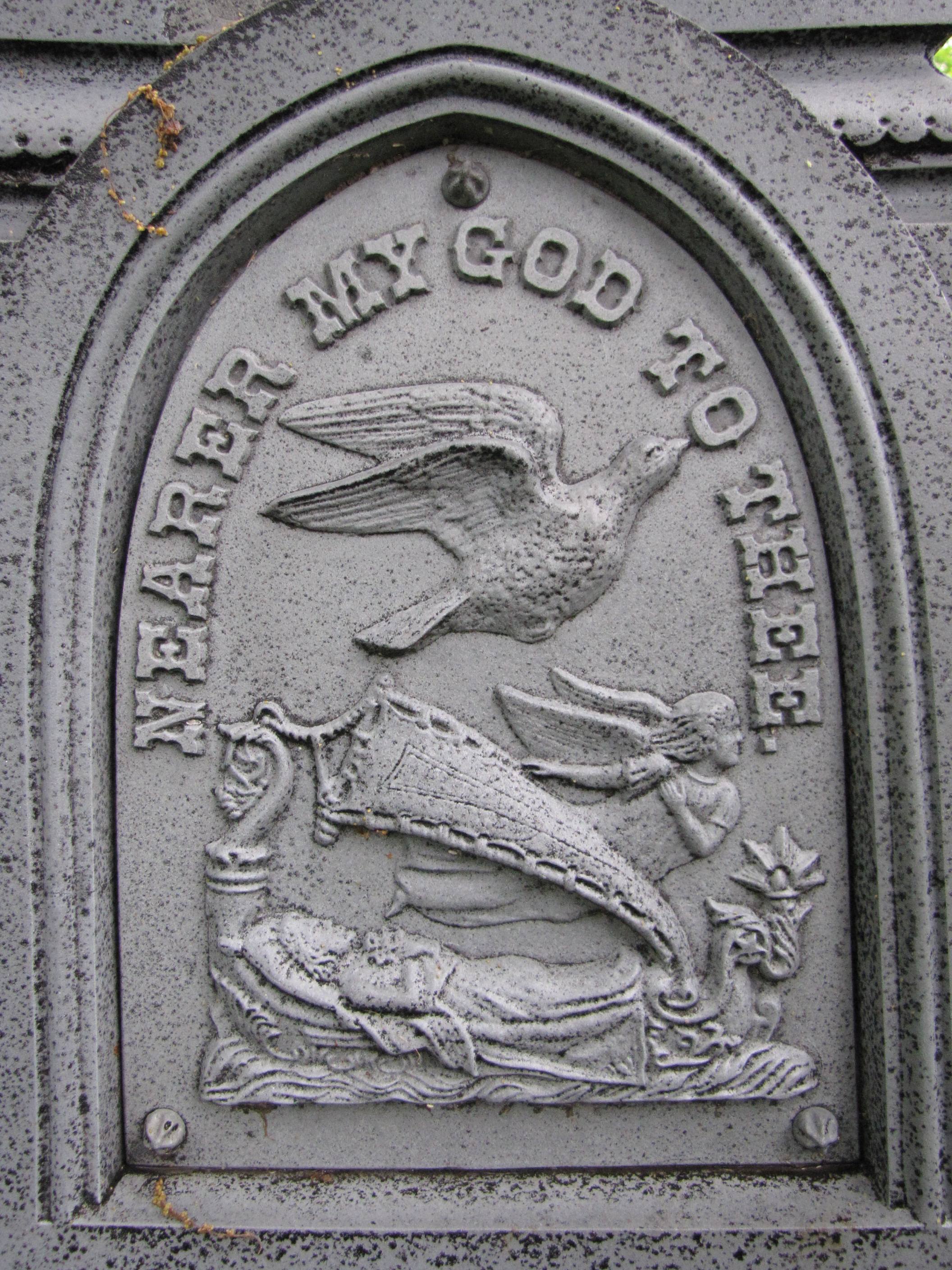
The Western White Bronze Company of Des Moines, Iowa, and the other companies that produced zinc funeral monuments made many variations.  The popular symbols came in multiple forms.  The various symbols could be bolted in place by special order much the same way that an erector set is bolted together.  Sometimes a symbol was available in a bas-relief and sometimes it could be purchased as a statue in the round.  Others such as this boat could be found by itself or with a dove ascending over the boat.

Since ancient times, the imagery of the boat to ferry a soul from one realm to the other has been a part of the symbolism of death.  In Greek mythology, the River Styx wrapped its way around Hades (the Underworld) nine times.  To cross from this life to the next, the dead had to pay with a coin to be ferried from the realm of the living to the realm of the dead.  The toll was placed in the mouth of the deceased to pay Charon, the ferryman.  It was said that if the dead person did not have the coin, he was destined to wander the shores of the River Styx for a century.  The “boat” was one of the images found on Victorian graves to represent the crossing from one world to the next.

In the case of the marker above, it is not Charon ferrying the soul to the other side but a winged angel, whose way is lit by a torch radiating light on the front of the boat.  In the marker below a dove is added.  Many symbols found on gravestones have multiple meanings. The dove is one of those.

Several references in the Bible refer to the dove as a symbol of the Holy Spirit. Matthew 3:16 reads, “And Jesus, when he was baptized, went up straightway out of the water: and, lo, the heavens were opened unto him, and he saw the Spirit of God descending like a dove, and lighting upon him.” In Mark 1:10 the Bible says, “And Straightway coming up out of the water, he saw the heavens opened, and the Spirit like a dove descending upon him.” Again in John 1:32, the Bible reads, “And John bare record, saying, I saw the Spirit descending from heaven like a dove, and it abode upon him.”

Along with the dove symbolizing the Holy Spirit, the dove is also closely associated with peace, often depicted with a sprig of an olive in its beak. This, too, originated in the Bible. After the waters receded in the story of Noah, the dove appears. Genesis 8:11, “And the dove came in to him in the evening; and, lo, in her mouth was an olive leaf pluckt off; so Noah knew that the waters were abated from off the earth.”   It was a sign of God’s forgiveness.
Woodland Cemetery, Des Moines, Iowa

Woodland Cemetery, Des Moines, Iowa

Posted in Symbolism, Zinc Markers | Leave a comment

Bloomers

Fairview Cemetery, Council Bluffs, Iowa

Fairview Cemetery, Council Bluffs, Iowa

The inscription on the original tombstone:

AMELIA JENKS

WIFE OF

D. C. BLOOMER

DIED

DEC. 30, 1894

AGED

76Ys. 7Ms. 3Ds.

A pioneer of woman’s

Emancipation


DEXTER C.

BLOOMER

DIED

FEB. 24, 1900

AGED

83 Ys. 7Ms. 20Ds.


Inscription on the granite block placed later in front of the original tombstone:

IN 1855 THE BLOOMERS CAME TO COUNCIL BLUFFS.  AMELIA WAS ALREADY INTERNATIONALLY PROMINENT FOR HER ADVOCATION OF TEMPERANCE AND WOMEN’S RIGHTS.  IN THE LILY, THE MAGAZINE SHE EDITED AND PUBLISHED, SHE PROMOTED DRESS, REFORM, PUBLICIZING THE BLOOMER GARMENT.  LOCALLY DEXTER HELPED ESTABLISH A BANK AND THE COMMUNITY SCHOOL SYSTEM AND SERVED ON CITY AND STATE SCHOOL BOARDS.  HE WROTE AMELIA’S BIOGRAPHY IN 1895.


Amelia Bloomer’s name has become synonymous with the loose fitting clothing that she advocated women to wear even though it was not her creation.  Elizabeth Smith Miller designed the long baggy pantalettes that narrowed at the ankles to give women more freedom of movement than the floor-length skirts which were popular during the Victorian Era.  Because Amelia Bloomer was a strong advocate of “Bloomers” in her magazine, The Lily, her name became attached to the style. 

Bloomer[1]

But her influence was more far reaching than the reform clothing she advocated.  Her magazine became the voice of the suffragette movement and gave a place for leaders such as Susan B. Anthony and Elizabeth Cady Stanton to share their reform ideas for temperance and women’s suffrage.

The gray-veined white marble tombstone at the Fairview Cemetery at Council Bluffs, Iowa, is badly weathered, the finial that topped the monument is missing and the inscription is faint but legible.  An additional granite block with an inscription has been placed in front of the original tombstone but is not set. 

Posted in Famous graves | 3 Comments

Asleep

Woodland Cemetery, Des Moines, Iowa

Woodland Cemetery, Des Moines, Iowa

Only sleeping


Dear Mother in Earth’s thorny paths,

How long thy feet have trod.

To find at last this peaceful rest,

Safe in the arms of God.


Sleep on sweet babe, and take thy rest,

God calls away when He thinks best.


Asleep in Jesus! Peaceful rest,

Whose waking is supremely blest.


Happy infant, early blest,

Rest, in peaceful slumber, rest.


There is rest in Heaven.


May he rest in peace.


Weep not, he is at rest.


Sleep on brother, thy work is done,

Jesus has come and borne thee home.


Asleep in Jesus!  Blessed sleep,

From which none ever wake to weep!


Alas! She has left us, her spirit has fled,

Her body now slumbers along with the dead.


To a glad dream of slumber, which wakens in bliss,

She hath passed to the world of the holy from this.


Death is but to sleep in Jesus,

When this life is o-er:

And to sorrows, sins, diseases,

Never to awaken more.


She sleeps in the valley so sweet,

But her spirit has taken its flight:

Lo! Her form is but dust ‘neath our feet,

While she is an angel of light.


Asleep in Jesus precious thought!

With peace and life eternal fraught:

He said—whose power upholds the sky—

Believing ye shall never die.


How sleep the brave, who sink to rest,

By all their country’s wishes blest.


Rest, soldier, rest, thy warfare o’er,

Sleep the sleep that knows no breaking,

Dream of battlefields no more,

Days of danger, nights of waking.


He is not dead but sleepth.

He giveth his beloved sleep


Weep not, she is not dead, but sleepth.


Them also who sleep in Jesus will God bring with him.


There are many epitaphs to be found in cemeteries that equate death to sleep and to rest.  Those words are meant to comfort the living.

Sometimes the gravestones themselves convey that metaphor.

IMG_0659

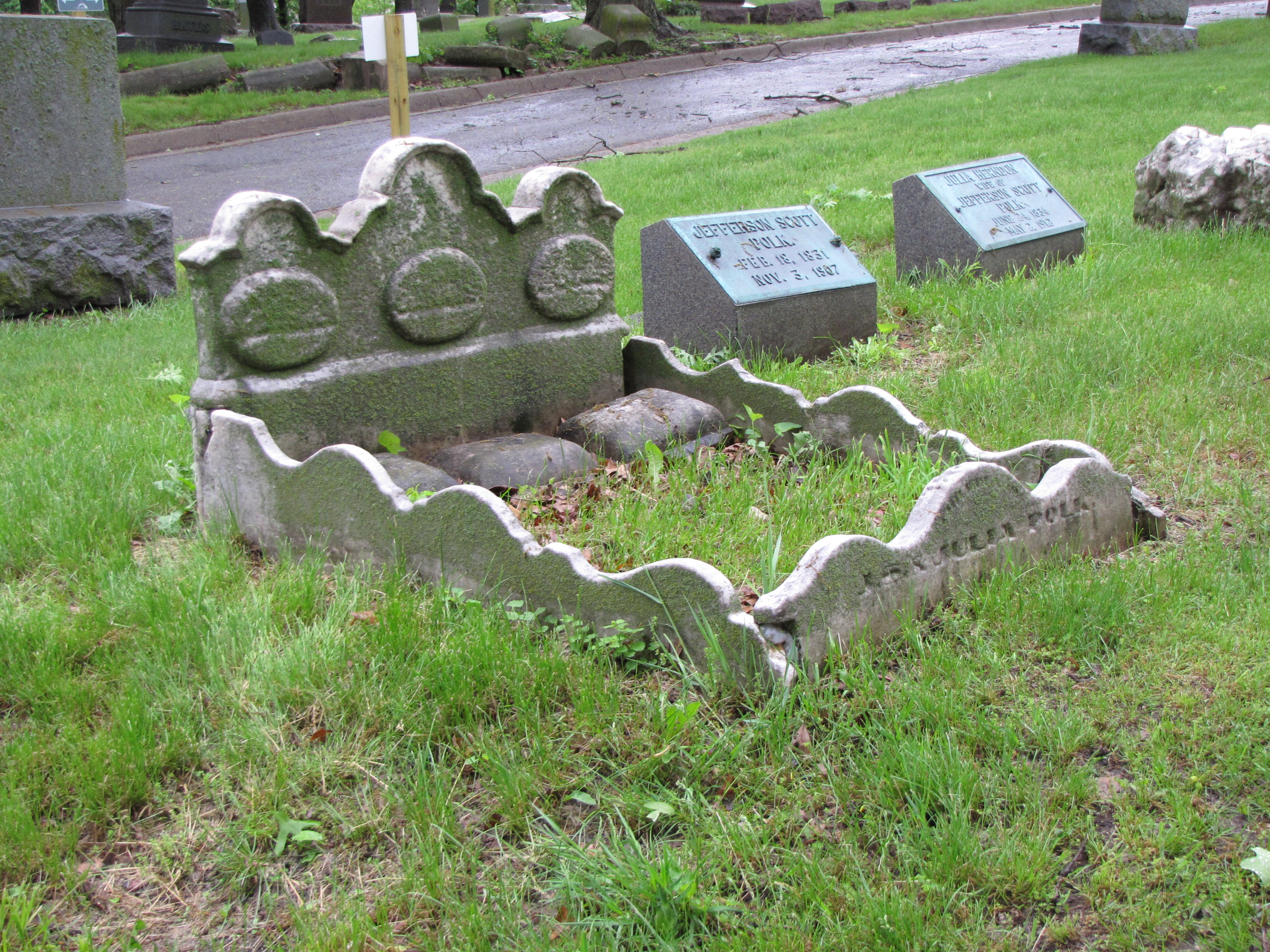
In the Woodland Cemetery at Des Moines, Iowa, the gravestone for three children of Jefferson Scott and Sarah Polk is made to look like a bedstead with three small pillows at the headboard, one pillow for each child.  The gravestone is badly weathered but the names of each of child was carved in an oval on the headboard.  The footboard is carved with their parents’ names, “Children of J. S. & Julia Polk“.

Jefferson Scott Polk was a highly successful Des Moines lawyer and business man.  He and his wife, Sarah Herndon Polk had six children, three of whom died in childhood—Lutie Lee (August 8, 1861-March 10, 1871; Daniel S. (March 8, 1870-March 12, 1871); Mary Blanton “Mollie” (December 22, 1854-May 22, 1863)—are buried next to their parents in the bedstead gravestone.

Note: I first saw the gravestone above on the Website: www.graveaddiction.com.  Beth Santore, the Webmaster, has photographed hundreds of cemeteries in Ohio, as well as, making photo forays into neighboring states.  I highly recommend her Website, especially for those tramping around Ohio graveyards!


Posted in Symbolism | Leave a comment

Budded on Earth

Greenbush Cemetery, Lafayette, Indiana

Greenbush Cemetery, Lafayette, Indiana

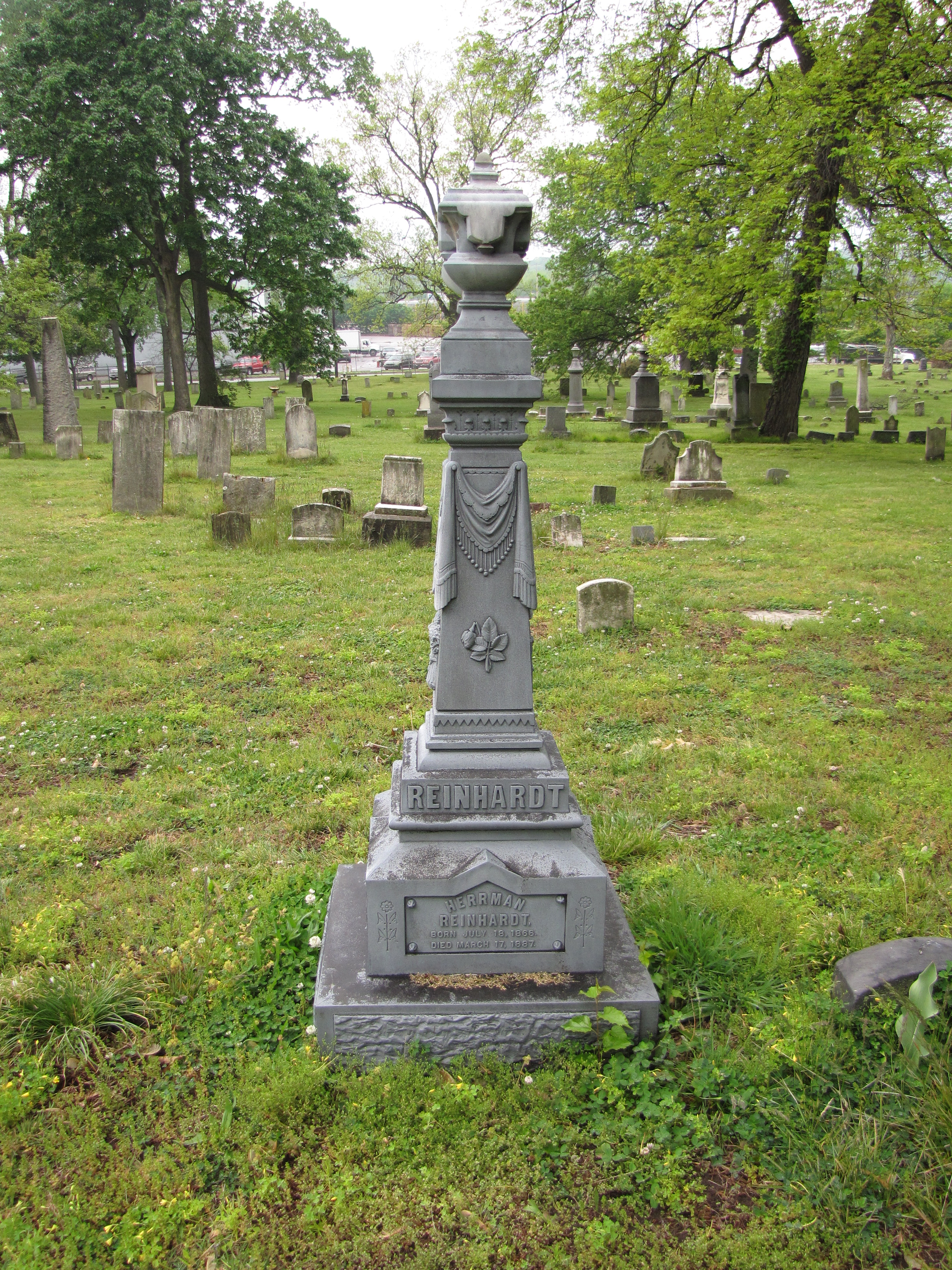
HERRMAN REINHARDT

BORN JULY 18, 1866.

DIED MARCH 17, 1887.

WHERE IMMORTAL SPIRITS REIGN

THERE WE SHALL MEET

AGAIN.

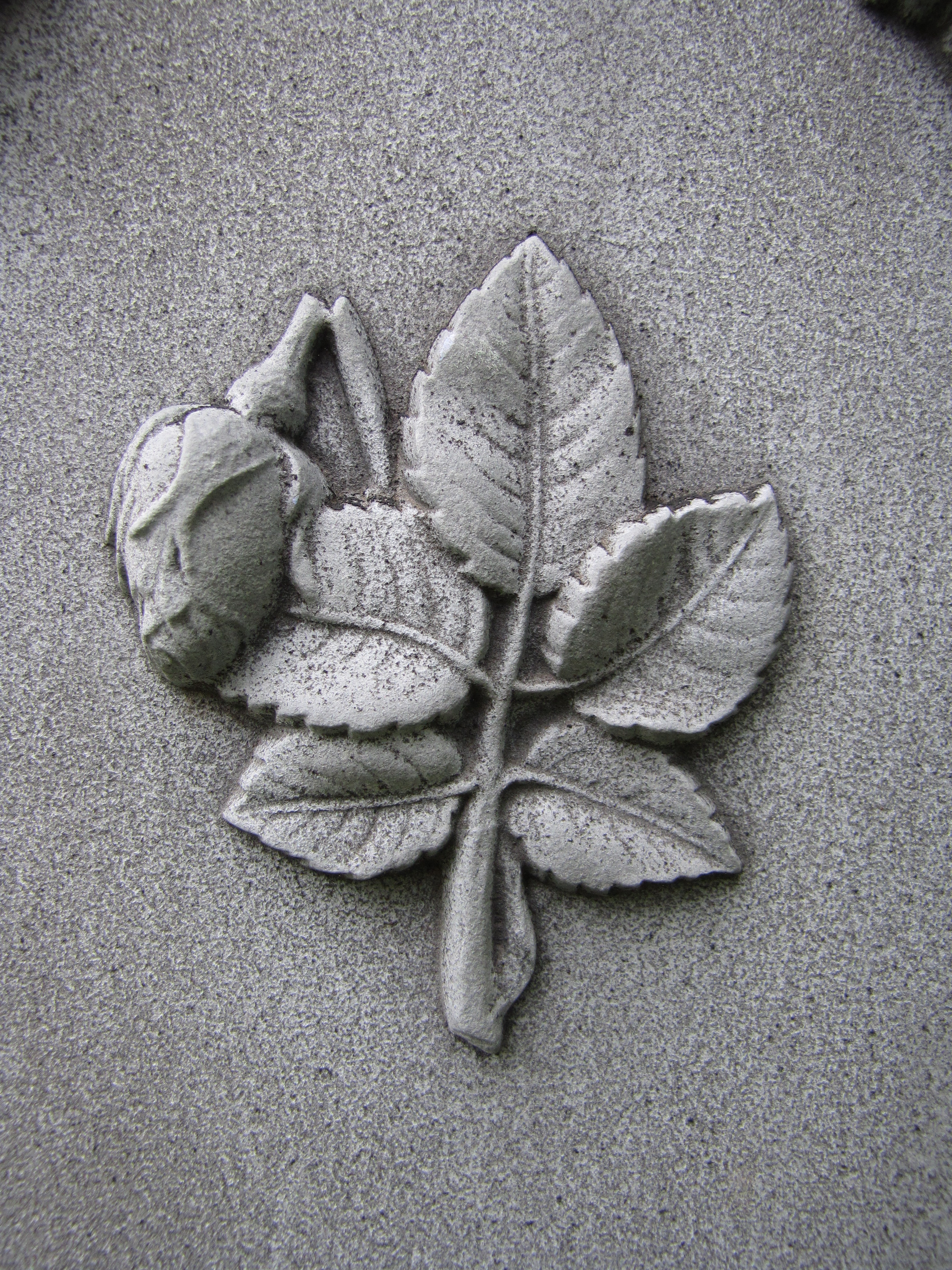
Life is fragile, especially young life.  Many funerary motifs represent children–shoes, seedpods, cribs, cherubs–but one of the most common is the hanging bud.  Often this symbol is coupled with the epitaph, “Budded on Earth, To bloom in Heaven”.

The broken rose bud displayed on this zinc monument represents the flower that did not bloom into full blossom, the life that was cut short before it had a chance to grow to adulthood.

IMG_2874

Posted in Children's Graves, Symbolism, Zinc Markers | Leave a comment

In God We Trust

St. Paul's Lutheran Church Cemetery, rural Indiana.

St. Paul’s Lutheran Church Cemetery, rural Indiana.

ROBERT

SON OF

 & E. BURRES

BORN

FEB. 19, 1836

DIED

JUNE 25, 1865.

HE WAS IN CO. D. 80 REG. IND. VOL.

THEN CONQUER WE MUST

FOR OUR CAUSE IT IS JUST

AND THIS BE OUR MOTTO

IN GOD WE TRUST.

This broken rounded-top white marble gravestone commemorating the grave of a Civil War soldier displays a soldier, though, weathered and difficult to discern, and a patriotic and reverential epitaph recognizing the solemn sacrifice for the ultimate cause of freedom.


Posted in Epitaphs | Leave a comment

Fraternal Societies

City Cemetery, Seymour, Indiana

City Cemetery, Seymour, Indiana

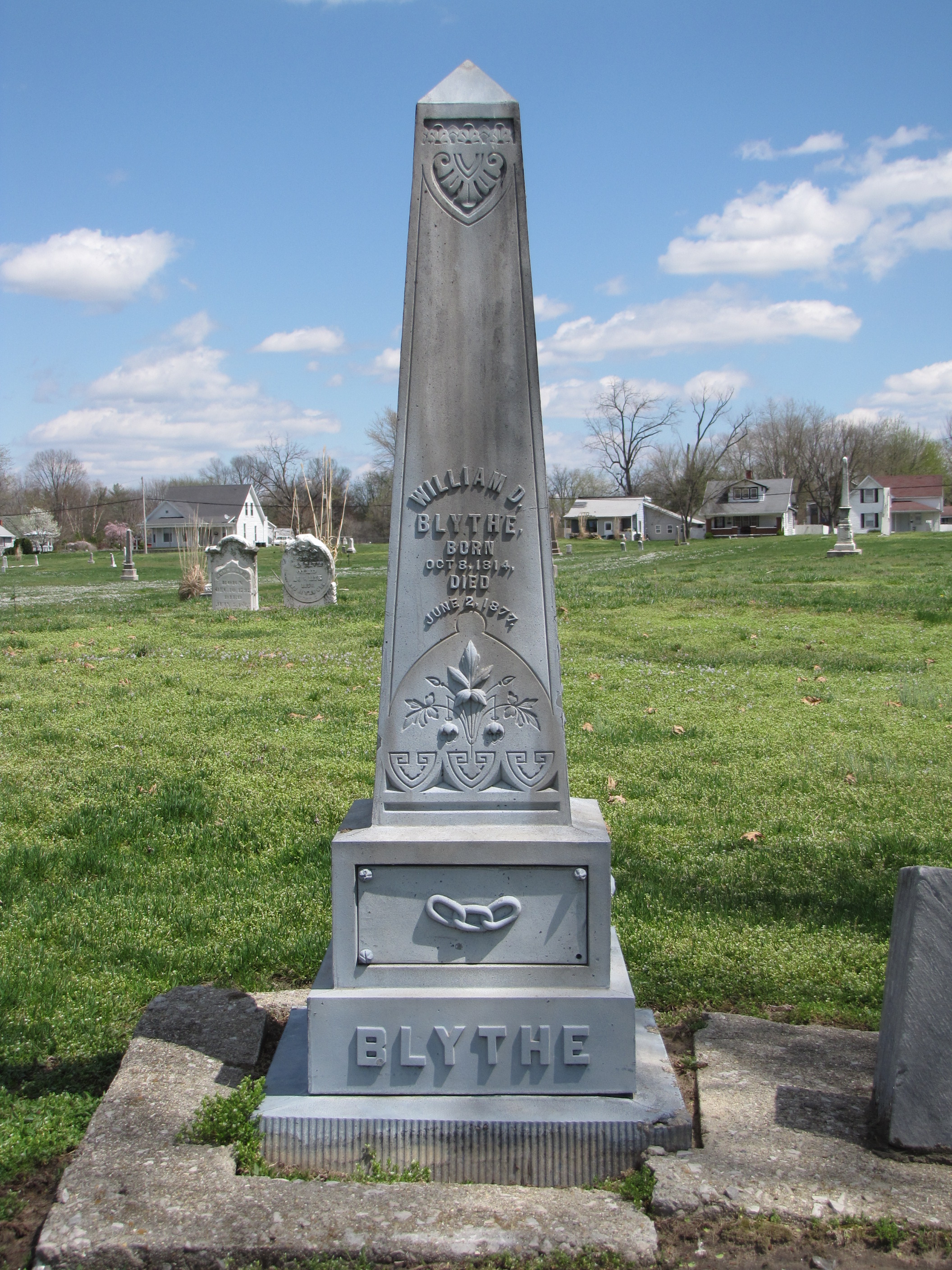
WILLIAM D.

BLYTHE

BORN

OCT. 8, 1814

DIED

JUNE 2, 1877

The Monumental Bronze Company of Bridgeport, Connecticut, offered customers many symbols that could be bolted into place on the zinc markers they produced, including symbols that represented fraternal societies that were very popular.  The marker above at the City Cemetery at Seymour, Indiana, displays a symbol of three links of chain, one of the most recognized symbols of the Odd Fellows.

Odd Fellows is an fraternal organization that formed in England in the 1700s as a service organization.  The American association was founded in Baltimore, Maryland, on April 26, 1819.

Posted in Symbolism | 1 Comment

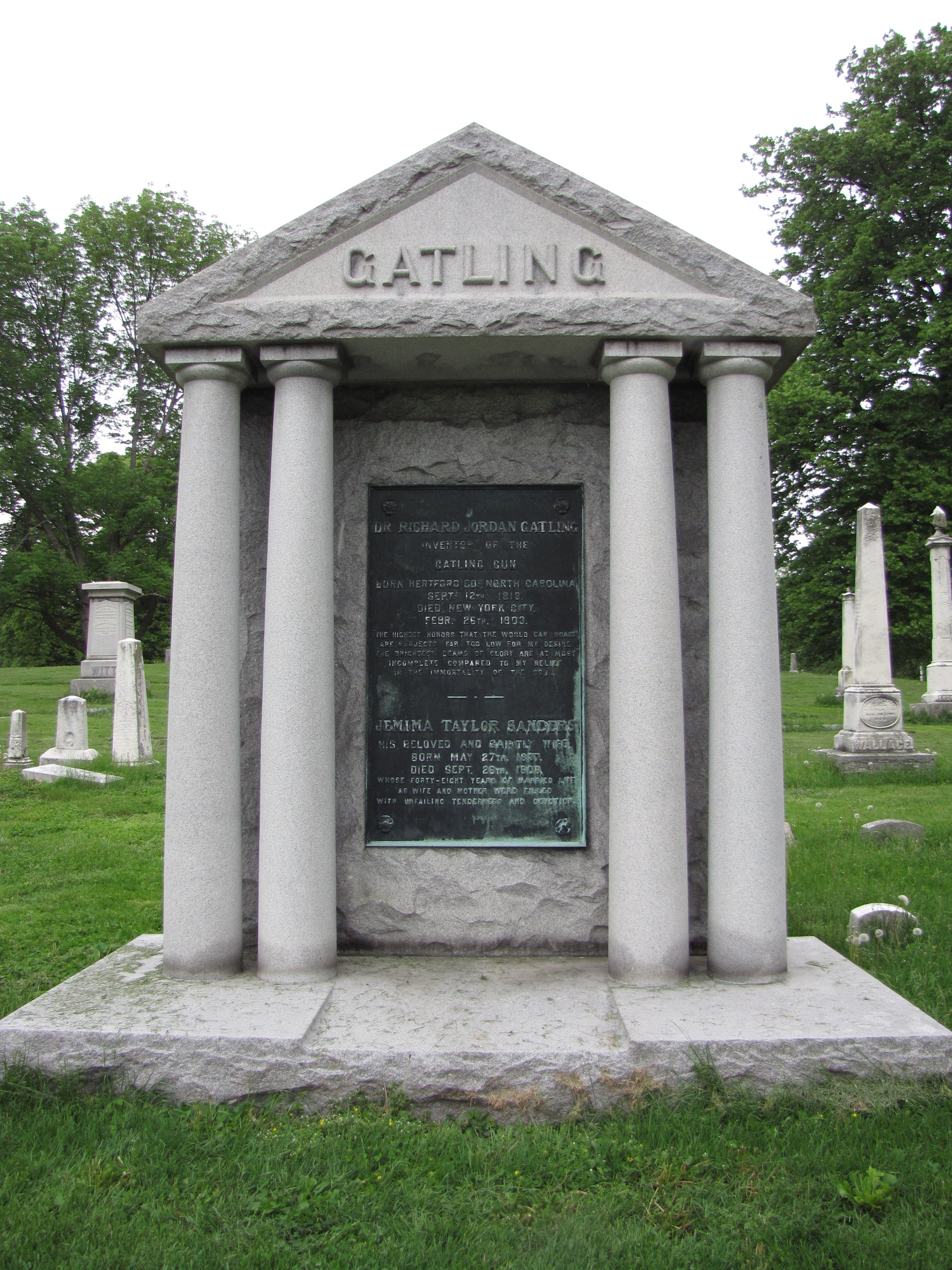
Dr. Richard Jordan Gatling

Gatling Monument, Crown Hill Cemetery, Indianapolis, Indiana

Gatling Monument, Crown Hill Cemetery, Indianapolis, Indiana

DR. RICHARD JORDAN GATLING

INVENTOR OF THE

GATLING GUN

BORN HERTFORD CO., NORTH CAROLINA

SEPT. 12TH, 1818.

DIED NEW YORK CITY,

FEBR. 26TH, 1903.

THE HIGHEST HONORS THAT THE WORLD CAN BOAST

ARE SUBJECTS FAR TOO LOW FOR MY DESIRE

THE BRIGHTEST BEAMS OF GLORY ARE AT MOST

INCOMPLETE COMPARED TO MY BELIEF

IN THE IMMORTALITY OF THE SOUL.

JEMIMA TAYLOR SANDERS

HIS BELOVED AND SAINTLY WIFE

BORN MAY 27TH, 1837.

WHOSE FORTY-EIGHT YEARS OF MARRIED LIFE

AS WIFE AND MORTHER WERE FILLED

WITH UNFAILING TENDERNESS AND DEVOTION.

Serial inventor, Richard Gatling, invented the wheat drill, a hemp break machine, a steam plow, a motor driven plow, a screw propeller, a rice-sowing machine, and a seed planter.

The seed planter led Gatling to invent his signature creation, the one that bears his name—the Gatling gun.  The forerunner to the machine gun, the Gatling gun, was notable for the multi-barrel design which allowed quick synchronized firing and reloading that gave the gun time to cool down during the cyclic firing.  The Gatling gun was patented November 4, 1862.  Gatling naively believed his creation would make warfare so horrific that wars would be too cruel to fight.

Gatling had been a clerk, a school teacher and a merchant, but when he fell ill with small pox it piqued his interest in medicine.  He enrolled in the Ohio Medical College and graduated with a M.D. in 1850, though he never practiced medicine.  Gatling moved to Indianapolis where he was a successful entrepreneur.  He married Jemima Taylor Sanders, 19 years his junior and the daughter of a prominent Indianapolis doctor.  Jemima’s sister, Zerelda married the Governor of Indiana, David Wallace.

Gatling and his wife, Jemima, are buried in the Crown Hill Cemetery at Indianapolis.  The monument looks like a mausoleum, but is in fact a granite slab of a classical design featuring a pediment supported by four Doric columns.

IMG_0368

Posted in Famous graves | 2 Comments

A Country Church

IMG_0283

ANNA

WIFE OF

JAMES CONOLY

BORN

March 19, 1848.

DIED

JAN. 21, 1881.


FRANK E.

BORN

APR. 3, 1880

DIED

JAN. 26, 1881.

ROSA C.

BORN

APR. 9, 1878

DIED

JAN. 17, 1884.


GEORGE

BORN

JUNE 9, 1870

DIED

SEPT. 4, 1870.

CHILDREN OF J. & A. CONOLY

The limestone monument in the St. Ambrose Catholic Church Cemetery at Seymour, Indiana, for the wife and children of James Conoly, is carved to look like a country church.  On the front of the church above the doorway, is carved, “MY WIFE”.  Three of the gothic windows on one side of the church have the inscription for three Conoly children who died.  On the back of the building is a scroll that lists the name, birth, and death dates for Anna, along with an epitaph that is now obscured and unreadable because it is so weathered.

Posted in Uncategorized | 2 Comments

Infant child

Crown Hill Cemetery, Indianapolis, Indiana

Crown Hill Cemetery, Indianapolis, Indiana

INFANT SON

 Nov. 27, 1900

BURIED WASHINGTON CO., IND

At the base of the angel monument erected for the Wilkins Family is a plain white marble marker in memory of the infant son of Thomas and Alice Wilkins who was born and died on the same day.  The marker does not have an epitaph, but Mary Kim Schreck, my friend and fellow cemetery enthusiast, shared a poem with me that seems appropriate, written by Elizabeth Gaskell, July 4th, 1836.  The poem speaks to the loss of a grieving Mother at not only losing her child and what might have been but the untold thoughts she had of the child even during joyful times.  The visage of the little girl was never far from her Mother’s mind.  The Wilkins family had moved from Washington County, Indiana, where their infant son was buried, but next to their graves for eternity was a reminder of the infant son they lost 50 years before they died.

On Visiting the Grave of My Stillborn Little Girl
I made a vow within my soul, O Child,
When thou wert laid beside my weary heart,
With marks of death on every tender part
That, if in time a living infant smiled,
Winning my ear with gentle sounds of love
In sunshine of such joy, I still would save
A green rest for thy memory, O Dove!
And oft times visit thy small, nameless grave.
Thee have I not forgot, my firstborn, though
Whose eyes ne’er opened to my wistful gaze,
Whose sufferings stamped with pain thy little brow;
I think of thee in these far happier days,
And thou, my child, from thy bright heaven see
How well I keep my faithful vow to thee.

IMG_0353

Nesting in the tree

As my son and I took the picture of the angel, Zain noticed that an expectant Mother Robin had nested between the wings of the angel.  Barley peaking out, he noticed the little Mother and asked to snap her picture.  The photograph captures the life cycle in its essense and ultimate irony…rebirth in the spring on the wings of death and the sadness of winter.

IMG_0354

Posted in Angels, Children's Graves | Leave a comment

A guardian angel

IMG_6728

JOHNSON

ROBERT CLARENCE

1927-2006

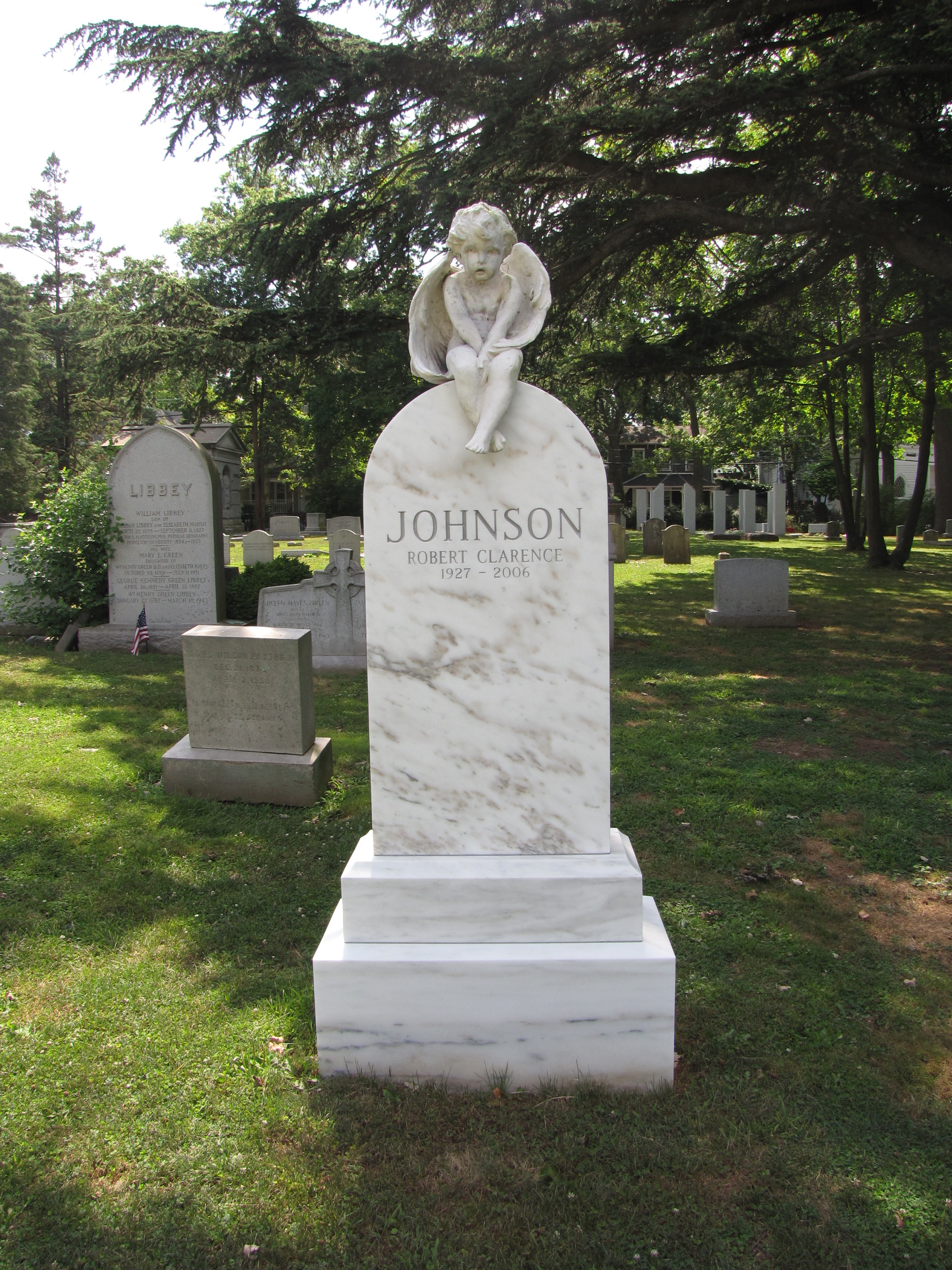
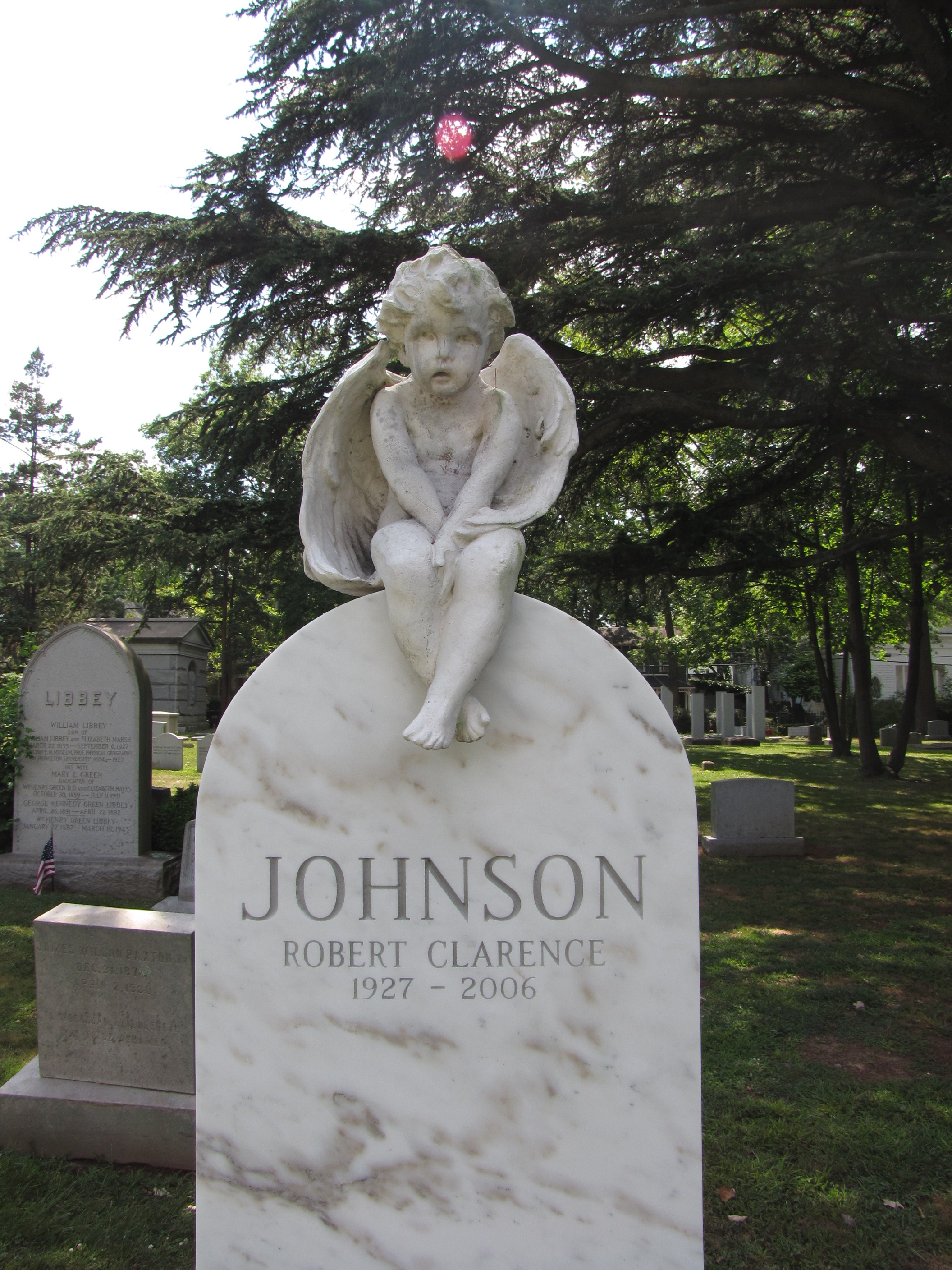
A bewildered-looking angel is gingerly perched on top of the rounded top white marble tablet marking the grave of Robert Clarence Johnson in the Woodward Hill Cemetery at Lancaster, Pennsylvania.

Cherubim are one of nine orders or choirs of angels which are organized into three spheres, with three choirs in each sphere. According to Christian tradition, the first sphere, which is made up of the Seraphim, Cherubim, and the Thrones, are considered the closet to Heaven. In Ezekiel 10:14, the Cherubim are described as having four likenesses or four faces, “And every one had four faces; the first face was the face of a cherub, and the second face was the face of a man, and the third the face of a lion, and the fourth the face of an eagle.” Cherubim are most always depicted as chubby babies.

The Cherubim were to be guardian angels. In two places in the Bible, their role is described, first as guardians of the gates at the Garden of Eden and then of the Ark of the Covenant.

IMG_6729

Posted in Uncategorized | Leave a comment