The Community of True Inspiration

Main Amana Cemetery, Main Amana, Iowa

Main Amana Cemetery, Main Amana, Iowa

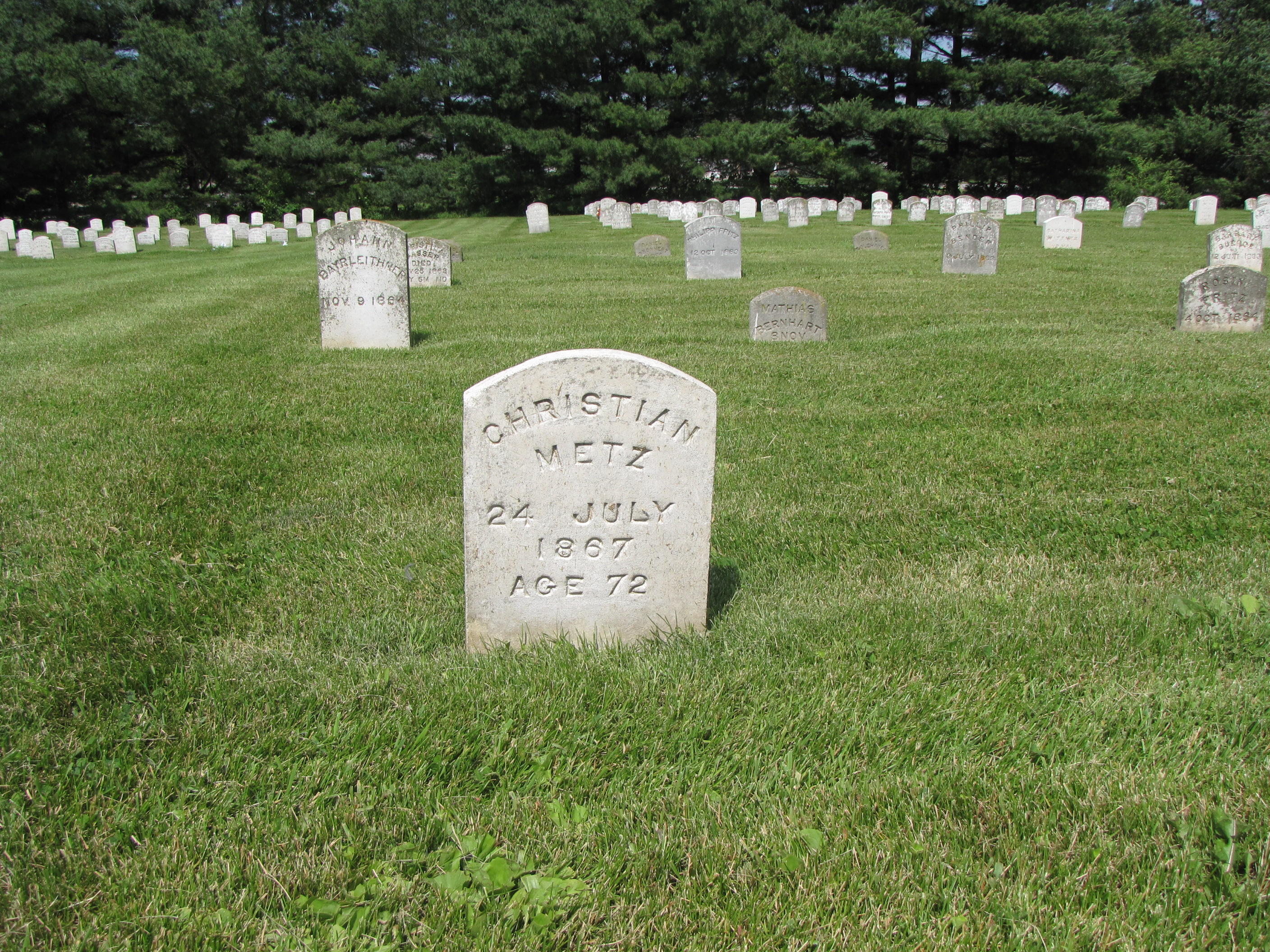
The straight upright rows of same-shaped gravestones look like they are located in a military graveyard—but they are not. These gravestones are in a tiny graveyard at “Main” Amana, Iowa, one of the seven villages founded by a communal German religious group of Pietists known as the Community of True Inspiration. Each person is buried in order of their death–NOT next to their families in family plots.  Each person receives a concrete segmented-top gravestone of the same shape and construction.

In the early 1700s, two religious leaders, Eberhard Gruber and Johann Rock, founded the religion. They followed the teachings of Philipp Spener, who believed that God spoke directly to individuals, just as He had done in Biblical times through the prophets. The Inspirationalists, as they were called, were being persecuted in Germany for disavowing the teachings of the Lutheran Church. Their property was seized and some of the members of the religious group were flogged.

After Gruber and Rock died, Christian Metz and Barbara Heinemann were named instruments, those who could hear the word of God directly. After leasing land in Europe for two different settlements, they decided, in a meeting of elders to move the colony to America. In 1842, the Inspirationalists moved to a settlement in New York, which they called Ebenezer after the Eben-Ezer found in the Book of Samuel. The community prospered and they required more land. It was decided to move west. The purchased a parcel of land in Iowa and, in 1855, established the first village of Amana. Amana is a Biblical name meaning inspirational. Six more villages came after: Homestead (a village the Inspiralistionists purchased for the railway station), Amana vor der Hohe (High Amana), Sud Amana (South Amana), West Amana, Ost Amana (East Amana), and Mittel Amana (Middle Amana). In total the Amana Colonies had 26,000 acres of land in what is some of the best farmland in the breadbasket of America.
IMG_2175

These villages and this land were held in common by the community. Each member of the community was expected to work, go to several of the church services during the week, and eat together in the communal dining rooms. Each of the seven villages had communal kitchen to supply the meals—cooking was not done in individual homes. However, dining together was not considered a social act and talking was discouraged during meals. Men sat on one side of the table and women and children on the other. Likewise, church services were austere—men on one side of the church and women on the other, with small children and women in the back. These services had no music. Marriage was discouraged but allowed if the religious leaders could find no objection to the union. Children were also discouraged.

In 1932, the community went through what is known as the “Great Change.” That is, the community was disbanded and members of the community were awarded shares of stock based on how much they had invested in the community. That year communal life ended. However, the seven villages still remain as does the reputation of one of their best-known products—the Amana refrigerator, which is now owned by the Whirlpool Corporation.
Posted in Uncategorized | Leave a comment

Old Glory

Nashville City Cemetery, Nashville, Tennessee

Nashville City Cemetery, Nashville, Tennessee

WILLIAM DRIVER

BORN IN SALEM, MASSACHUSETTS

MARCH 17, 1803

DIED IN NASHVILLE TENNESSEE

MARCH 3, 1886

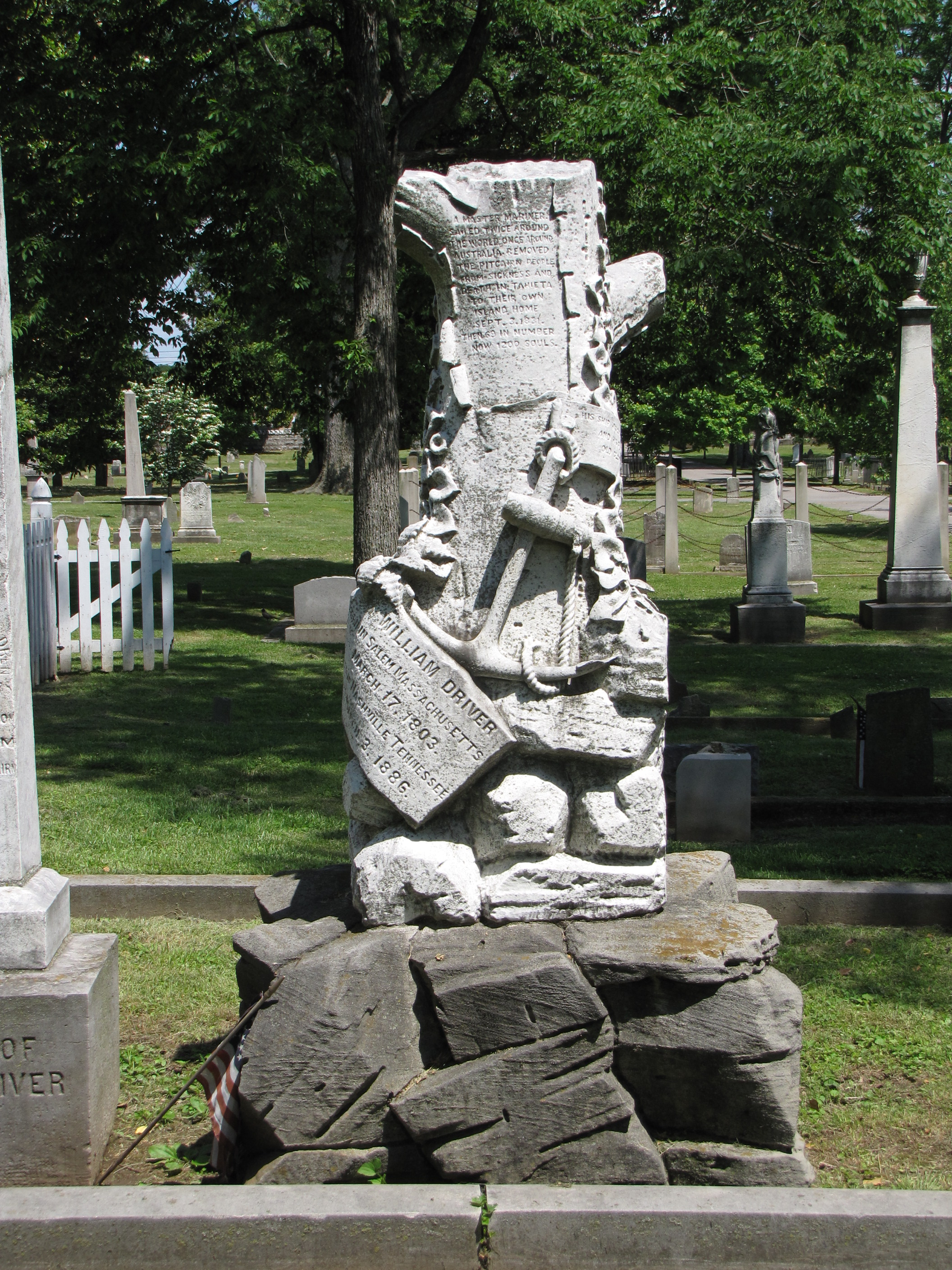
William Driver is buried in the Nashville City Cemetery at Nashville, Tennessee. Driver was an adventurous sea captain. Of his exploits one is noted on his gravestone—the rescue of a large number of descendants of the Bounty from Tahiti back to the Pitcairn Island:

A MASTER MARINER. SAILED TWICE AROUND THE WORLD, ONCE AROUND AUSTRALIA. REMOVED THE PITCAIRN PEOPLE FROM SICKNESS AND DEATH IN TAHIETA [sic] FOR TO THEIR OWN ISLAND HOME SEPT. 3, 1831. THEN 69 IN NUMBER, NOW 1200 SOULS.

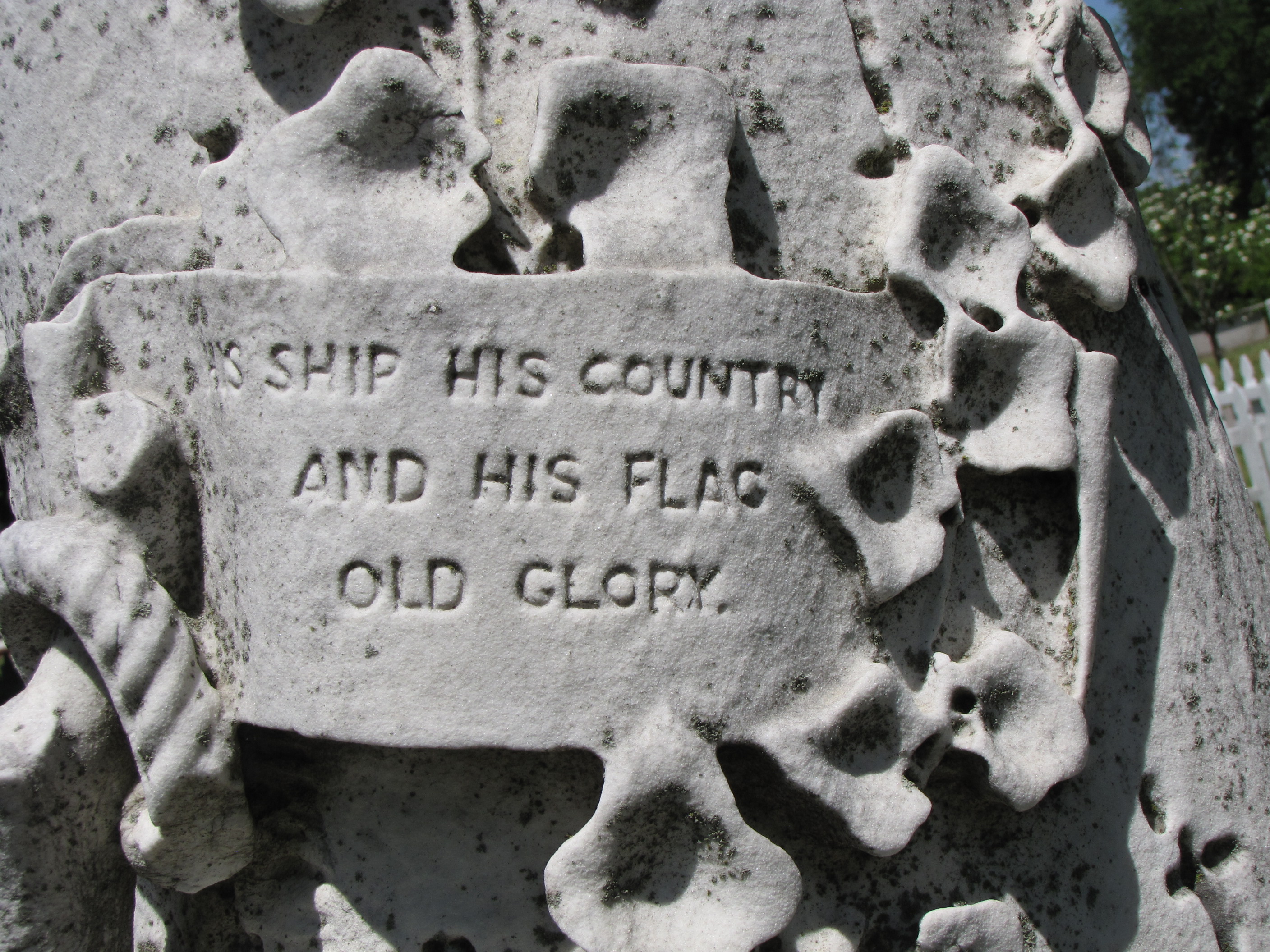
Driver was born in Salem, Massachusetts, and became a sailor at a young age. Before he first set sail, he was presented with an American flag that had been lovingly stitched together by his Mother and some of “the girls” of Salem. The flag was for him to take along his sea voyages. What Driver is best remembered for is how much he loved that flag. He cherished it and nicknamed it “Old Glory”. Driver was the first to refer to our flag with that nickname. It stuck and has become a term of endearment for our flag ever since. The scroll that wraps around his tree-stump gravestone notes his sea adventures but also his love for his flag:

HIS SHIP HIS COUNTRY

AND HIS FLAG

OLD GLORY

After Driver’s wife died, he moved with his small family to Nashville. He remarried and had nine more children. During the Civil War, Driver who was loyal to the Union took care to guard and protect the flag that was so dear to him. To hide it from Confederate soldiers, he sewed it into a quilt for safekeeping. Once Nashville was safely in Union hands, he removed it from the quilt and even flew it over the State Capitol building.

After Drive’s death, March 3, 1886, his beloved flag was given to his daughter. Years later “Old Glory” was donated by his family to the Smithsonian Museum in Washington, D.C., where it is on display next to the Star Spangled Banner.

Driver’s tombstone is a white-marble tree-stump. The dominant symbol on the face of the gravestone is an anchor. The anchor is an ancient Christian symbol that has been found in early catacomb burials.  The anchor was used by early Christians as a disguised cross.  The anchor also served as a symbol of Christ and his anchoring influence in the lives of Christians.  Just as an anchor does not let a moored boat drift, the anchoring influence of Christ does not allow the Christian life to drift. The anchor in this case, however, is most likely a nod to William Driver’s career as a seaman.

IMG_1097


Posted in Symbolism | Leave a comment

The Butterfly

Nashville City Cemetery, Nashville, Tennessee

Nashville City Cemetery, Nashville, Tennessee

Sacred

to the memory

of

NANCY MAYNOR

born 17th of Novbr

1788

departed this life

on the 28th of May

1836

This elaborate gravestone in the Nashville City Cemetery at Nashville, Tennessee, has a delicate butterfly on the face of the pedestal supporting the urn, just under the cartouche displaying the name, birth and death dates of the woman’s whose remains lay beneath the stone.

Like many symbols found in gravestone art, the butterfly has more than one meaning.  The butterfly emerging out of a chrysalis represents the flight of the soul from the body.  The metamorphosis of the butterfly, the change from caterpillar to chrysalis to butterfly, also represents the life, death, and resurrection of Jesus Christ.  Many ancient paintings of Jesus Christ show Him holding a butterfly.

The butterfly is also seen as a metaphor for change.  During the path through life the many twists and turns along the way help the soul morph into a more perfect being.

IMG_1062

Posted in Symbolism | 2 Comments

B.P.O.E.

img_1244[1]

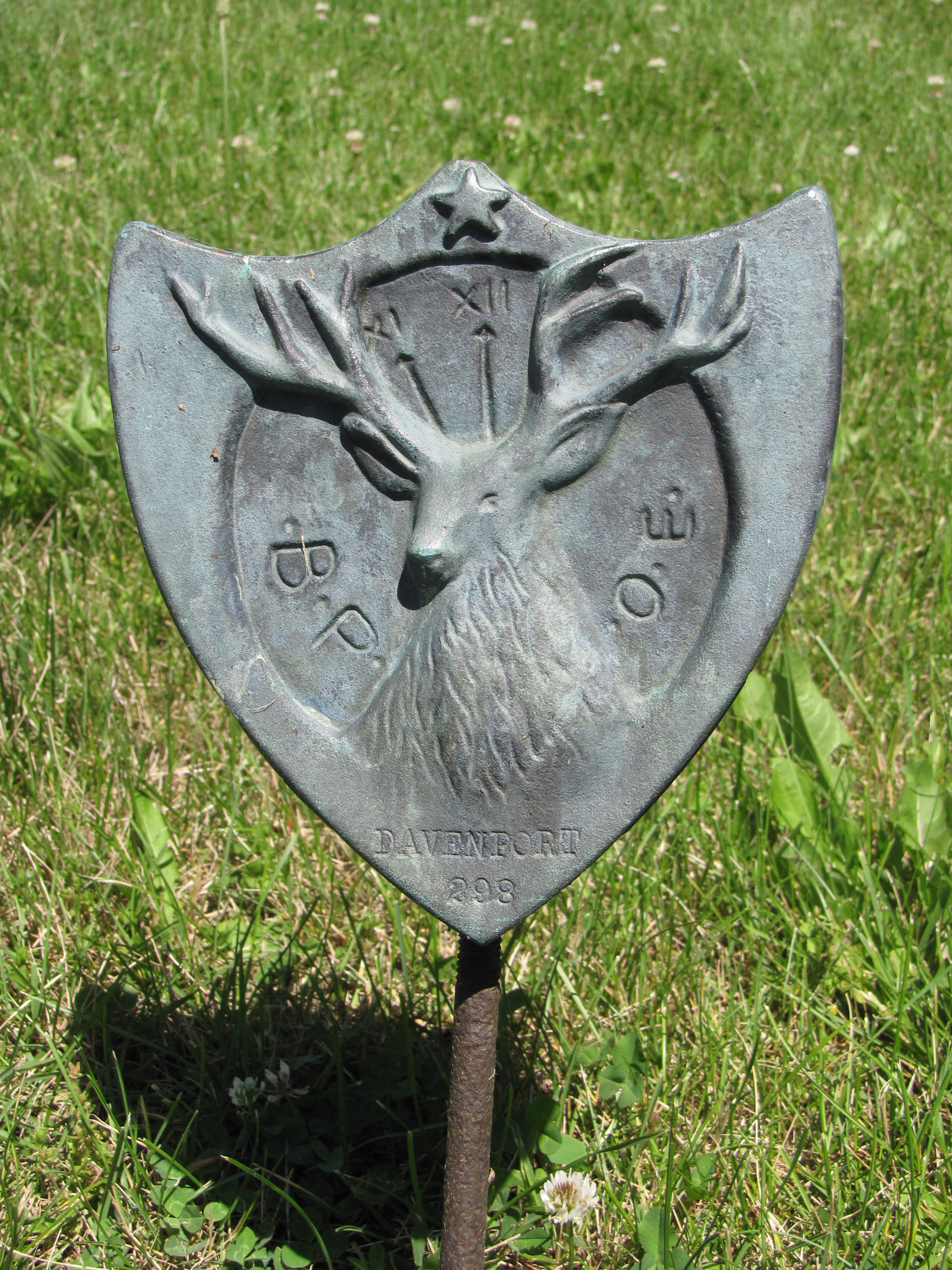
The Benevolent Protective Order of Elks metal markers come in many sizes and shapes.  The metal markers above include the two most significant symbols for the Elks Club members–the Elk, of course, and the clock with the hands frozen at the 11:00 o’clock hour when the Elks traditionally remember their members who have passed away with a solemn toast.  It also carries the words “cervus alces” which is Latin referring to the genus and species for the American Elk.  Below that is a lodge number.

IMG_2231

The metal marker above is similar in style, as it carries the elk and the clock and the lodge number, as opposed to the badge-like marker below, that only has the lodge number.

img_8191[1]

Posted in Metal Markers | 1 Comment

Fighting Satan’s Hordes

IMG_1574

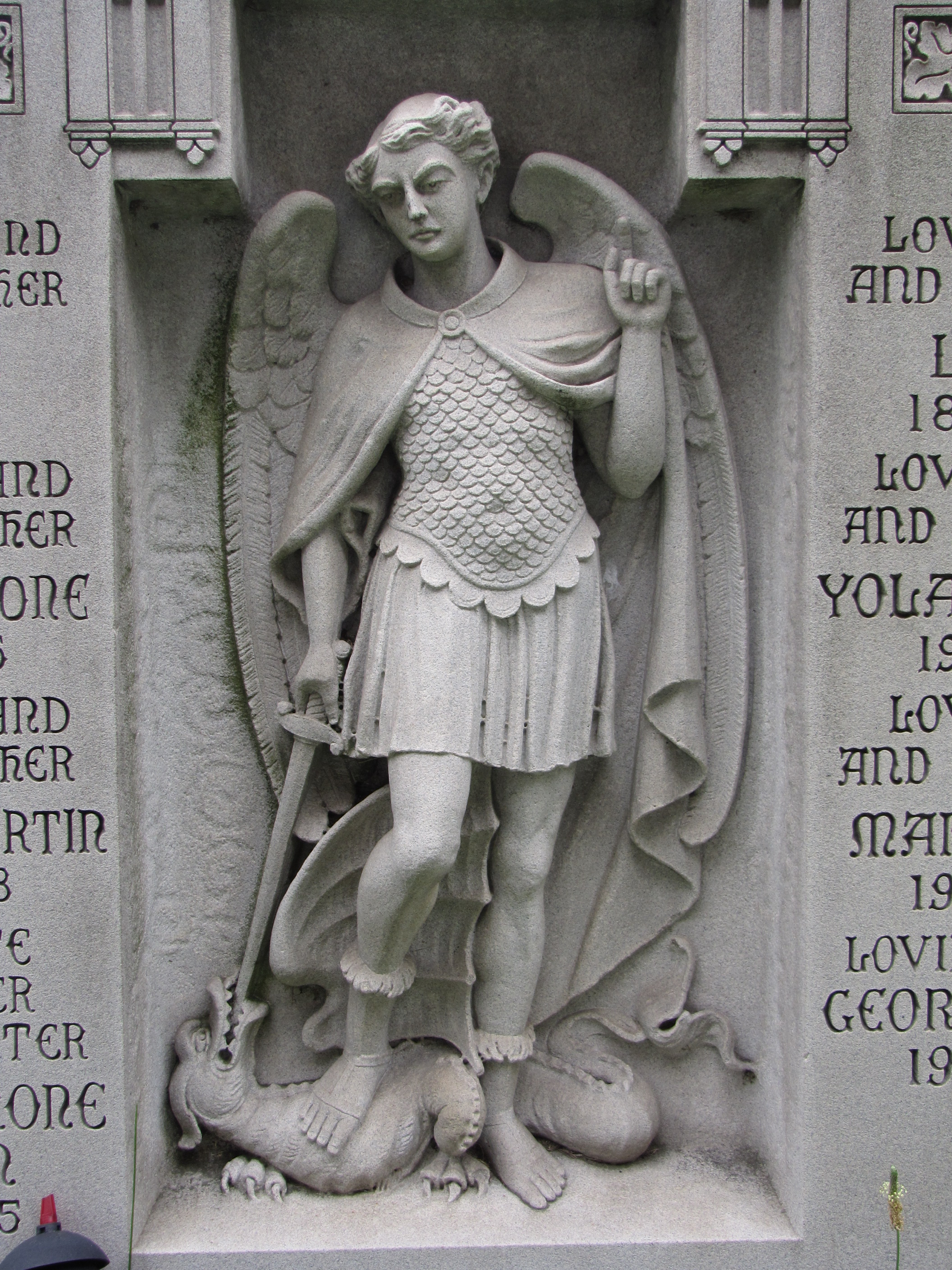
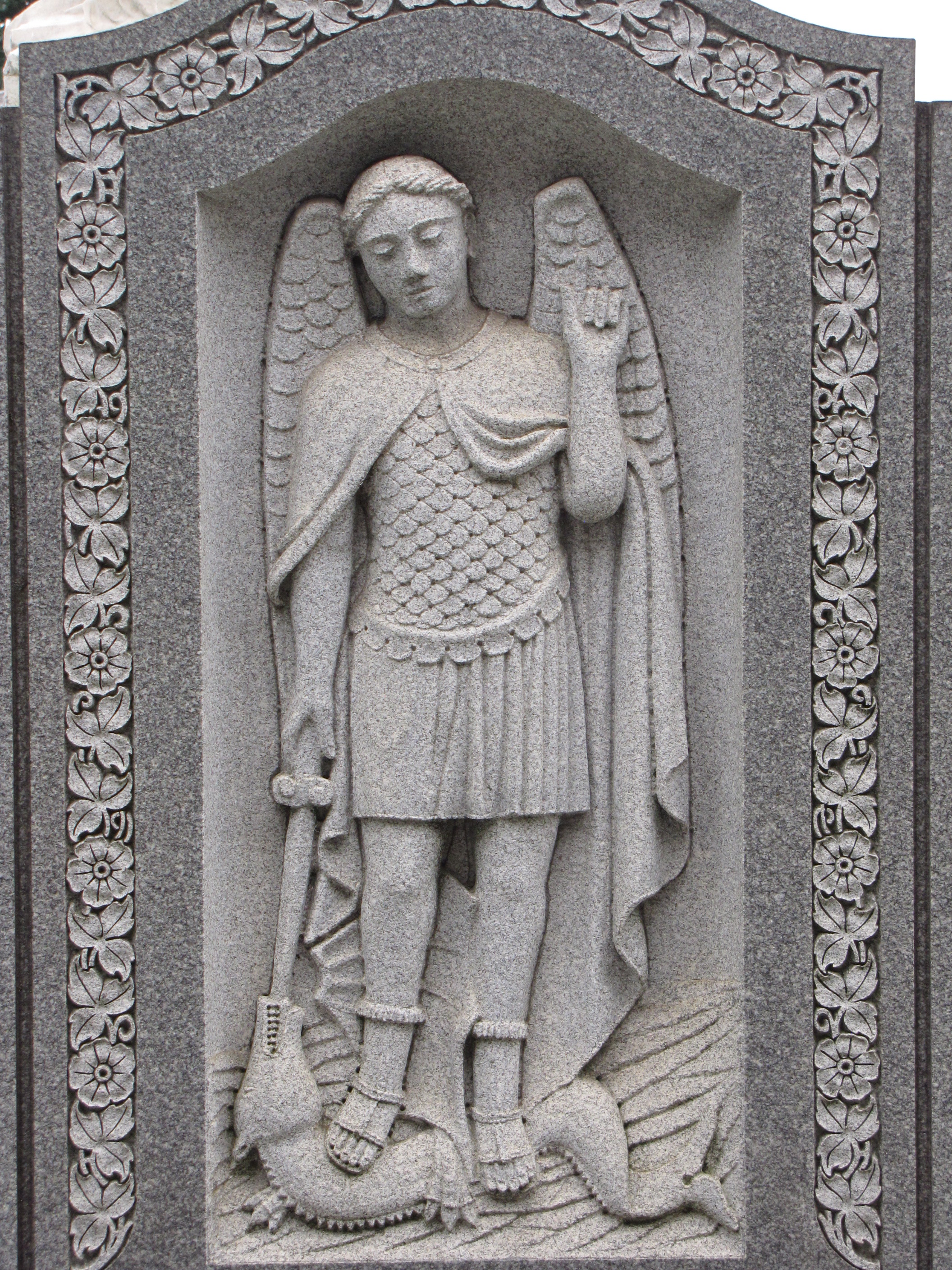
St. Michael is featured in many cemetery sculptures. Only the Archangel Michael, one of three angels mentioned by name in the Bible, is clothed in armor.  The sword he carries represents a cross but also a weapon in his war against the devil’s warriors.

IMG_1364

Archangel Michael is a Christian soldier fighting Satan’s hordes.   Archangel Michael is often represented standing on a worm or a dragon.  In dramatic examples, St. Michael has plunged his sword into Satan’s mouth as he stands on the vanquished enemy.  Satan is depicted as a dragon.

img_7645[1]

The Archangel Michael is also considered the guardian of souls.

IMG_1562

Posted in Angels, Symbolism | Leave a comment

Memorial for a Mother and Infant

Sleepy Hollow Cemetery, Sleepy Hollow, New York

Sleepy Hollow Cemetery, Sleepy Hollow, New York

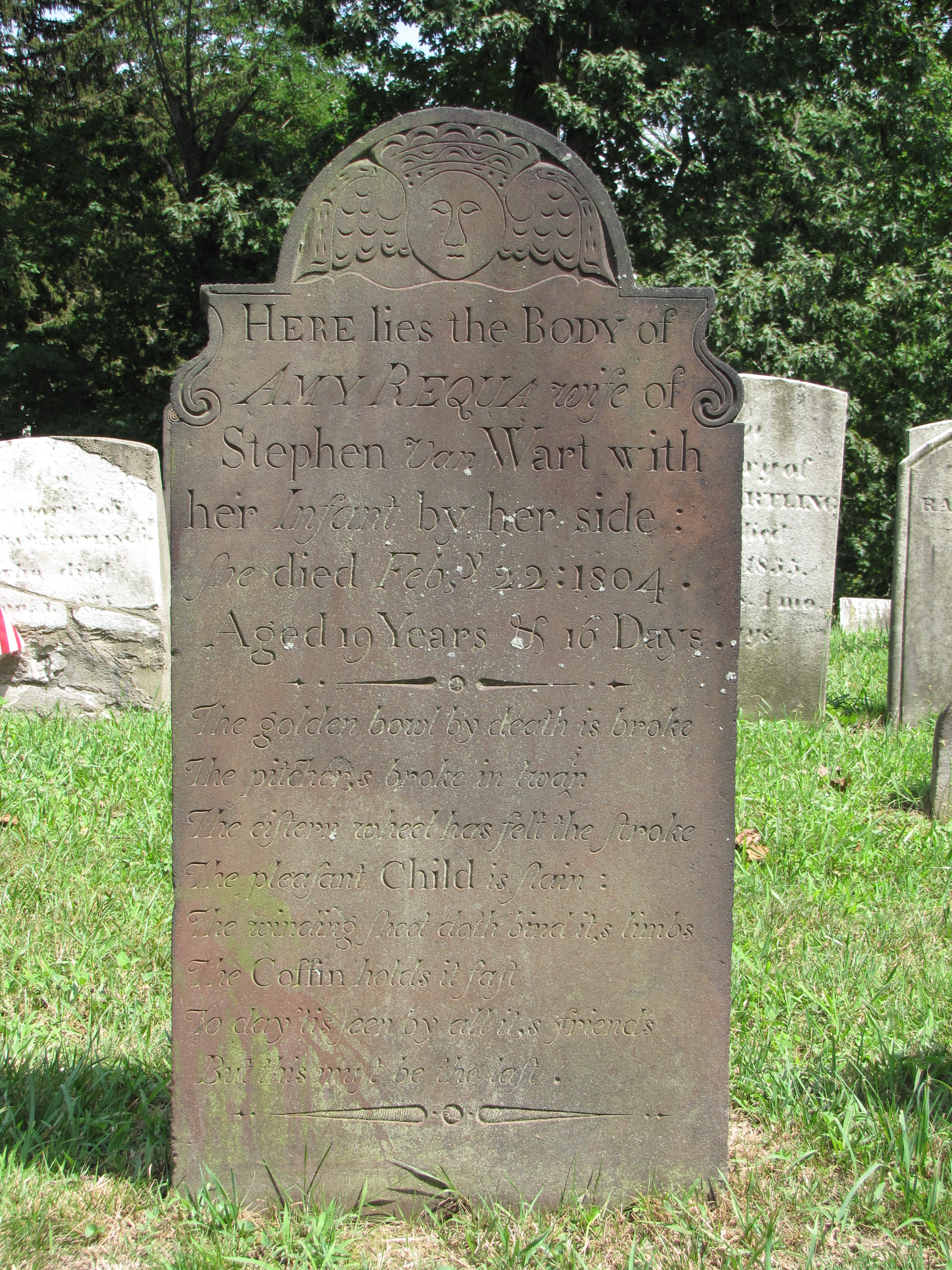
HERE lies the BODY of

AMY REQUA wife of

Stephen Van Wart with

Her Infant by her side:

She died Feb,y 22 : 1804 .

Aged 19 Years & 16 Days.

The golden bowl by death is broke

The pitchers broke in twain

The cistern wheel has felt the stroke

The pleasant Child is Slain :

The winding sheet doth bind it’s limbs

The Coffin holds it fast

To day tis seen by all it’s friends

But this must be the last .

Posted in Uncategorized | Leave a comment

Wheat

Walnut Hill Cemetery, Council Bluffs, Iowa

Walnut Hill Cemetery, Council Bluffs, Iowa

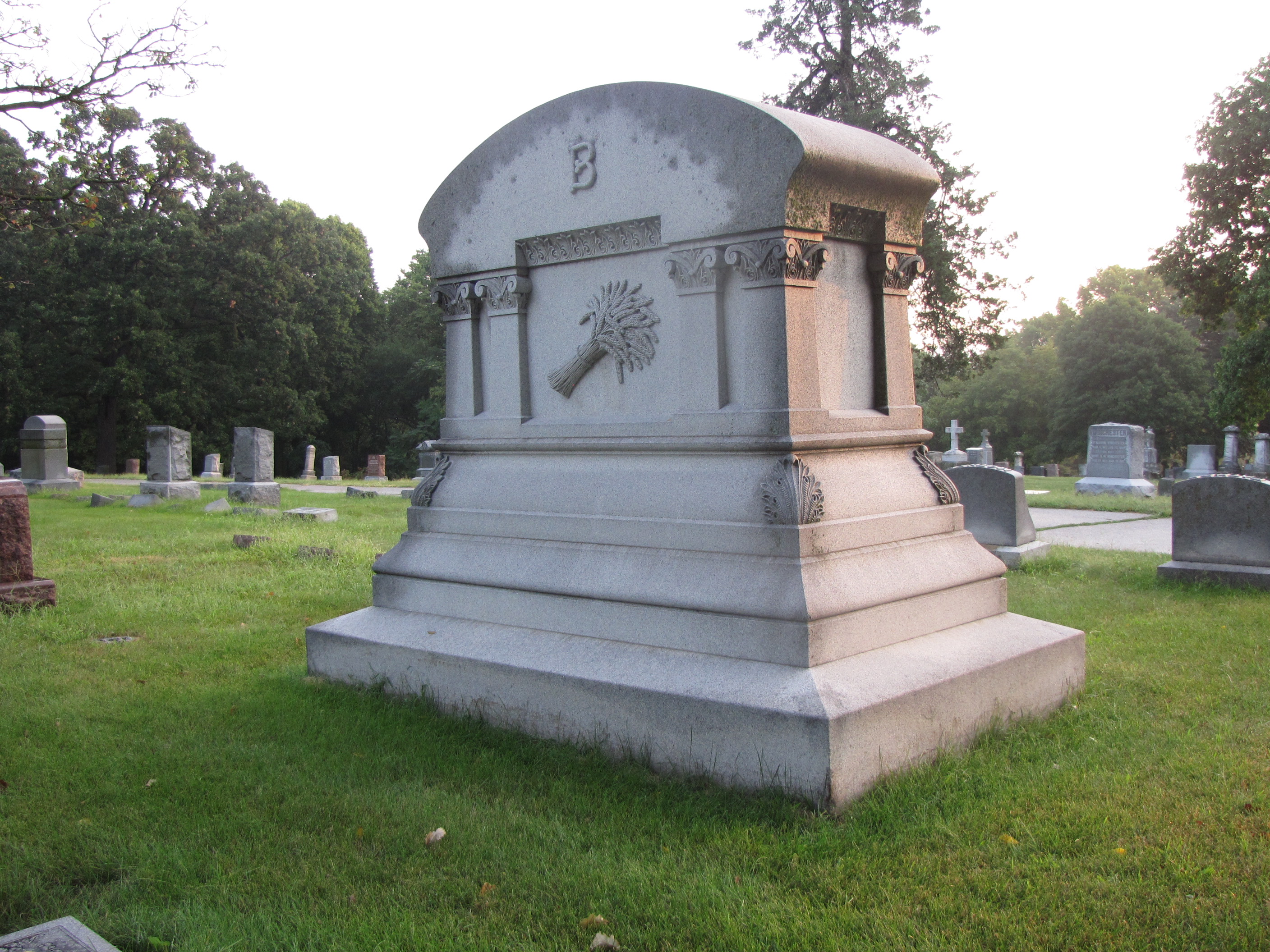
On the reverse side of the Bone Family Monument in the Walnut Hill Cemetery at Council Bluffs, Iowa,  is carved a sheaf of wheat.

Wheat’s origins are unknown but is the basis of basic food and a staple in many cultures. Because of wheat’s exalted position as a mainstay foodstuff, it is viewed as a gift from Heaven.

Wheat symbolizes immortality and resurrection.  But, like many symbols found on gravestones, they can have more than one meaning.  For instance, because wheat is the main ingredient of bread, the sheaf of wheat can represent the Body of Christ.  Wheat can also represent a long life, usually more than three score and ten, or seventy years.

IMG_7257

Posted in Uncategorized | 1 Comment

Death and Mortality

Nashville City Cemetery, Nashville, Tennessee

Nashville City Cemetery, Nashville, Tennessee

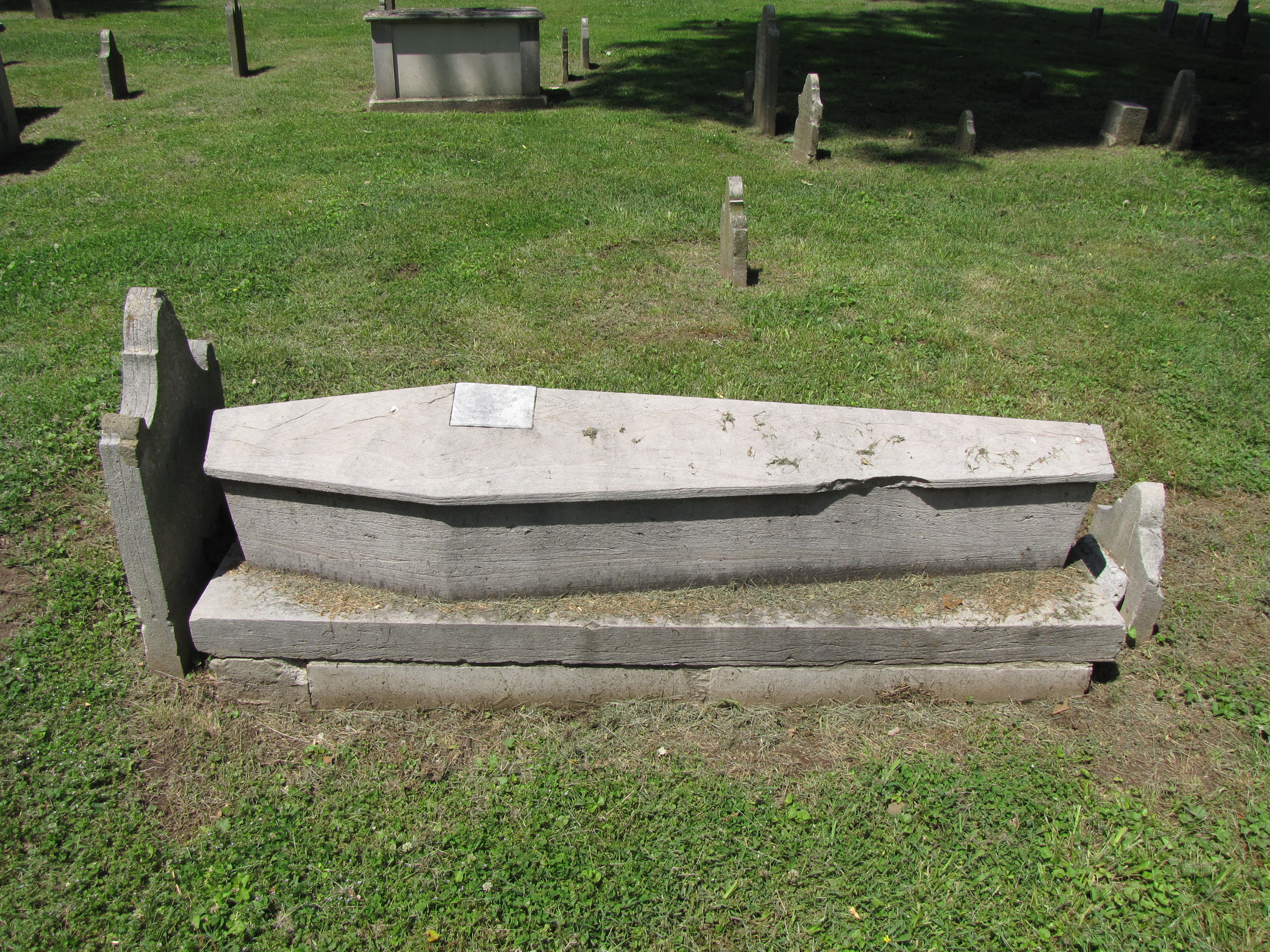
Coffins come in many shapes and sizes, though, technically, a coffin is a six-sided container or box for burial.  A casket is generally understood to have four sides and be rectangular.

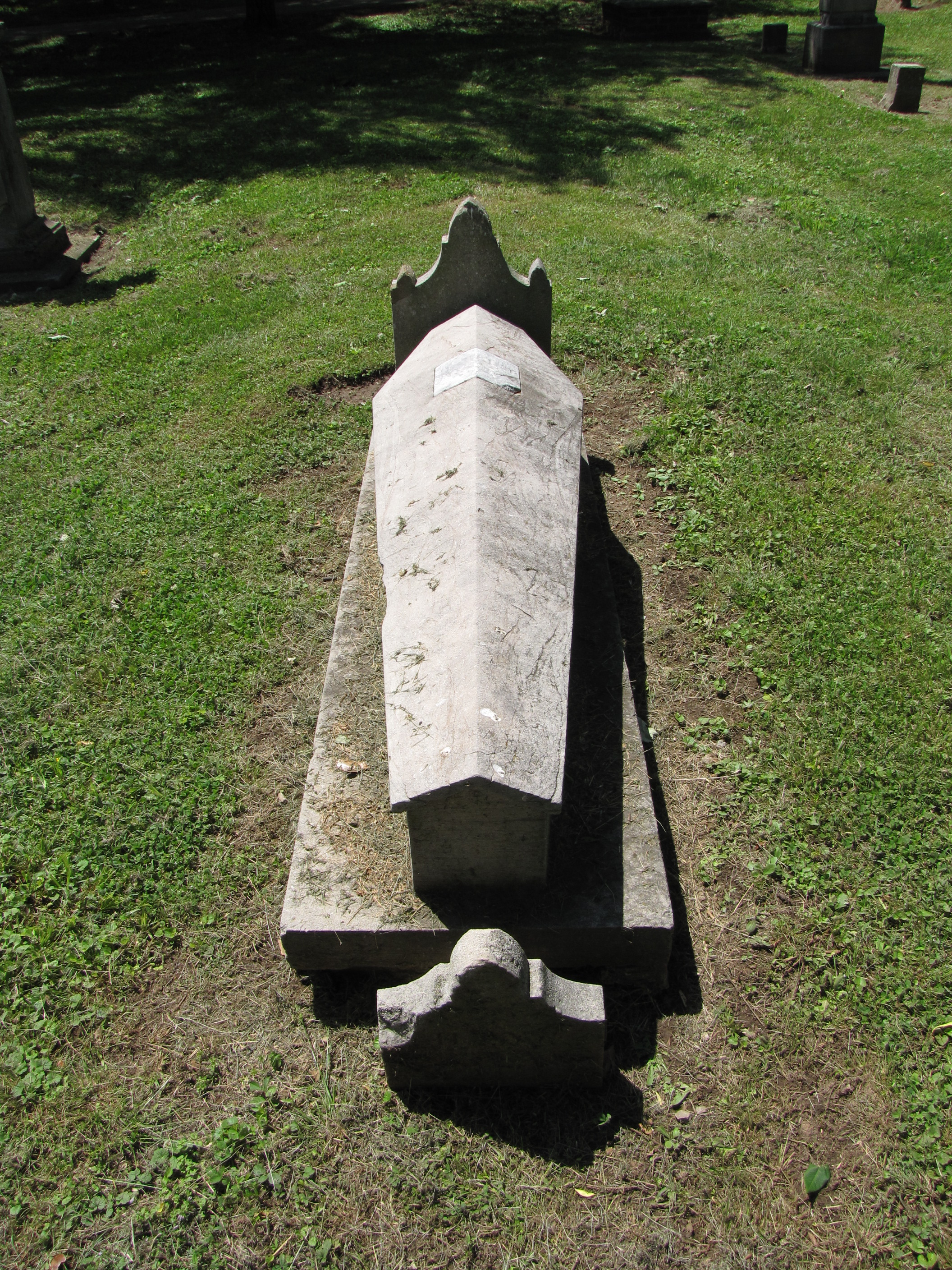
The six-sided coffin tombstone found in the Nashville City Cemetery, Nashville, Tennessee, pictured above is tapered to widen around the shoulders and then become narrow around the feet.  The coffin-shaped tombstone replicates what many 18th and 19th century coffins looked like.  This gravestone is faded and the inscription on the gray-marble inset in the center of the coffin-shaped tombstone is illegible. It is flanked by a headstone and a footstone.

This funerary motif broadcasts its meaning: death and mortality.

IMG_1115

Posted in Uncategorized | Leave a comment

Venetian Gothic

Cavehill Cemetery, Louisville, Kentucky

Cavehill Cemetery, Louisville, Kentucky

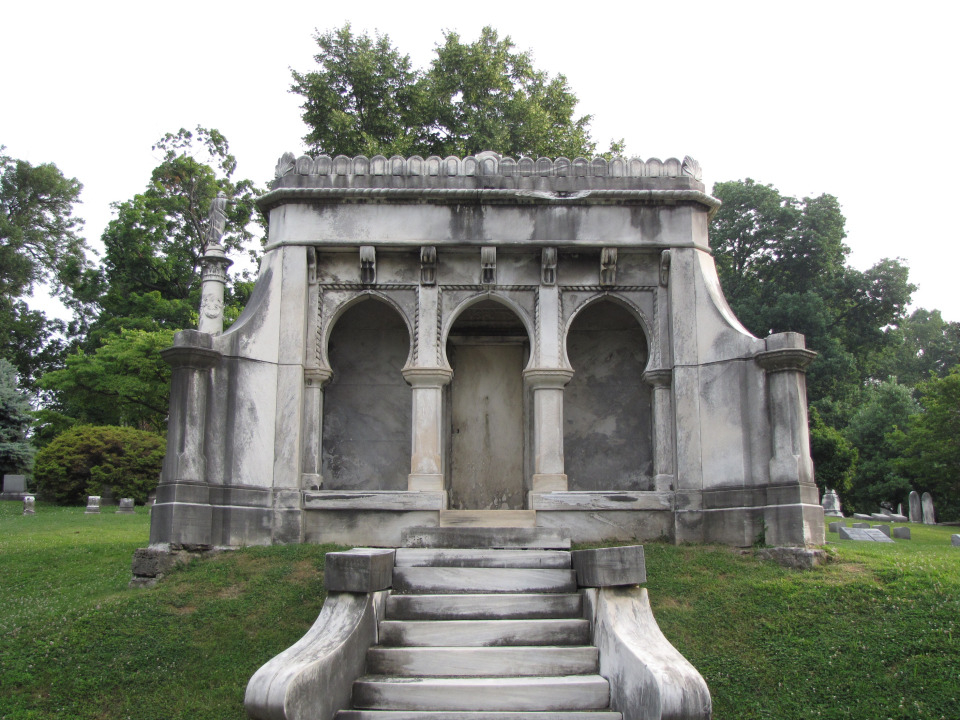
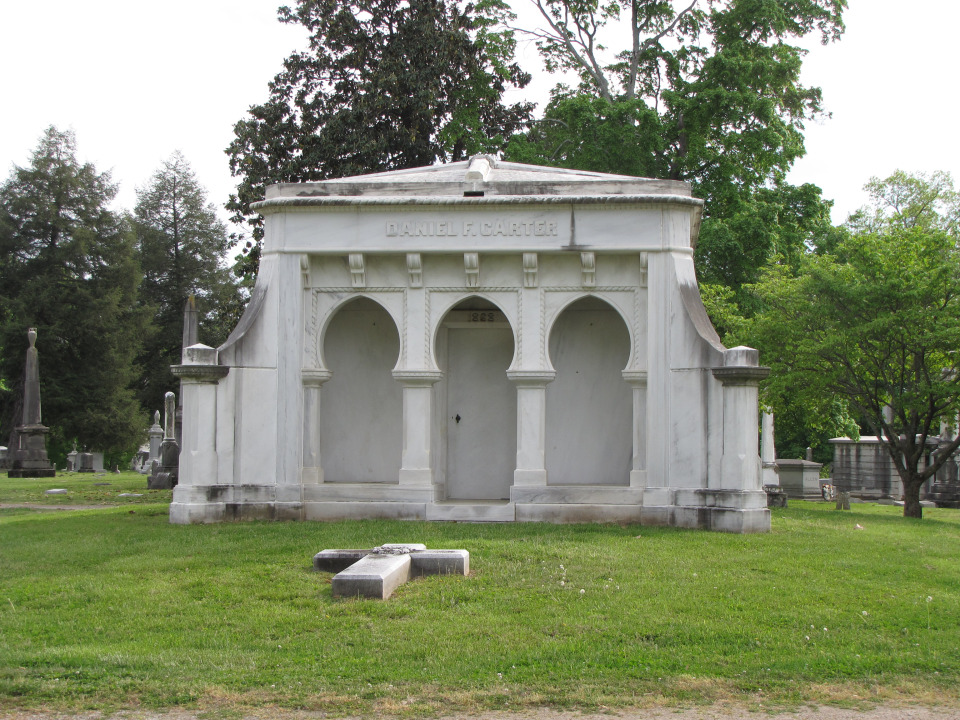
With the exception of the ornamentation on the top of the Spotts Mausoleum, two nearly identical mausoleums, one in the Cave Hill Cemetery at Louisville, Kentucky, and the other in the Mt. Olivet Cemetery at Nashville, Tennessee, were designed and built in the Venetian Gothic style.

Owner of the St. Nicholas Hotel and Steamboat Captain Harry Innes Spotts was laid to rest in a mausoleum (above) designed by John Baird (1820-1894) who was the proprietor of the Steam Marble Works at Philadelphia which cut marble with steam power.   Baird’s shop gave customers standard designs to pick from.  Daniel Franklin Carter (1808-1874), a prominent Nashville banker, was buried in a mausoleum in the Mt. Olivet Cemetery at Nashville, Tennessee.

Mt. Olivet Cemetery, Nashville, Tennessee

Mt. Olivet Cemetery, Nashville, Tennessee

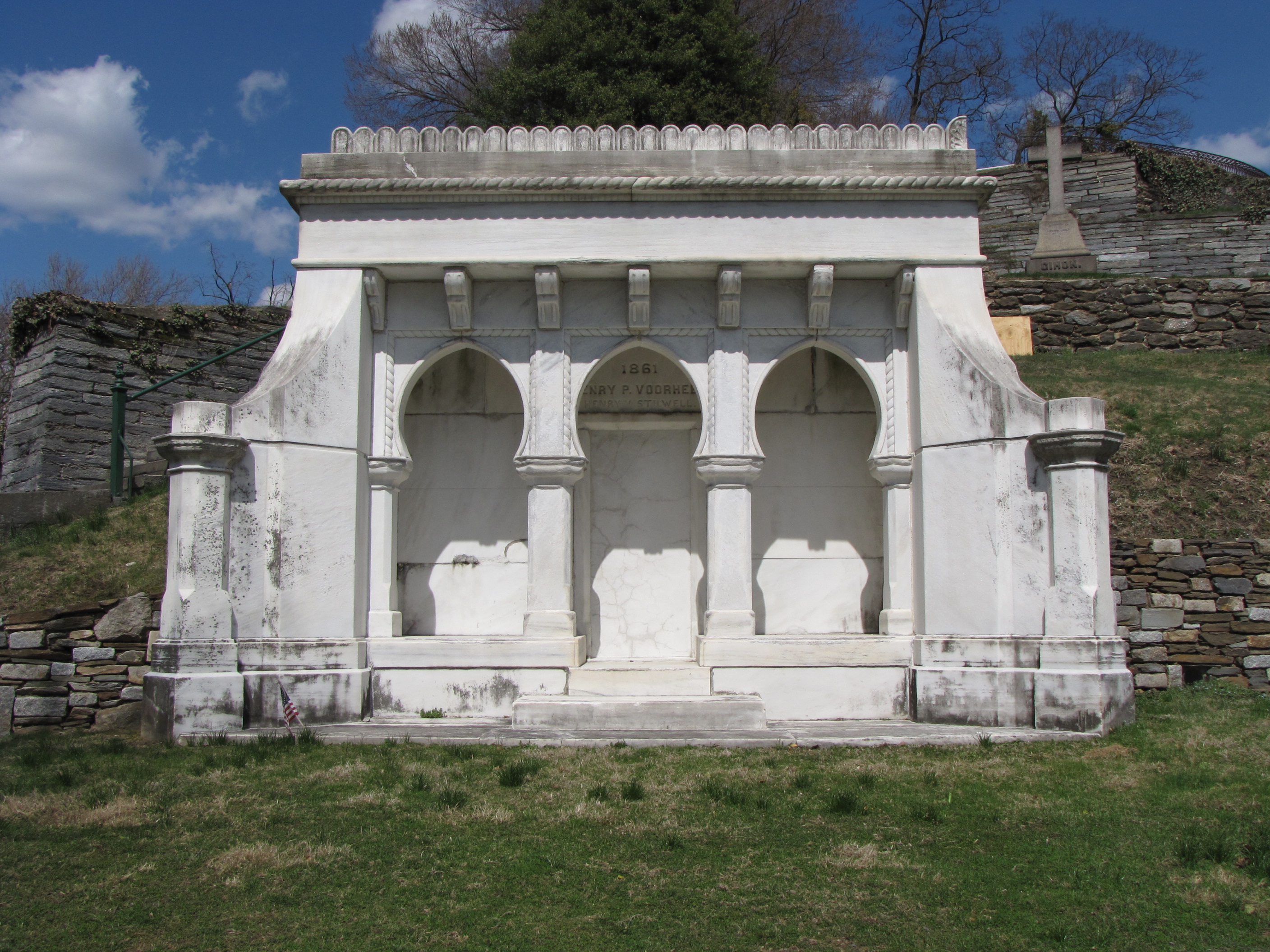
Both mausoleums are designed in the Venetian Gothic style.  Venetian Gothic architecture combined several architectural styles—Moorish, Gothic, and Byzantine—into a single style reminiscent of the building designs that brought a confluence of cultures together to create a flourish and lightness to the canals of Venice.  During the Victorian era, several architects drew from the Venetians for creative building designs that was part of a larger revival that intertwined several styles into one pleasing to the eye.

When the Spotts Mausoleum was erected in the Cave Hill Cemetery the local newspaper, the October 14, 1866 issue of the Louisville Daily Democrat wrote, “It is of Moorish style architecture…this mausoleum is one of the most permanent and tasteful structures yet erected in our far-famed ‘city of the dead.’”

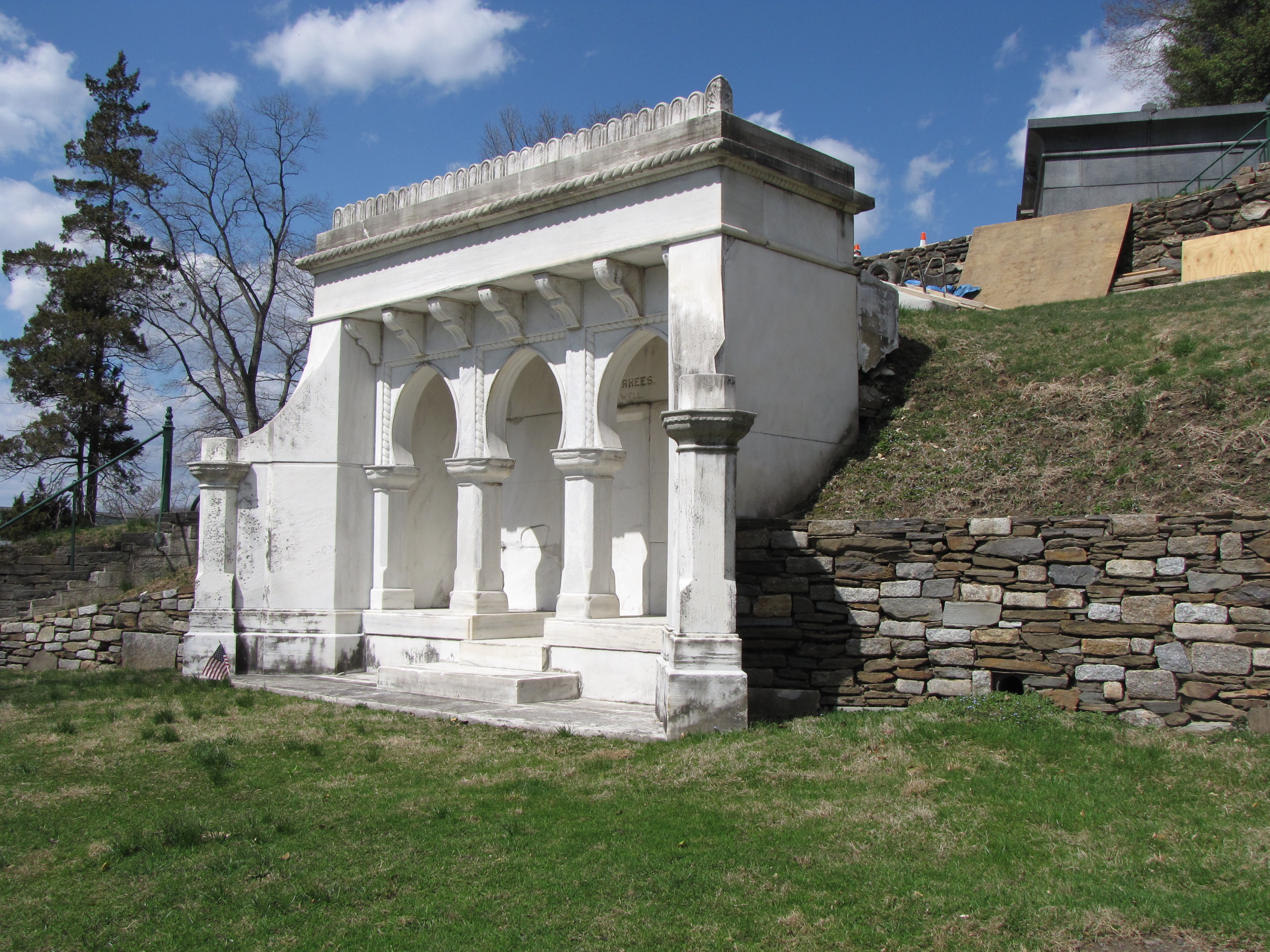
In addition to the two mausoleums found in Nashville and Louisville, this same design is found in two mausoleums in the Laurel Hill Cemetery in Philadelphia. The difference, however, is that with each of these two mausoleums are not free-standing.   That is, the façade is designed and constructed in the same Venetian Gothic style, but most of the tomb in underground. It is likely that in both cases of these two mausoleums are constructed and built by the Steam Marble Works in Philadelphia. The Vorhees Tomb is ornamented just like the Spotts Tomb in Louisville and the Carter Tomb in Nashville.

Laurel Hill Cemetery, Philadelphia

Laurel Hill Cemetery, Philadelphia

IMG_9784

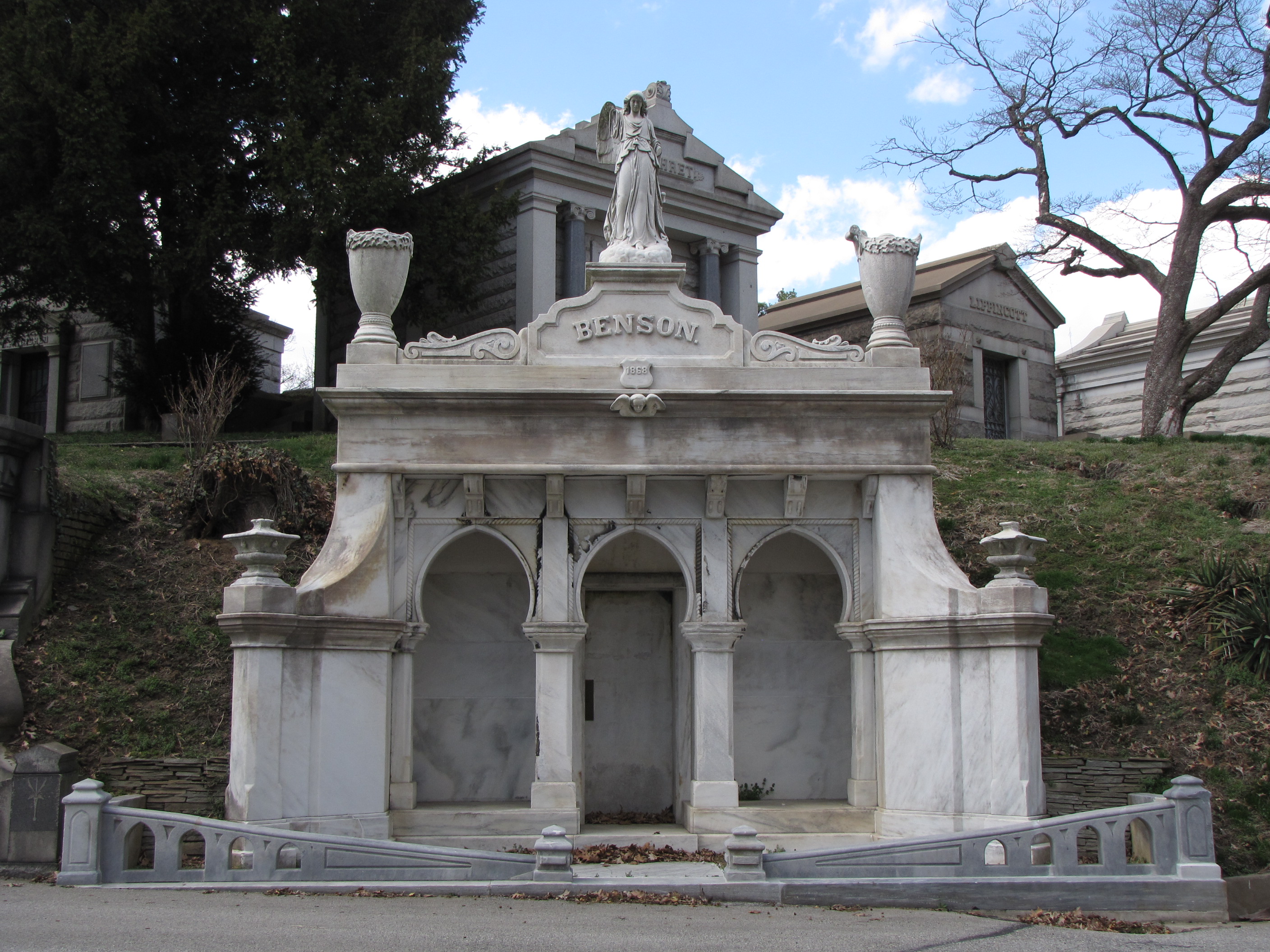
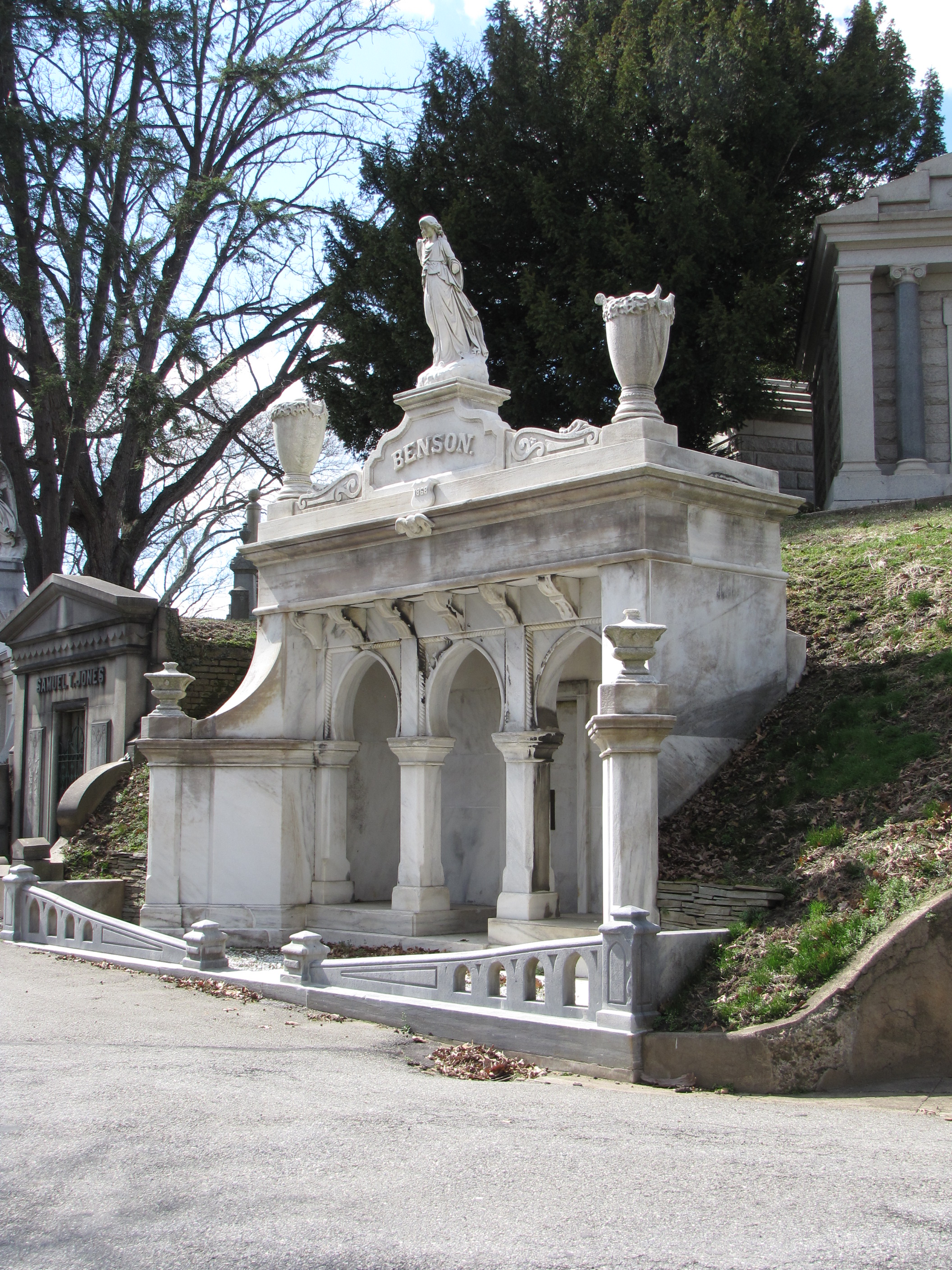
The Benson Tomb, is in the same architectural style, but is highly ornamented—with two large urns on the corners of the top of the tomb, and an angel in the center. In addition there are square urns on the “wings” of the mausoleum and a winged cherub under the date the mausoleum was built.

Laurel Hill Cemetery, Philadelphia

Laurel Hill Cemetery, Philadelphia

IMG_9914

What this appears to demonstrate is that though one could order the Venetian Gothic Mausoleum from the Steam Marble Works Company, one could also have this design customized to suit the tastes of the family.

Posted in Mausoleums | Leave a comment

Crown and Open Gates

Woodlawn Cemetery, Las Vegas, Nevada

Woodlawn Cemetery, Las Vegas, Nevada

JOHN W. MEYERS

1865 – 1941


The gravestone pictured above displays an incised carving of open gate, a very common symbol found in American cemeteries.

In this example, the open gates, which are central to the Last Judgment, have above the gates a crown.

The gates represent a passageway, the gates are the portal for saved souls to make their passage from the Earthly realm to Heaven upon Christ’s return.

The crown is a symbol of glory and reward and victory over death.  The reward comes after life and the hard-fought battle on Earth against the wages of sin and the temptations of the flesh.  The reward awaits in Heaven where the victor will receive a crown of victory.  The crown also represents the sovereign authority of the Lord.

IMG_9599

Posted in Symbolism | 1 Comment