Crying Mary

Johannes Decker 1839 – 1910

Ruth Decker 1840 – 1925

Lila Decker 1869 – 1872

Baby Decker 1875

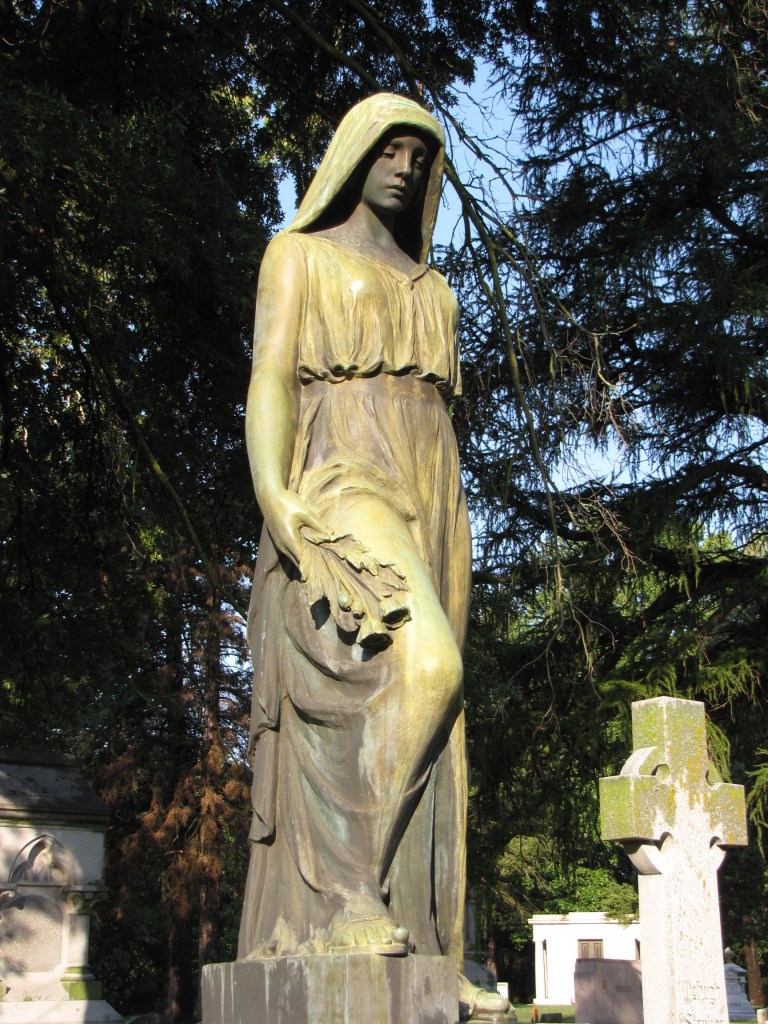
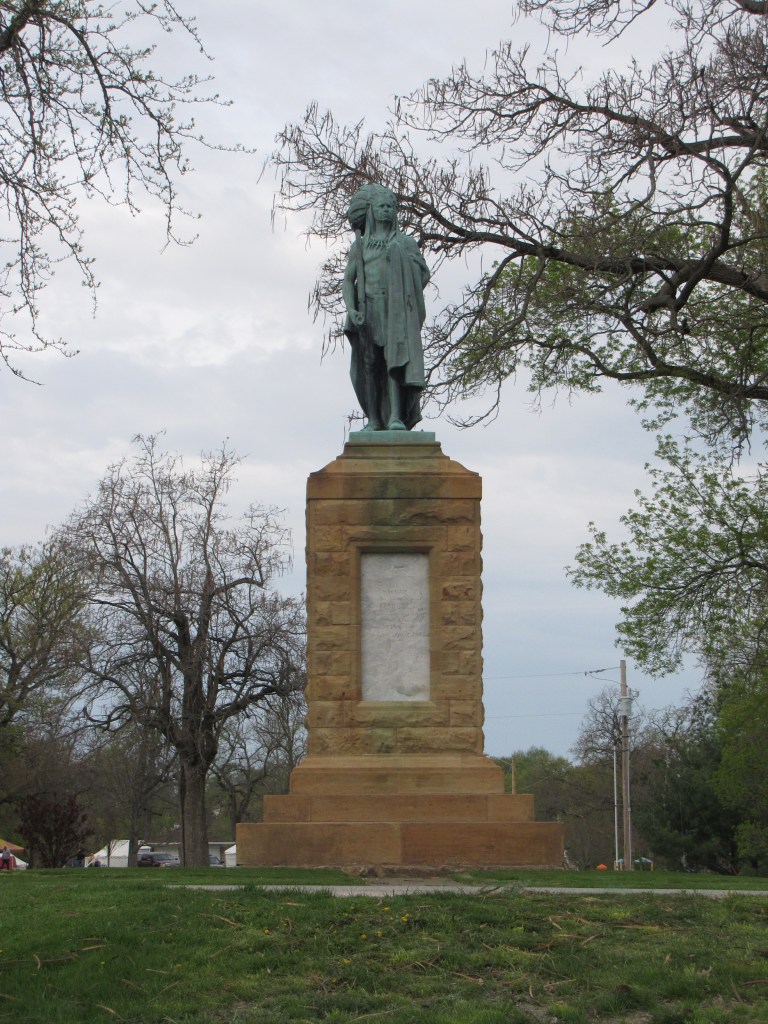
Often legends that spring up about gravestones and monuments in cemeteries are born of fantasy and imagination.  One such example is the so-called “Crying Mary” statue in the Oak Hill Cemetery in Battle Creek, Michigan.

The statue was commissioned by Ruth Decker in 1911, after her husband Johannes Decker died.  Nellie Verne Walker, an Iowa sculptress who was working in Chicago at the time, created the monument.  The monument now marks the graves of Johannes, Ruth, and their two children—Lila, who died of scarlet fever, and Baby, who was born stillborn.

The bronze statue of a woman symbolizes “Memory.”

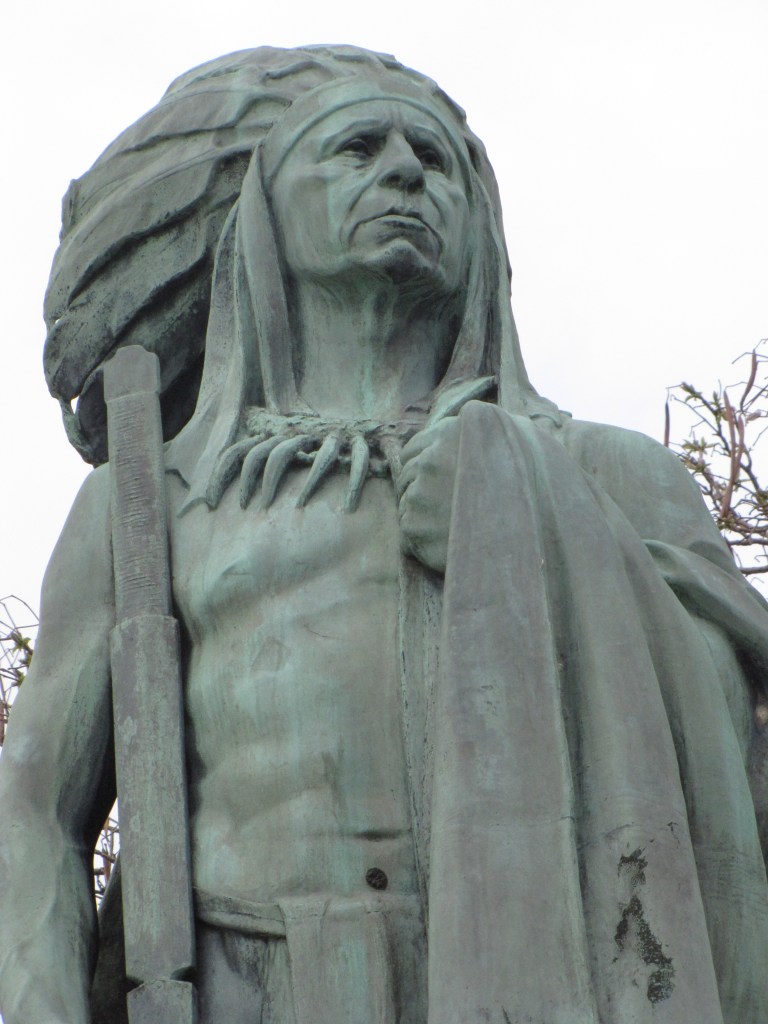
Currently, the statue has been polished to reveal the original bronze color.  But after the statue was placed in the cemetery in 1911, after many years the bronze oxidized, and a green patina appeared.  The pattern around the eyes made the goddess Memory appear to be weeping.  She looked as if she had tears streaming down her face.  Then someone reported that they had actually seen the statue weep and she wept every night at midnight.  The legend continued to grew—people were whispering that it wept because she had murdered her six children.

Some, trying to explain the myth with an “logical” explanation, falsely claimed that tubing was inserted in the base of the statue up to the eyes to draw up moisture and make “Crying Mary” cry!

Of course, the rumors and the legend surrounding the statue are untrue but even with the statue sandblasted and the original bronze color revealed, it continues….

Posted in Uncategorized | Leave a comment

The Learned Angel

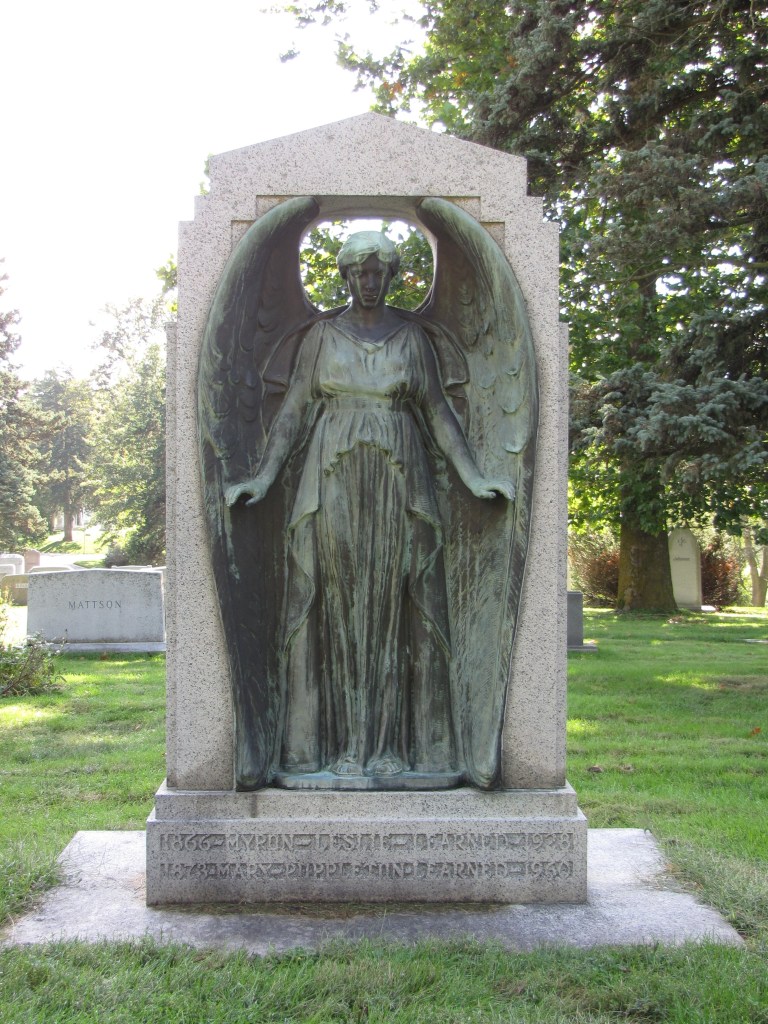
1866 MYRON LESLIE LEARNED 1928

1873 MARY POPPLETON LEARNED 1960

A MAN SHALL BE

AS AN HIDING PLACE FROM THE WIND

AND A COVERT FROM THE TEMPEST

AS RIVERS OF WATER IN A DRY PLACE

AS THE SHADOW OF A GREAT ROCK IN A WEARY LAND

The February 10, 1928, Evening State Journal and Lincoln Daily News, Lincoln Nebraska, front page, announced, “Myron Learned Dies: Myron L. Learned, sixty-one, prominent Omaha attorney and a former powerful figure in republican state and county politics, died here last evening following an emergency operation for appendicitis.  Learned came to Nebraska from Vermont in 1888 and for twenty years was law partner of John L. Kennedy here.  He served on state, county and city republican central committees and was delegate to several national conventions.  He never ran for public office.”

Learner was married to Mary Poppleton Learned who was a member of a prominent pioneer Omaha family.  Her father was A. J. Poppleton, a member of the First Nebraska Territorial Legislature and the second mayor of the city of Omaha.

After the death of Mr. Myron Learned in 1928, his family commissioned Nellie V. Walker to create the angel to mark his grave in the Forest Lawn Cemetery in Omaha, Nebraska.  The art deco design, completely in 1929,  is evident in the lettering on the base of the monument.  The angel recedes into a plain unadorned granite surround.  The oval behind the angels head gives the grieving angel a halo effect. The angle’s outstretched arms indicate a protective posture. The water stains from the angle’s eyes give the statue an appearance that she has been weeping.

Nellie Verne Walker, a diminutive woman standing only four foot eight inches tall, not only created commissions for individuals but also large public monuments, such as the one she created for the City of Keokuk, Iowa, and cast by J. Berchem of Chicago, Illinois. 

The October 22, 1913, edition of the Decatur, Illinois, Daily Review posted a front page article about the dedication of the statue of Chief Keokuk, that read, in part, “Members of the Daughters of the American Revolution from all parts of Illinois, Missouri, and Iowa attended the dedication here today of the statue in memory of Chief Keokuk of Black Hawk fame for whom this city was named. With Mrs. William C. Story, of New York City, president-general of the Daughters of the American Revolution, in attendance…[other prominent people in attendance] include Lorado Taft, the sculptor, Dr. Frank Wyman of the Department of Indian Affairs, and Mrs. H. R. Howell, state regent, D. A. R., John Keokuk, of Oklahoma, the great-great-grandson of the Indian Chief, brought a message from the Sac and Fox Tribe, over which Chief Keokuk ruled while in his prime.”

The article went on to further state, “The statue of Chief Keokuk is of bronze ten feet in height, resting on a base fifteen feet high.  It is the work of Miss Nellie V. Walker, an Iowa girl, now living in Chicago.  Great care was taken in the reproduction of Chief Keokuk’s dress, and Miss Walker made frequent trips to the Smithsonian Institute  and to numerous historical societies throughout the central states in order to give a correct picture of the Indian as he lived.” That last sentence in the article was a tribute to the thorough and meticulous nature of Walker to her work as a serious sculptor.

Posted in Uncategorized | Leave a comment

The Delos and Esther Diggins Monument

DELOS F. DIGGINS

May 16, 1852

Sept. 7, 1907

ESTHER C. DIGGINS

May 31, 1858

Oct. 19, 1915

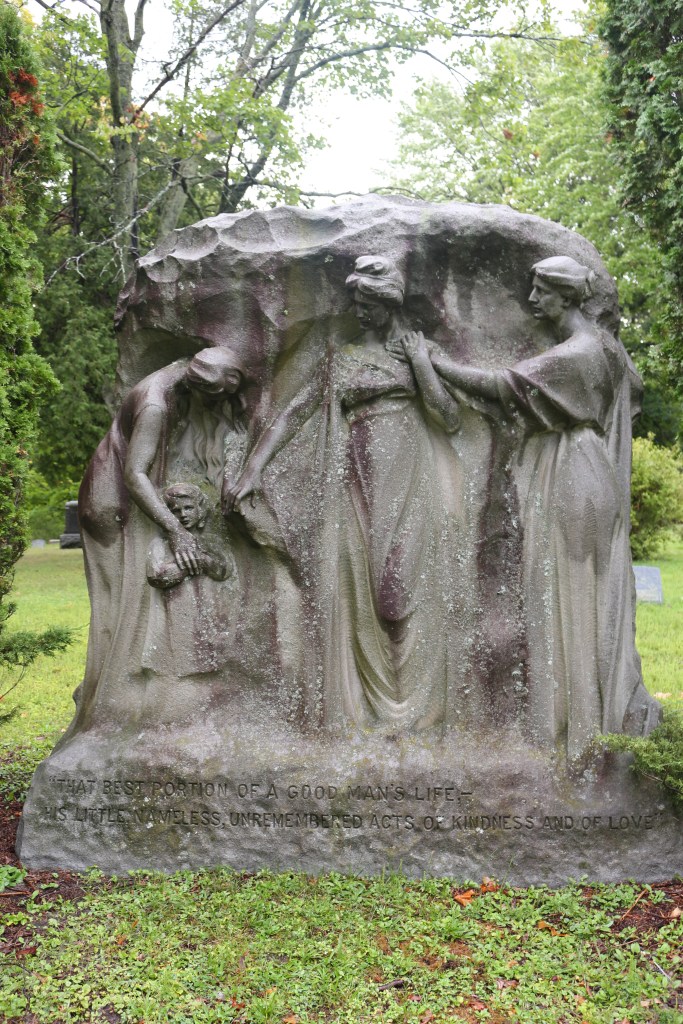
“THAT BEST PORTION OF A GOOD MAN’S LIFE—HIS LITTLE, UNREMBERED ACTIONS OF KINDNESS AND LOVE.”

In an article from the “The Lumber World” journal, dated December 15, 1910, Volume 11, page 34, the magazine highlighted the Delos F. Diggins monument erected in the Maple Hill Cemetery.  The article read, “A SPLENDID WORK OF ART: Monument to the Late D. F. Diggins Erected at Cadillac, Michigan.”

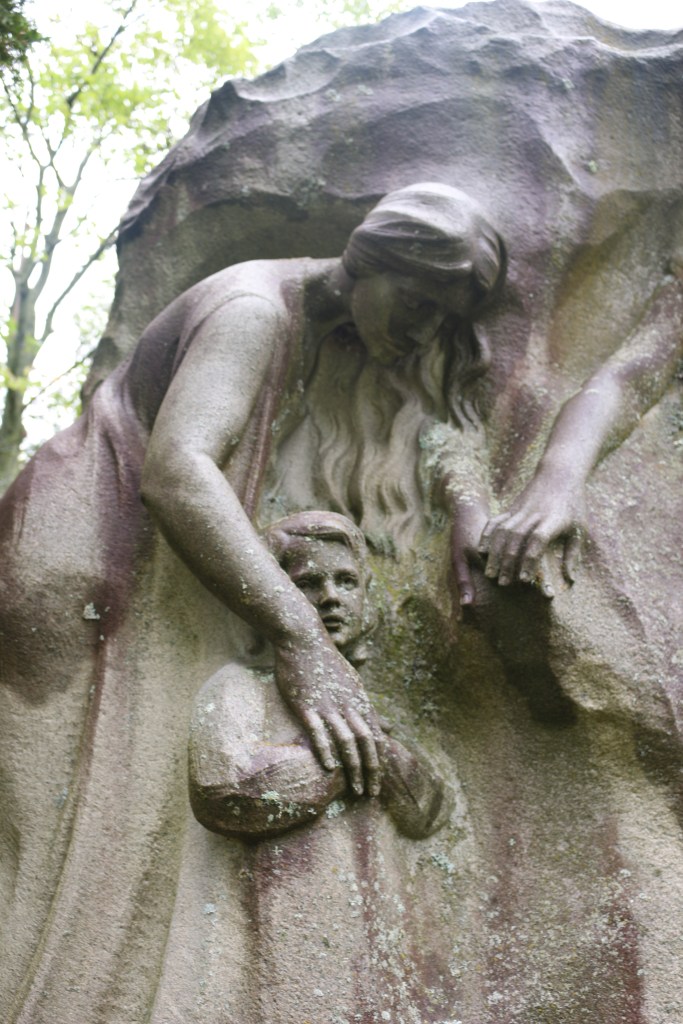
It further stated, “Mrs. Esther C. Diggins, widow of the late Delos F. Diggins, of the Cummer-Diggins Company, Cadillac, Mich., has recently caused to be created a handsome memorial to her late husband in the cemetery at Cadillac.  The monument is made from a special design by Miss Nellie Walker, who was a student of Lorado Taft, and who is now associated with him in sculptural work.  The memorial is cut from a solid block of Westerly granite: is 9 feet high, 9 feet wide, and 4 feet thick.  The block weighs 42,000 pounds and was furnished by Charles G. Blake & Co., of Chicago, at whose establishment the work of the sculptress was done.  On the base of the column is chiseled this statement, “That Best Portion of a Good Man’s Life—His Little, Nameless Unremembered Acts of Kindness and Love.””

Posted in Uncategorized | 1 Comment

Mitchell Family Monument

MITCHELL

WILLIAM WHITTIER MITCHELL

JUNE 3, 1854 – NOVEMBER 8, 1915

ELLA YOST MITCHELL

JULY 2, 1855 – JUNE 11, 1945

A MAN SHALL BE AS THE SHADOW OF A

GREAT ROCK IN A WEARY LAND

William Whittier Mitchell was a successful businessman—who took over his uncle’s sawmill upon his death and expanded the operations. He and his wife, Ella Yost Mitchell, are buried in the Maple Hill Cemetery in Cadillac, Michigan. 

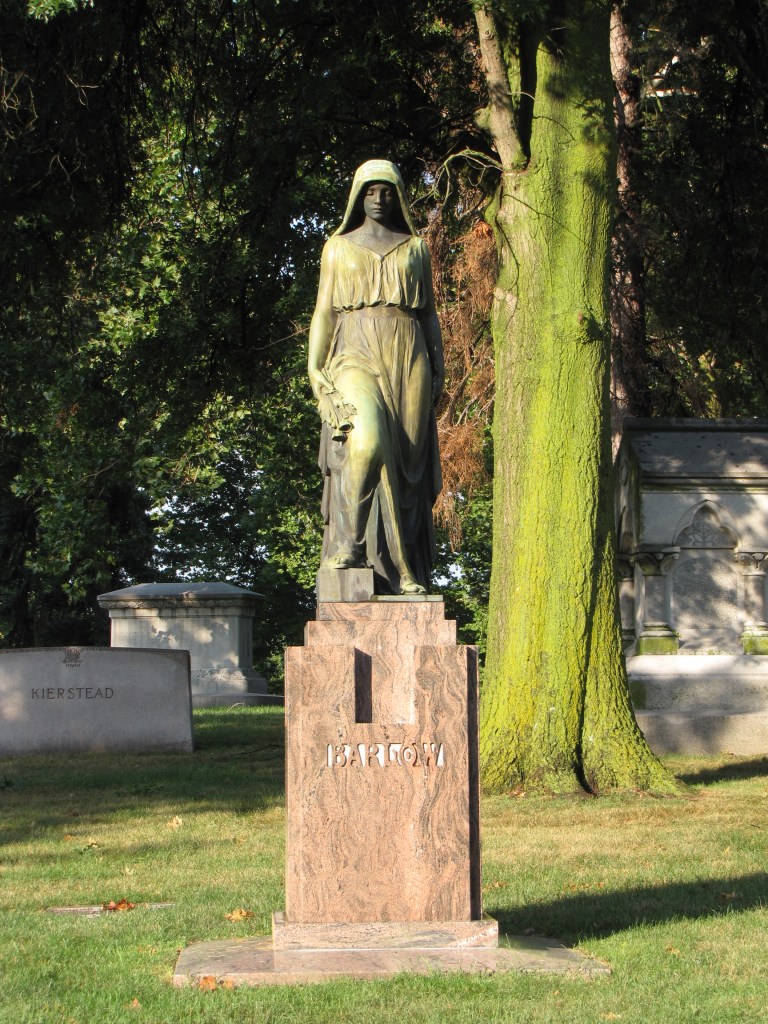
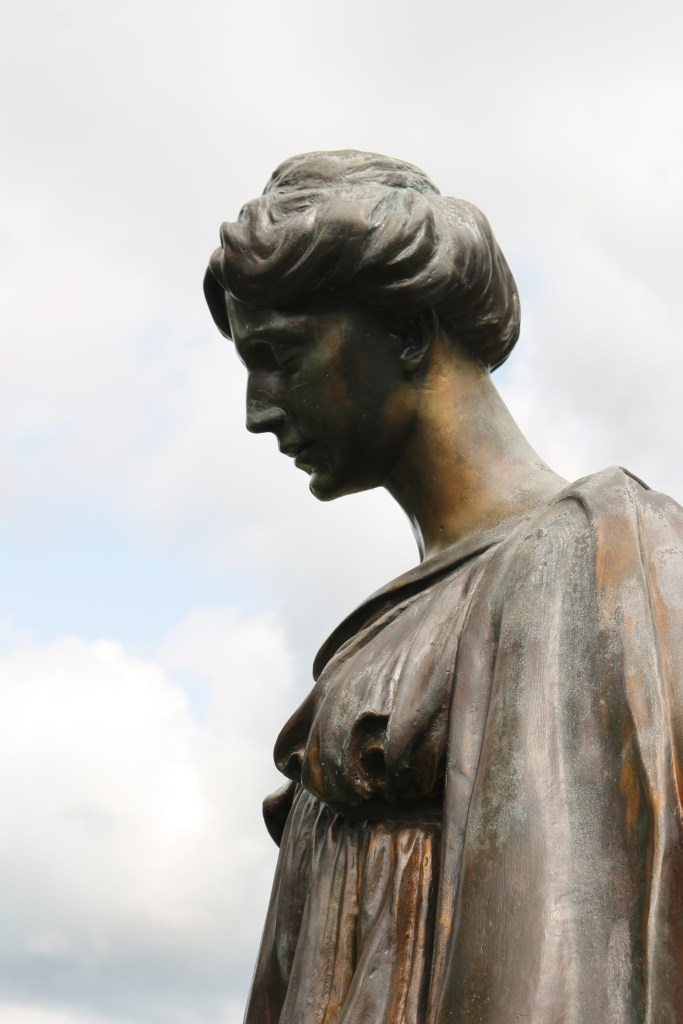
The couple has an impressive monument—the exedra on each side of the sculpture is made of polished granite.  The centerpiece of the monument, however, is the bronze statue of a goddess-like woman, described by the Smithsonian Art Survey as a “heroic-sized female figure dressed in a long, flowing garment and coat stand[ing] on a pedestal.  Here hair is in a bun and her arms are partially outstretched.  The pedestal is flanked by exedras which slope downward towards large urn which stand at each end.” 

The bronze cast by the Florentine Brotherhood Foundry of Chicago, Illinois, was sculpted by Iowa artist Nellie Verne Walker (1874-1973).

Posted in Uncategorized | Leave a comment

The Shippey Family Monument

THAT BEST PORTION

OF A GOOD MAN’S LIFE:

HIS NAMELSS UNREMEMBERED ACTS

OF KINDNESS AND LOVE 

Charles Webster Shippey was a real estate dealer who was struck down by a locomotive killing him just a few feet away from the station where he was to board a train.  According to the August 13, 1906 edition of the Chicago Daily Tribune, Shippey was crossing the tracks to climb aboard a train to carry him to join his family who were already vacationing.  He was buried in Grand Haven, Michigan and likely his remains were removed and reburied in the family plot in Chicago’s Rosehill Cemetery.

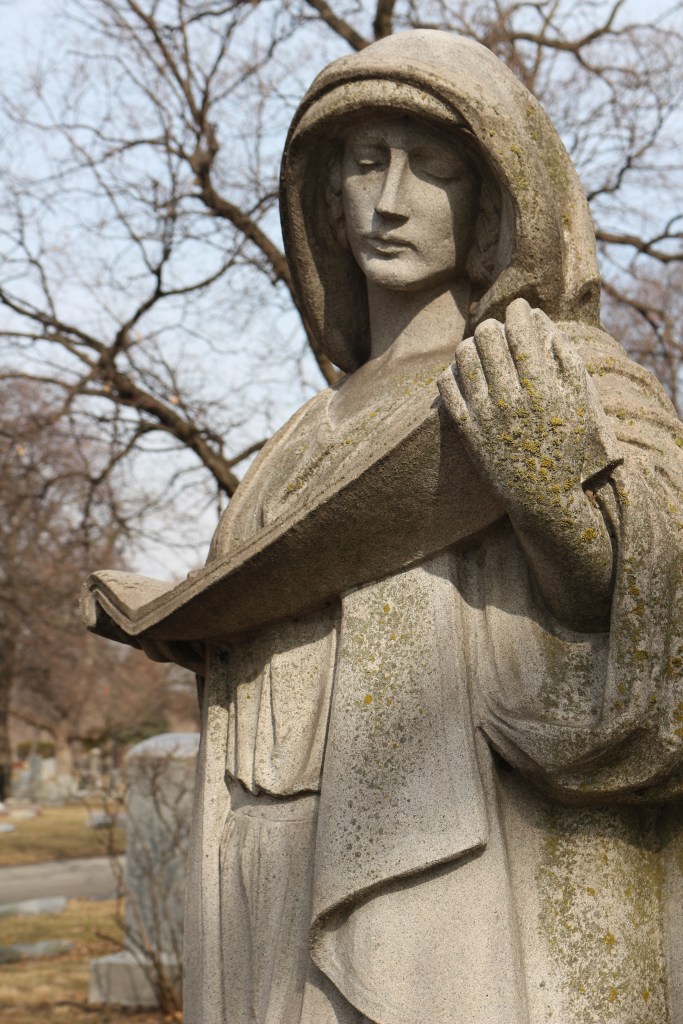
The Shippey Family monument is a sculpture of a hooded female figure holding a scroll. The scroll represents both the life of the deceased and the time spent on Earth. Like so much symbolism found in the cemetery, the scroll can have many meanings.  The scroll likely represents the life of the deceased that has come to an end and been recorded by the angels.

CHARLES WEBSTER SHIPPEY

1858 – 1906

LULU SHIPPEY SHIPPEY

1862 – 1941

WEBSTER B. SHIPPEY

1896 – 1981

RAYMONDE SHIPPEY SCHOBINGER

1898 – 1991

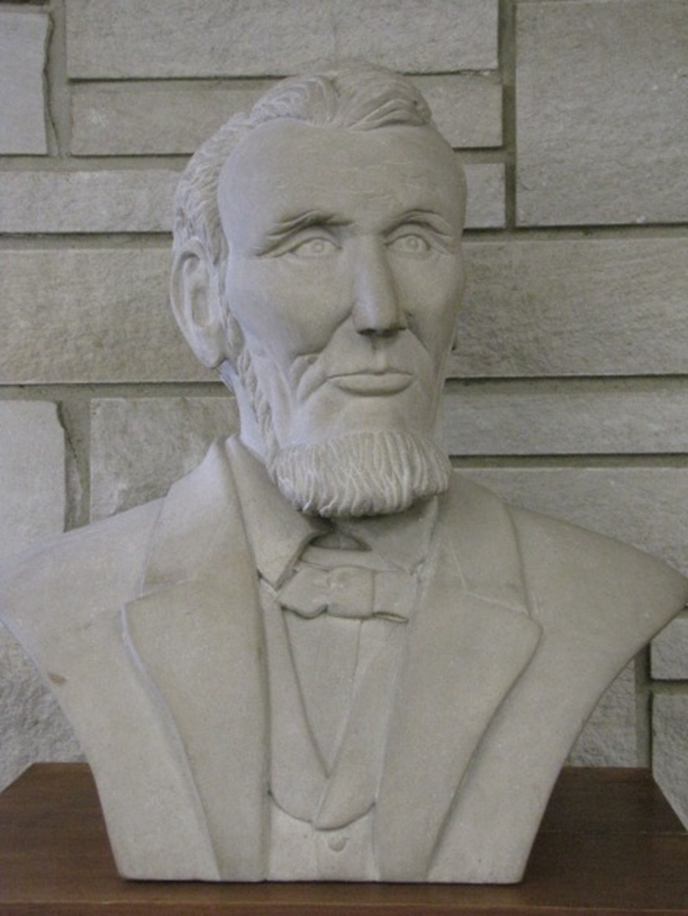
The monument was carved by Nellie Verne Walker.  Walker was a protégé of the great American sculptor Lorado Taft.  She was born December 8, 1874, in Red Oak, Iowa. She first picked up a hammer and chisel in her father’s Moulton, Iowa, shop carving gravestones. But, by age 17 she carved her first work of art—a limestone bust of President Abraham Lincoln. In a mere 24 days, she had created the bust for the Columbian Exposition being held in Chicago in 1893. Her first piece is now on display in the Moulton City Library.

Posted in Uncategorized | Leave a comment

Quakers, Shakers, and Lollipops

The Protestant Reformation spawned many different religious sects, including splinter groups from sects that had already broken away from mainstream Protestant churches.  One such group was known as The United Society of Believers in Christ’s Second Appearing.  This group became known colloquially as the “Shakers” and was an offshoot of the Quakers and the French Camisards. 

The Quakers, or Society of Friends, founded by George Fox in 1652, were named such because of the tremblings and “quakings” during worship.  The “Shaking Quakers” or “Shakers” split from the Quaker church.  Ann Lee, daughter of a blacksmith in Manchester, England, joined the Shaker sect in 1758.  On May 10, 1774, after receiving a vision to establish the church in American, Ann Lee and a small band of believers set sail for America.  She led the group to the US and became the leader of the Shakers in America establishing over 20 communities of Shakers in the Northeast, Ohio, and Kentucky.

The Shakers became known for their enthusiastic and physical worship including spontaneous dancing, trembling, shaking, and whirling—hence their name. In addition to their ecstatic practices during church ceremonies, the Shakers held many beliefs that were considered radical at the time—celibacy, pacifism, racial and gender equality, and communal living.  Because the Shakers remained celibate and therefore did not believe in procreation, the members adopted children and recruited converts to the religion to be able to grow the church membership.

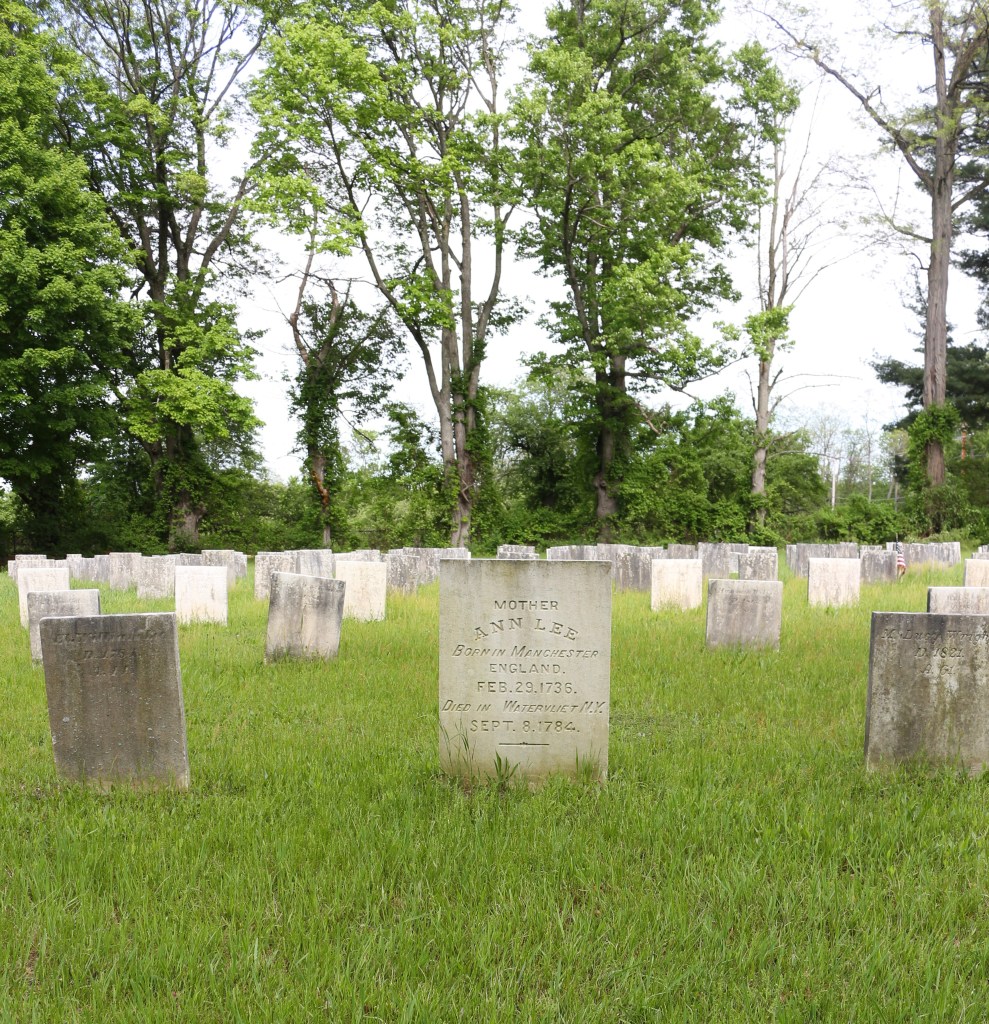
Ann Lee settled in the community of Colonie, New York, the first Shaker community in the United States.  Mother Ann Lee, as she was known, the charismatic leader, is buried in the small Shaker Cemetery close to what is now the Albany Airport.  The communities’ egalitarian beliefs are conspicuously on display in the cemetery.  One of the first things you notice as you look at the orderly cemetery is that all 445 gravestones are square-top white marble tablets—the same shape and the same size.  Only the name, the date of death, and the age of the deceased appears on the stone.  They are buried as they died one after the other.  The exception is the gravestone of Mother Ann Lee, whose gravestone is taller than all of the rest of the gravestones in the cemetery and also contains more information:

MOTHER

ANN LEE

BORN IN MANCHESTER

ENGLAND

Feb. 29. 1736.

DIED IN WATERVLIET, NY.

SEPT. 8. 1784.

The historical sign just outside the cemetery fence reads in part:

This cemetery is part of the first Shaker settlement in the US.  Following their charismatic leader Mother Ann Lee, a small band of Shakers traveled from Manchester, England to New York City in 1774 seeking a place to worship freely.  Twelve Shakers arrived in Albany in 1776.  Known as the Watervliet or Niskayuna Shakers, they eventually established four “Families” or villages within a mile of this sit.  They owned or leased over 4,000 acres between here and the Mohawk River.

The 445 burials reflect the equality of all Brethren and Sisters.  There are a number of African-Americas, including Violet Bennet who was the first burial in 1785.  A few Shakers who committed suicide are included among the burials, not shunned.  Graves in the first row re “World’s People” (as the non-Shakers were known) who had lived with the Shakers or wished to be buried near their Shaker relatives.  While the Shakers were pacifist, you may see flags marking some graves.  There were veterans who joined the community after they fought in the Revolutionary War of other conflicts.  The original stones were replaced by the Shakers in 1880.

Mother Ann Lee, her brother William Lee and one other man were originally buried on what is now Albany Airport property.  Their graves were move here in 1835.  Mother Ann’’s stone is the only one that does not reflect the equality of all other community members….”

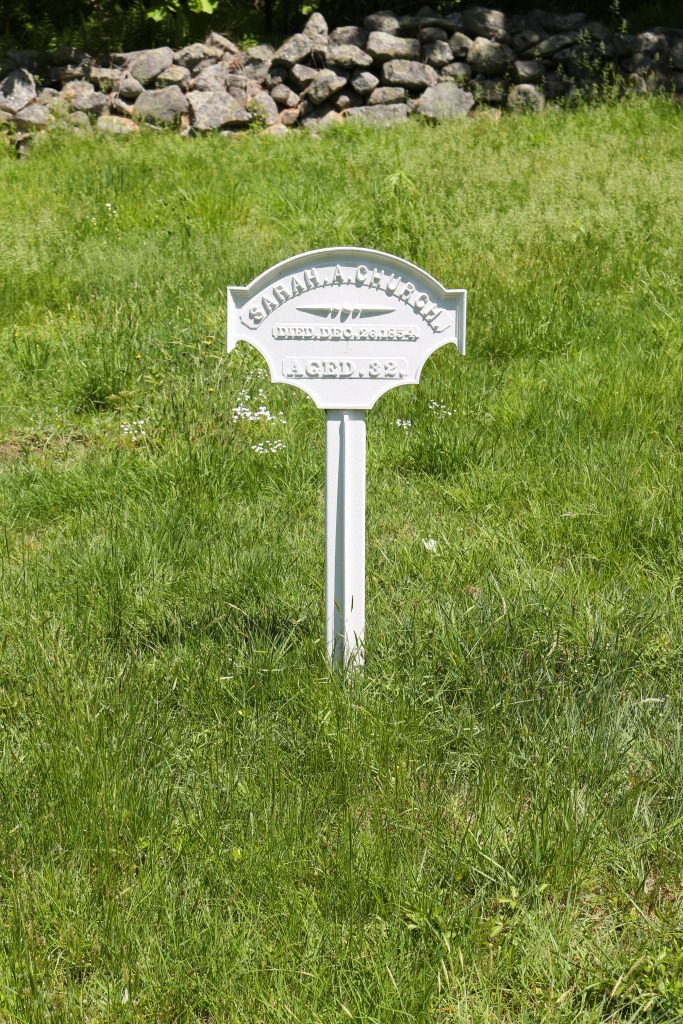
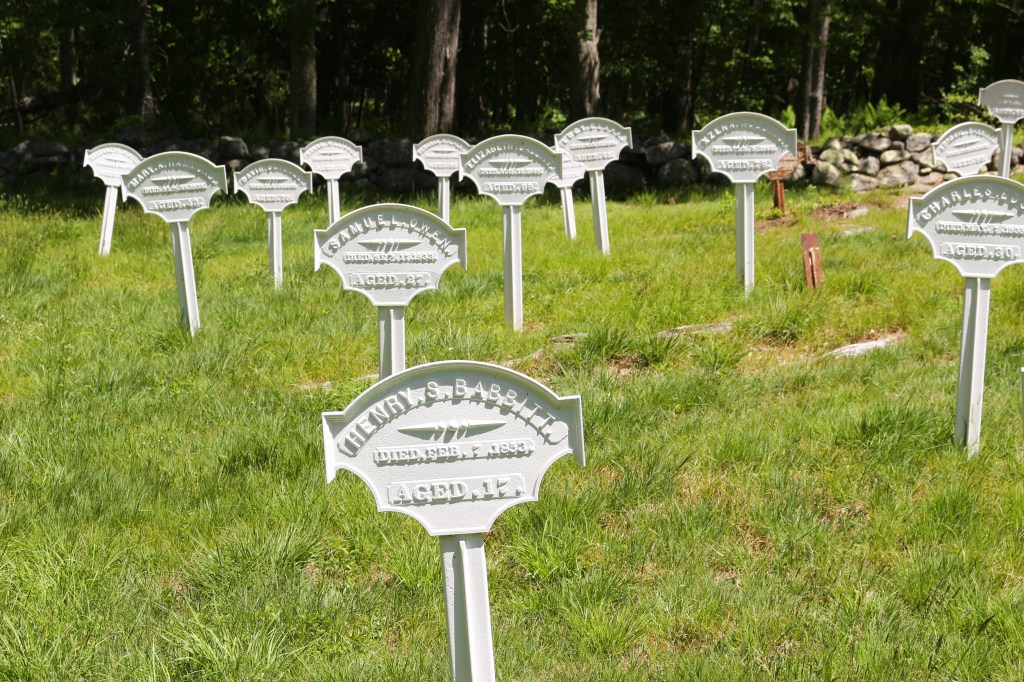
Another Shaker cemetery, this one in Harvard, Massachusetts, displays the same orderly layout as the cemetery in Colonie, New York.  The grave markers also contain only the name, the date of death, and the age of the deceased on the markers.  They are buried as they died one after the other in the order of death.  The difference is that each of the more than 300 markers, with the exception of about a dozen marble tablets, are made of cast iron and from a distance have a shape roughly appearing to look like a lollipop. 

Because of that, Harvard Shaker Cemetery has been nicknamed the Lollipop Cemetery.

Posted in Uncategorized | Leave a comment

Firefighters Monument

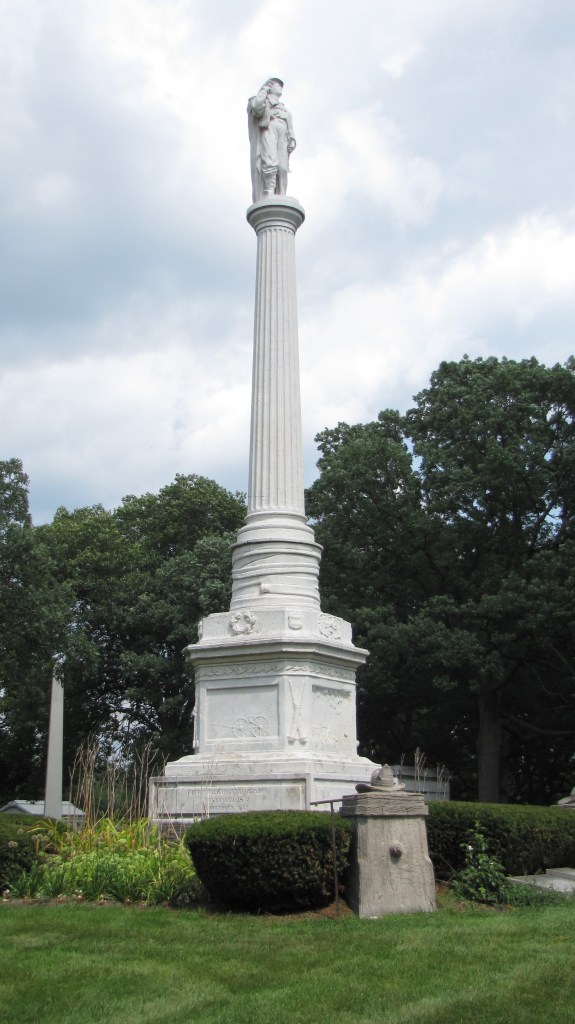
Leonard Wells Volk, written about in the two previous blogposts, is not only buried in the Rosehill Cemetery in Chicago, Illinois, but two of the monuments he designed are also in the cemetery. 

As you drive through the main gate toward the Our Heroes Monument and look to the right, you can see the 40-foot-tall white Carrara marble monument built to honor Chicago volunteer firefighters.

Volk entered his design in an heated competition.  Many designs were entered in the contest and considered but the Firemen’s Benevolent Association committee chose Volk’s.  The monument was erected in 1864 at the cost of $15,000 remains an inspirational commemoration and memorial to firefighters. 

Atop the Doric column stands a vigilant firefighter holding a trumpet to sound the call to action. 

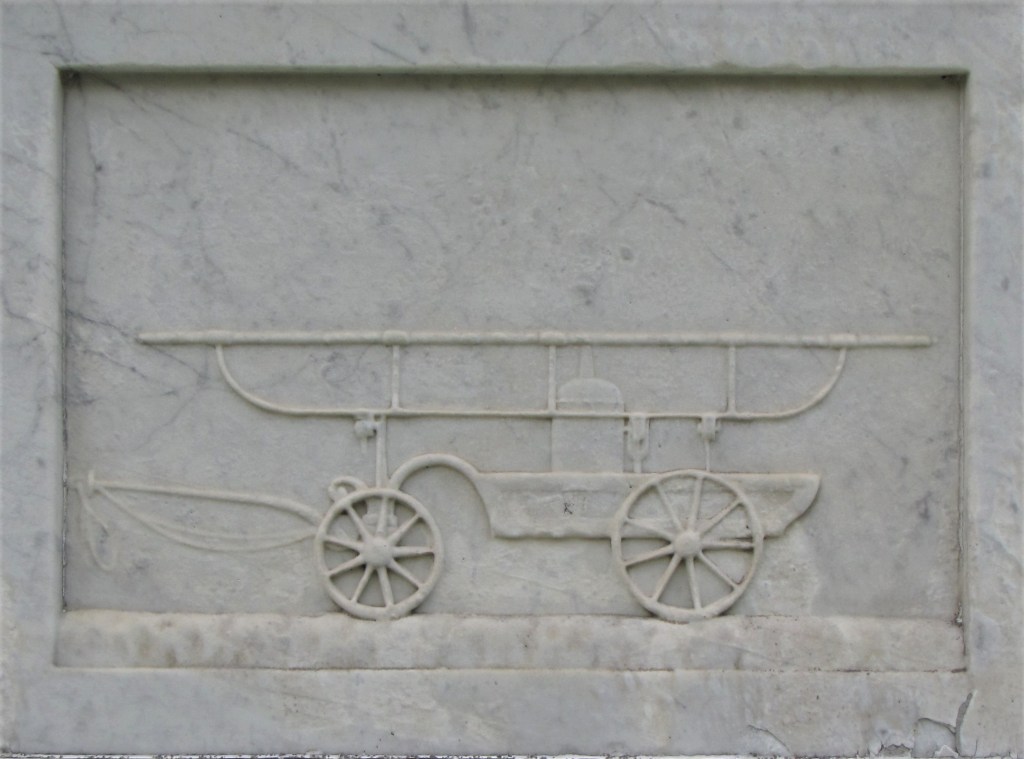
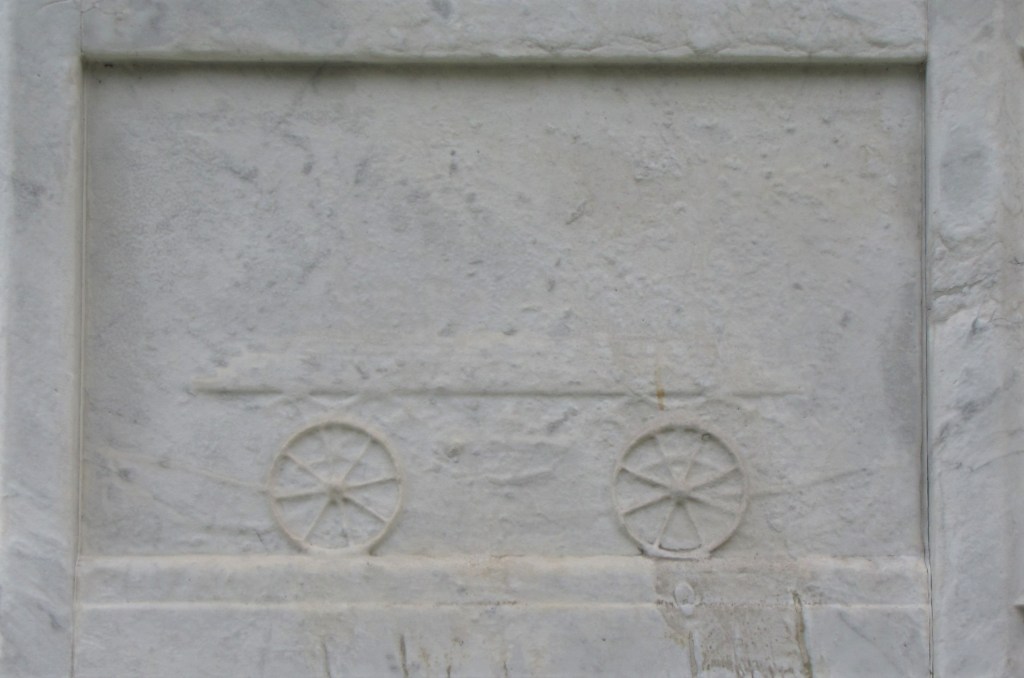
At its base is a firehose wrapping its way round the column.  The four corners of the memorial display old-style fire hydrants.  Three of the four panels on the lower part of the monument depict bs-reliefs of old-style fire hand-pump fire engine and hook and ladder trucks.  The fourth panel depicts a scene of firemen fighting the conflagration on Lake Street where 23 firefighters lost their lives. Unfortunately, all but one of the panels is very badly eroded.

The memorial commemorates the firefighters who were killed in the line of duty and a granite marker at the base of the monument lists their names and the year they died in the line of duty.

Posted in Uncategorized | Leave a comment

Tribute to War Heroes and to Volk’s Artistry

Leonard Wells Volk, written about in the previous blogpost, was buried in the Rosehill Cemetery in Chicago, Illinois.  Not only is there a statue monument commemorating his burial plot, but one of the first monuments one sees through the castellated main gate—driving up the motorway is the soaring heroes monument designed by none other than Leonard Volk—another monument to him, this time displaying his talent as an accomplished sculptor.

Each of the four sides of the column honor a different branch of service:

Artillery

Cavalry

Infantry

Navy

Posted in Uncategorized | 2 Comments

Leonard Wells Volk

LEONARD WELLS VOLK

11 – 7 – 1828

8 – 19 – 1895

EMILY CLARISSA BARLOW

HIS WIFE

8 – 23 – 1832

5 – 28 – 1895

ADELLE DOUGLAS

4 – 17 – 1864

8 – 9 – 1865

THEIR CHILDREN

ARTHUR DOUGLAS

4 – 23 – 1853

10 – 31 – 1855

HONORA VOLK COLT

7 – 13 – 1861

12 – 13 – 1928

A BELOVED MOTHER

Leonard Wells Volk was an artist most noted for the live mask he made of Lincoln’s face and hands shortly before Lincoln was elected president.  Ironically enough, Volk’s patron was Stephen Douglas, who was Lincoln’s political revival.  Stephen Douglas was a first cousin to Emily Volk, Leonard’s wife.  Douglas paid for Volk to study sculpture in Italy and later supported him when he opened a small studio in Chicago. 

Volk designed his own funerary monument which was carried out by the Gast Monument Company.  The sculpture sits on a circular plot in the Rosehill Cemetery in Chicago.  Volk is depicted seated as if he is resting on a rocky ledge.  He leans against a closed book that has a bas-relief profile of a woman—presumably of his wife, Emily. In one hand he is holding a walking stick and by his feet is a tattered hat. 

Posted in Uncategorized | 1 Comment

Glass Trumpet Angel

In the article, “Embodying Immortality: Angels in America’s Rural Garden Cemeteries, 1850—1900”, pages 56 – 111, 2007 edition of Markers, XXIV, written by Elisabeth Roark, she writes of the eight most common types of graveyard angels found in cemeteries—grouped by the task they performed: soul-bearing; praying; decorating and guarding; pointing; recording; trumpeting; sword-bearing (archangel Michael); and child angels.  Of the eight, only the trumpet angels are commonly found in cemeteries before the 1850s. “Trumpet angels not only foretell of the impending apocalypse and that the last Judgment is at hand but also as “embodiments of the resurrection.”

An example of that can be found in a stained-glass window in a mausoleum in the Rosehill Cemetery in Chicago, Illinois.  Here the angel is blowing a horn while walking down a path.  The angel does not have wings.  However, angels weren’t originally depicted with wings until the 4th Century.  In her article, “The Development of Winged Angels in Early Christian Art,” Therese Martin writes, “The shift to winged angels took place during the fourth century…it no longer sufficed to represent angels, who held a position somewhere between God and people simply as men.  Between God and man is the sky, a conceptual place where divinity had always been localized, a physical place occupied exclusively by winged creatures.”  She further writes that the concept winged angels can be found as early as Tertullian (c. 160 – c. 240), an early Christian author, who wrote, “Every spirit is winged, both angels and demons.”

After the 1850s, trumpet angels appear more frequently and often as full figures in sculptures rather than bas-reliefs and in glass. The angels are often depicted looking toward to Heavens with an almost serene expression unlike the trumpet angels found in the Book of Revelation. The seven trumpet angels in Revelation “are a ferocious lot; each trumpet blow brings a disaster that destroys earthly life.”  The trumpet angels found in rural garden cemeteries are watchful and calm by comparison.  This angel strolling along almost looks like the Pied Piper!

Posted in Uncategorized | 1 Comment