The Poet

THE POET

HANS CHRISTIAN

ANDERSEN

2 April 1805

4 August 1875

The soul which God in his image created,

Is incorruptible, can not be lost.

Our life on earth is the seed of eternity,

Our body dies, but the soul can not die!

Hans Christian Andersen’s gravestone in the Assistens Cemetery in Copenhagen is plain and unostentatious especially given his worldwide fame and popularity.  Even though, Andersen wrote plays, novels, poems, and travelogues, he is best known for his 156 stories that have been translated into 145 languages and are the stuff all children grew up on. 

Fairy tales such as the “Ugly Duckling”, “The Emperor’s New Clothes”, “The Princess and the Pea”, and “Thumbelina” are iconic stories that have been read to children for generations.  The statue of the Little Mermaid, from his story of the same name has become an iconic symbol of Copenhagen and a must-visited stop for every tourist to the city.

Posted in Uncategorized | Leave a comment

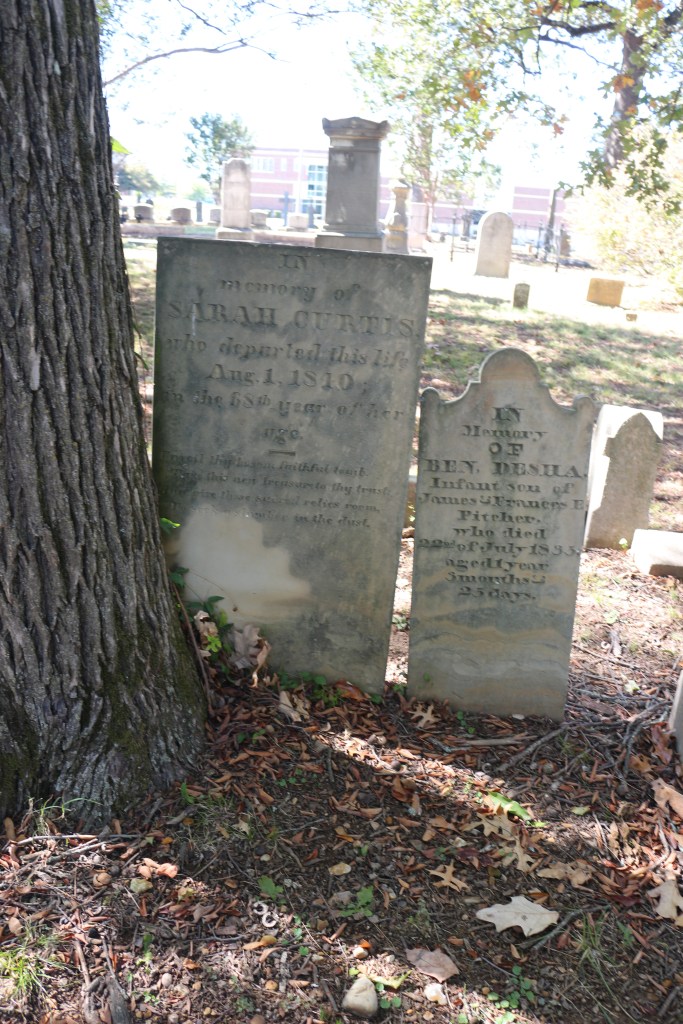
 Slumber in the Dust

IN

memory of

SARAH CURTIS,

who departed this life

Aug. 1, 1840;

in the 68th year of her

age

—

Unveil thy bosom faithful tomb,

Take this new treasure to the thy trust;

And give these sacred relics room,

To seek slumber in the dust.

In the historic Mount Holly Cemetery at Little Rock, Arkansas, a stained square-top marble tablet is nestled into a tree growing around it. The gravestone marks the grave of Sarah Curtis.  The epitaph makes a simple and plaintive plea for her peaceful rest in the grave.

Posted in Uncategorized | Leave a comment

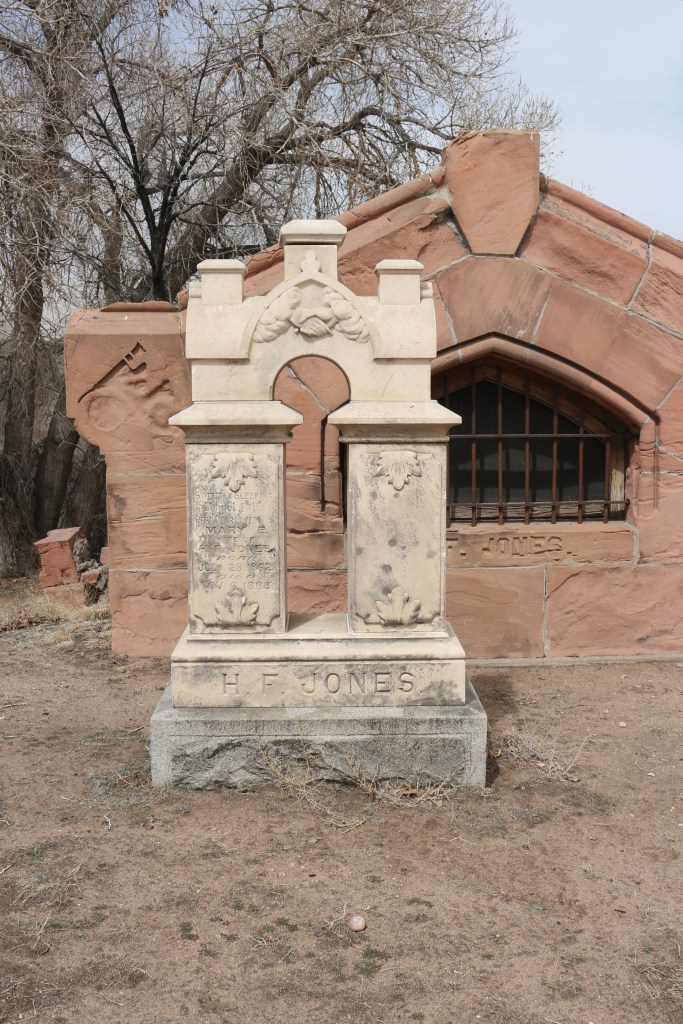
Heavenly Handshake

SWEETLY SLEEPING

Angel Wife

REST DEAR LOVED ONE.

MARY E.

WIFE OF

H. F. JONES

BORN

JULY 28. 1862.

DIED

NOV. 6. 1888.

Clasping hands as in a handshake was a popular Victorian motif and can be found in most American cemeteries in the latter 19th century. 

The symbol can take on many meanings and sometimes the cuffs on the wrists can give the viewer a clue and can indicate a particular meaning.  If for instance, one cuff has lace and one is a buttoned shirt cuff, it likely represents the matrimonial bond—that link between a married couple.  If the cuffs on both wrists are shirt cuffs, it can symbolize fraternal brotherhood—as members of the same organization or union. 

In the case above, where the hands descend through the clouds, which symbolize Heaven, it can represent a final farewell or eternal bond between the living and the dead. The handshake may also represent God reaching out for the deceased to bring them into his presence as a welcome to Heaven—the Heavenly handshake.

Posted in Uncategorized | Leave a comment

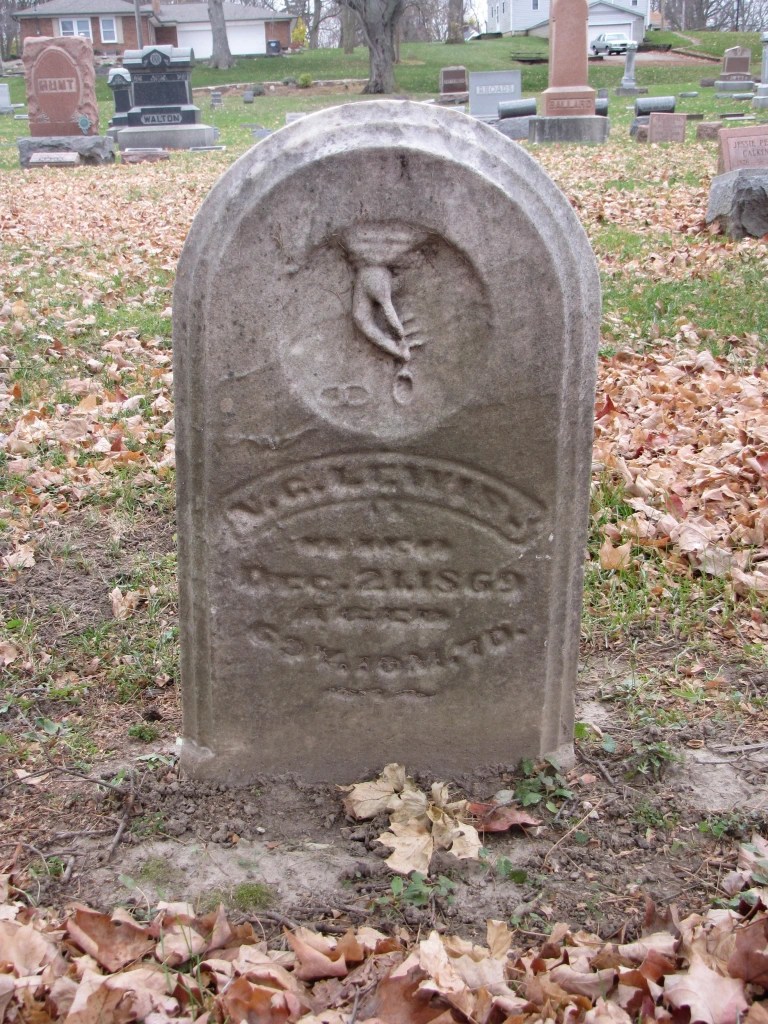
The Hand of God and a Broken Chain

N. G. LEWIS

DIED DEC. 21, 1869

AGED

69 Y. 10 M. 7D.

The rounded-top white marble gravestone of N. G. Lewis depicts the hand of God holding a broken chain. The broken link of chain represents a life that has ended. This symbolism dates back to medieval times when people believed that the soul could be held to the body by a golden chain. Once the chain was broken, the soul took flight and rose from the body leaving Earth and ascended to Heaven. Here there are three links in the chain which may also represent the Trinity—the Father, the Son, and the Holy Spirit.

Posted in Uncategorized | Leave a comment

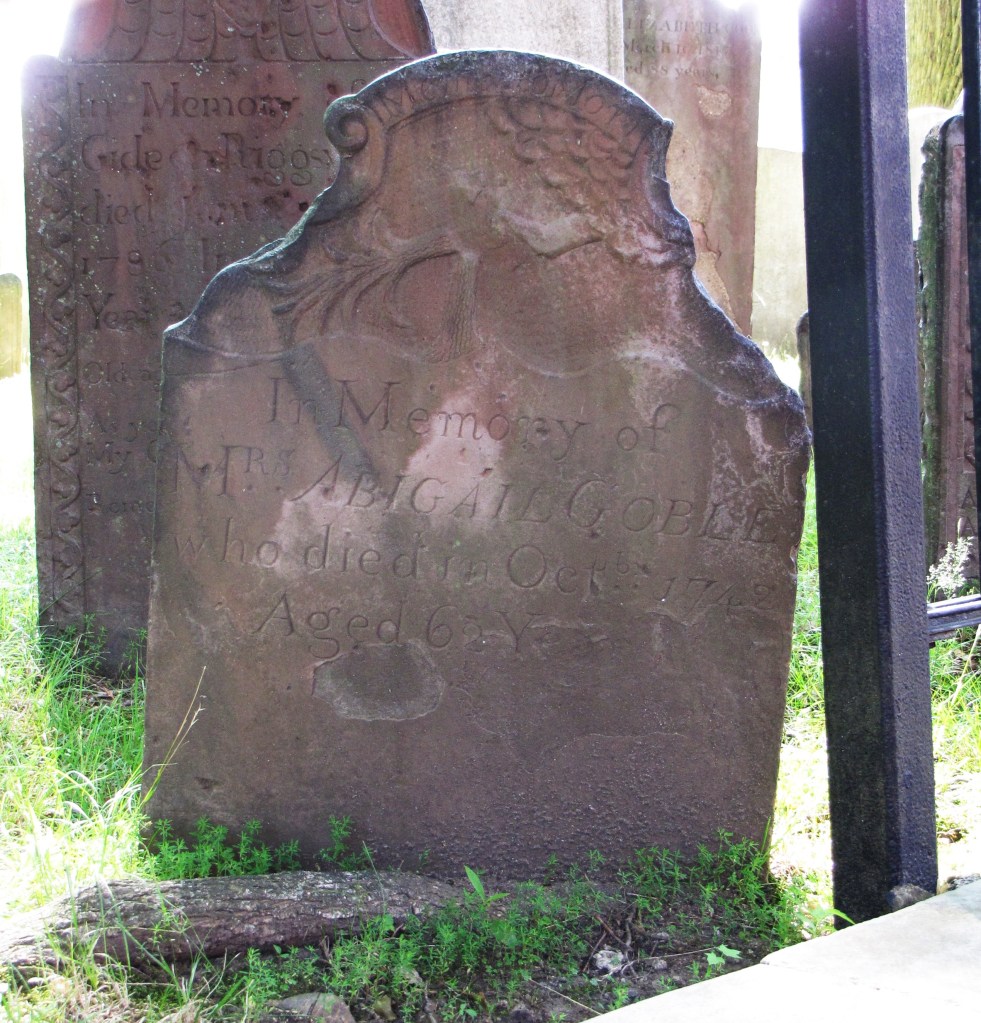
The Hand of God Wielding a Hatchet

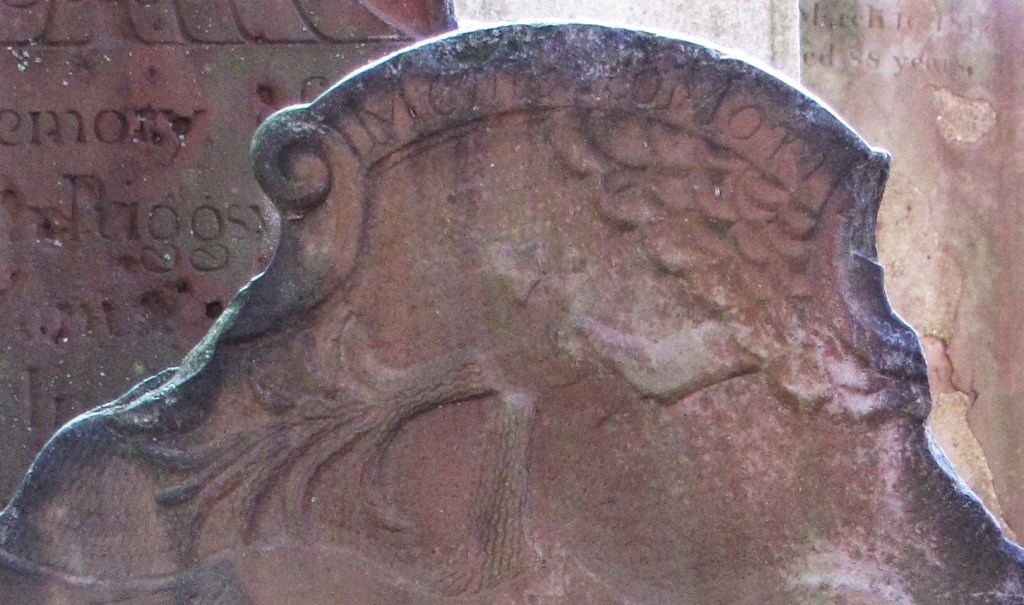
Memento Mori

In Memory of

Mrs. ABIGAIL GOBLE

who died in Oct.br 1742

Aged 62 Years

The Old Burying Ground at the Presbyterian Church at Morristown, New Jersey, is full of red slate gravestones, the most interesting of them by far is the gravestone of Abigail Goble, believed to be the oldest woman buried within the churchyard.  The image is dramatic.  In the right side of the top of the gravestone or the tympanum, out of the sculpted clouds of the Heavens, comes the hand of God wielding a hatchet. God’s axe has felled the Tree of Life!  The Tree is hacked down, life is over.  Over the top of the gravestone are the words “Memento Mori”.  This is a medieval reminder from the depths of the Black Death that swept through Europe to “remember death”.  Death was a constant and one must be prepared to die at any time.

Posted in Uncategorized | Leave a comment

The Hand of God Holding a Sheaf of Wheat

ALICE WARD JEFFS

Wife of

WILLIAM Y. JEFFS

BORN

Nov. 4 1832

Died

Sept, 4 1907

MOTHER

As the previous blogpost reported, for nearly a thousand years, artists depicted God as a hand reaching down from the clouds.  Such a representation can be found on Alice Ward Jeffs’s gothic-styled white marble gravestone in the Iona Cemetery in Ammon, Idaho.  On her marker, the hand coming down from swirling clouds is holding a sheaf of wheat and a sickle. 

Wheat’s origins are unknown but is the basis of basic food and a staple in many cultures. Because of wheat’s exalted position as a mainstay foodstuff, it is viewed as a gift from Heaven.  Wheat symbolizes immortality and resurrection.  But, like many symbols found on gravestones, they can have more than one meaning.  For instance, because wheat is the main ingredient of bread, the wheat can represent the Body of Christ in the Eucharist.  Wheat can also represent a long life, usually more than three score and ten, or seventy years, as is the case for Alice Ward Jeffs, who was a month shy of her 75th birthday.

The sickle is an ancient farm hand tool dating back thousands of years that was used to harvest cereal grains such as wheat.  The sickle was a farm implement to gather the wheat; used in funerary symbolism it represents a “harvesting of souls.”  The sickle can be shown alone or coupled with another object—such as a sheaf of wheat or with the Grim Reaper, himself! 

Posted in Uncategorized | Leave a comment

The Hand of God

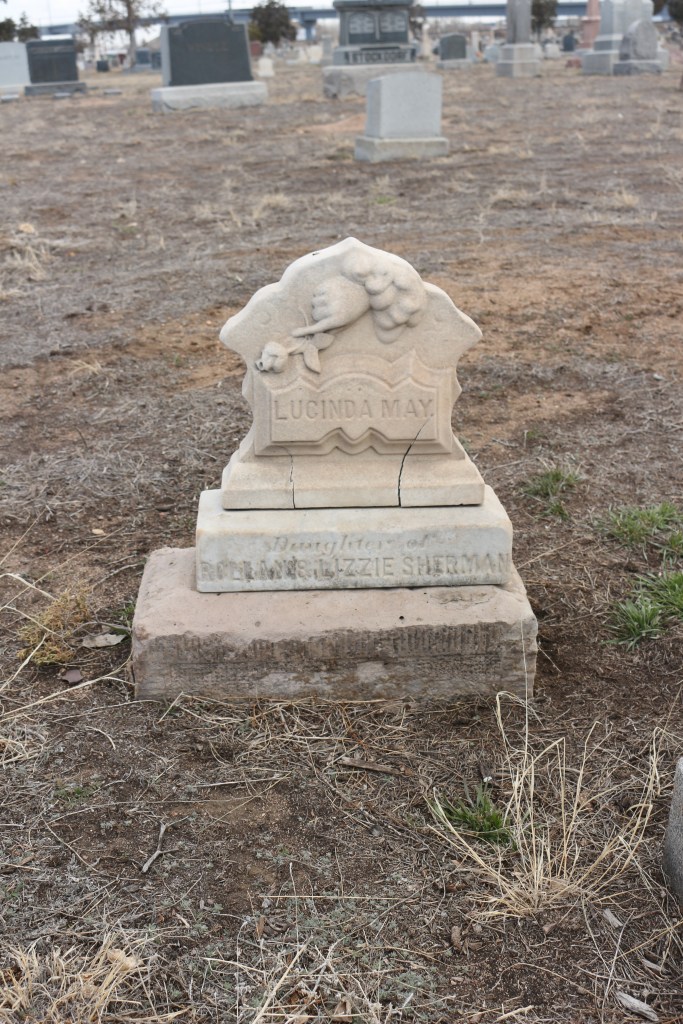
LUCINDA MAY

Daughter of

ROLLAN & LIZZIE SHERMAN

October 7, 1883

April 8, 1886

There are many verses in the Bible against showing a representation of God, such as, Exodus 20:4—”You shall not make for yourself an idol, or any likeness of what is in Heaven above or on Earth beneath or in the water under Earth.” Exodus 33:20 “Thou canst not see my face: for there shall no man see Me and Live.”  And, John 1:18, “No man hath seen God at any time.”

So, early Christian artists did not depict the face of God, which they considered against their teachings, but portrayed God as a hand coming down from the clouds.  The hand coming down from the clouds became an artistic metaphor to depict God.

The Bible refers to the hand of God in many verses throughout the text for example:

Isaiah 48:13

Surely My hand founded the earth,
And My right hand spread out the heavens;
When I call to them, they stand together.

Isaiah 64:8

But now, O Lord, You are our Father,
We are the clay, and You our potter;
And all of us are the work of Your hand.

Job 19:21

Pity me, pity me, O you my friends,
For the hand of God has struck me.

Habakkuk 3:4

His radiance is like the sunlight;
He has rays flashing from His hand,
And there is the hiding of His power.

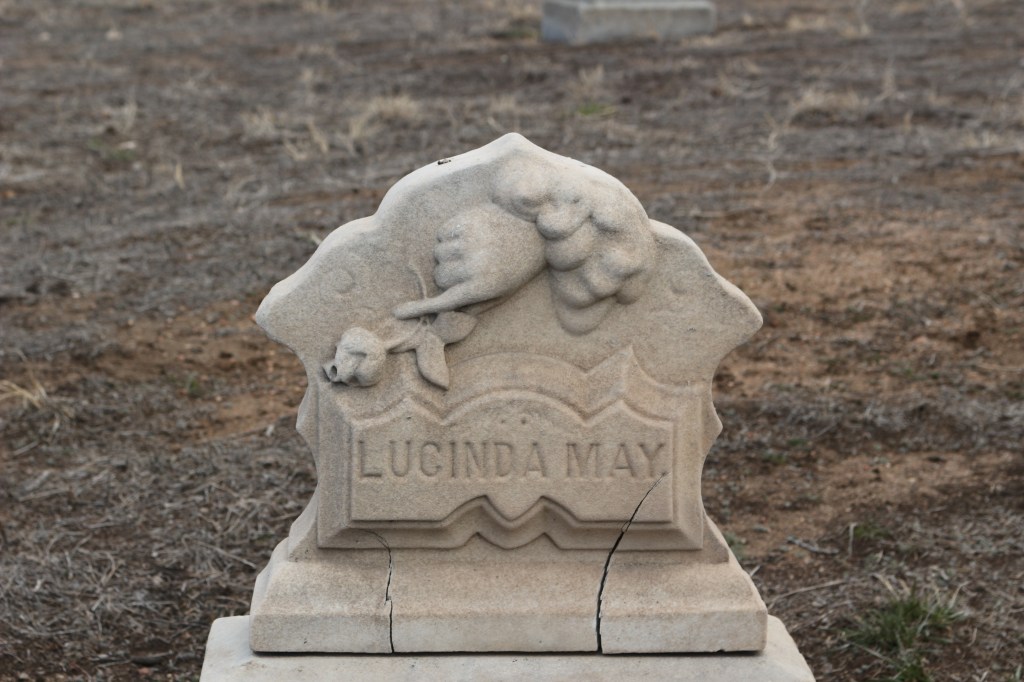
For nearly a thousand years, artists depicted God as a hand reaching down from the clouds.  Such a representation of God can be found on Lucinda May Sherman’s small white marble gravestone in the Riverside Cemetery in Denver, Colorado.  Often this symbol on a gravestone meant that the deceased had died unexpectedly or abruptly, as was the case for two-year old Lucinda May. 

On her marker, the hand coming down from swirling clouds is holding a rose with three leaves.  The three leaves likely represent the Trinity—the Father, the Son, and the Holy Ghost.  The rose is often found on the gravestones of women in Victorian cemeteries. 

Posted in Uncategorized | 1 Comment

The Temple

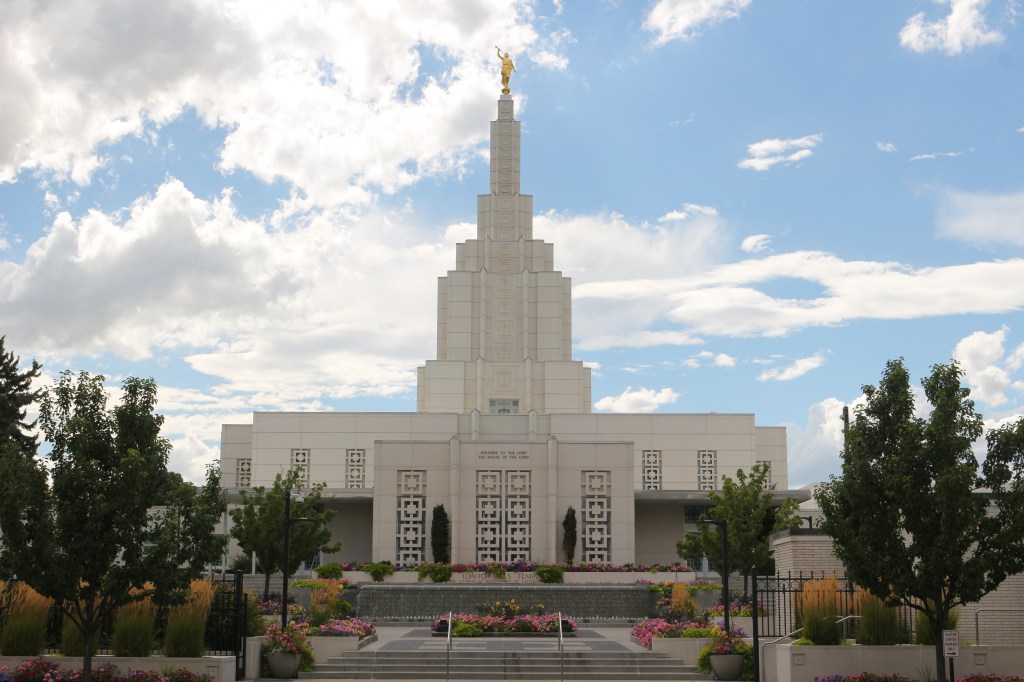
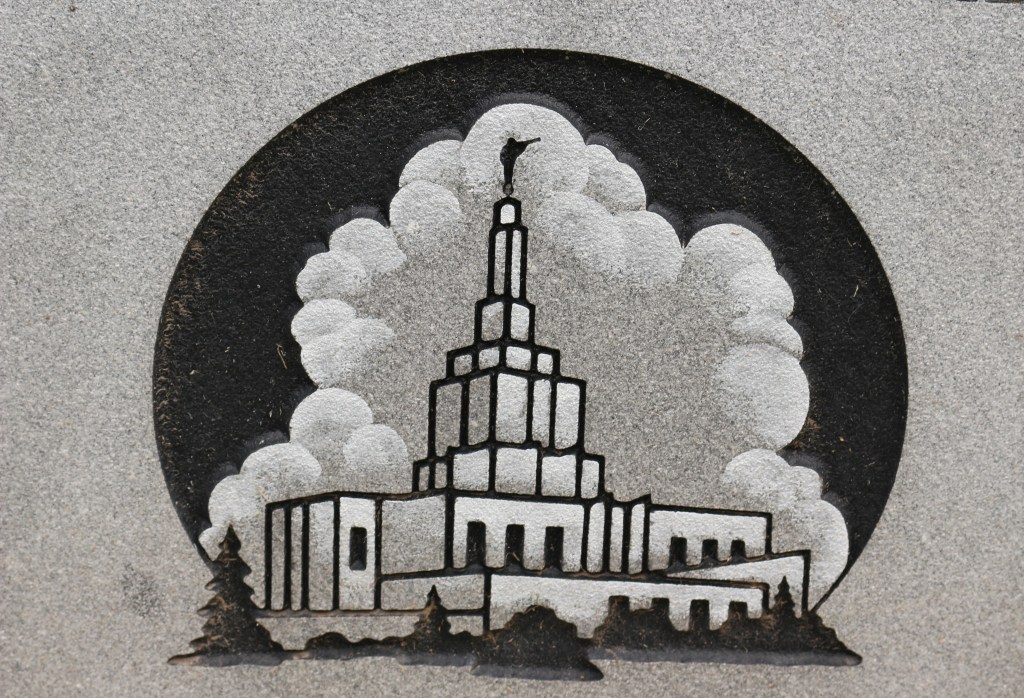
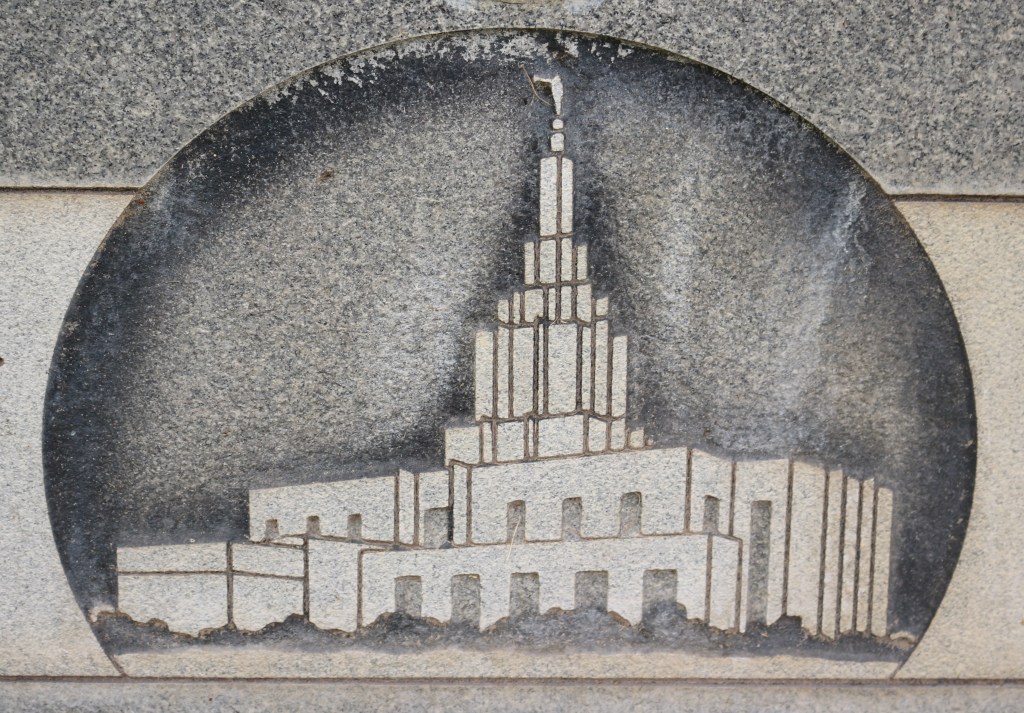
Idaho Falls, Idaho, is a small city of about 65,000 people in the southeastern part of the state.  Over 56% of the population is Mormon which is reflected in the symbolism found in the Rose Hill Cemetery.  Many of the gravestones feature the city’s Mormon Temple. 

The Temple was designed by a team of Latter-day Saint architects—Edward O. Anderson, Georgius Y. Cannon John Fetzer, Ramm Hansen, Hyrum Pope, and Lorenzo S. Young.  The temple is a blend of Art Deco and Mid-century Modern influenced by city skyscrapers of the 20s and early 30s.

The temple consists of a “two-story rectilinear block topped with a 125-foot tapering center tower with a six-tiered top.” Construction of the temple began in 1939 but was interrupted by World War II and not completed until 1945. 

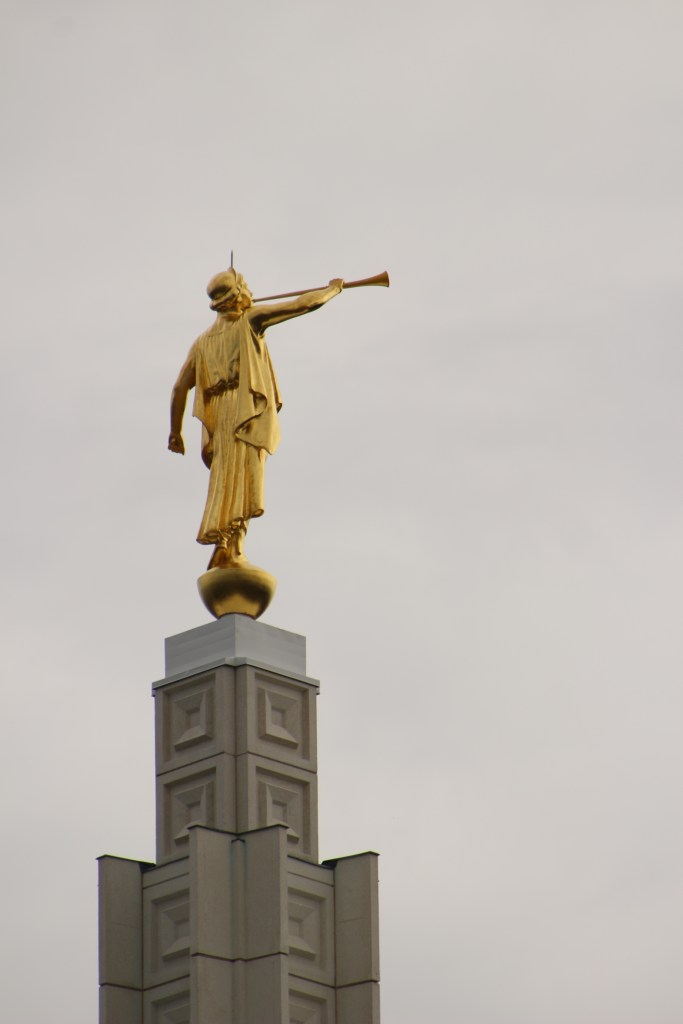
The statue of the Angel Moroni did not top the central tower until 1983 when a helicopter was employed to hoist it to the top.  The statue of the Angel Moroni is a replica of the Cyrus E. Dallin’s statue that rests atop the Salt Lake Temple.

Posted in Uncategorized | Leave a comment

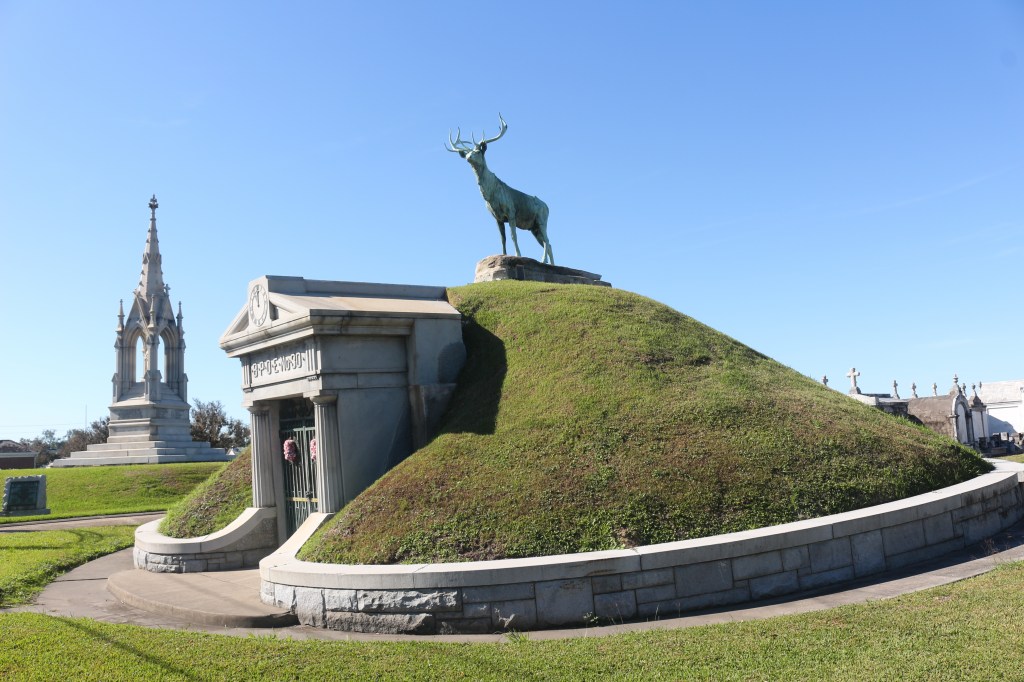
Elks Rest

In many cemeteries across the country are common burial spots owned by Elks Lodges for fraternity members who would like to be buried next to their Departed Brothers.  These burial plots are often marked by a statue of an elk.  Sometimes the elk is carved from stone, other times, a bronze elk marks the final resting plots where the fraternal brothers rest until their final summons to the Celestial Lodge.

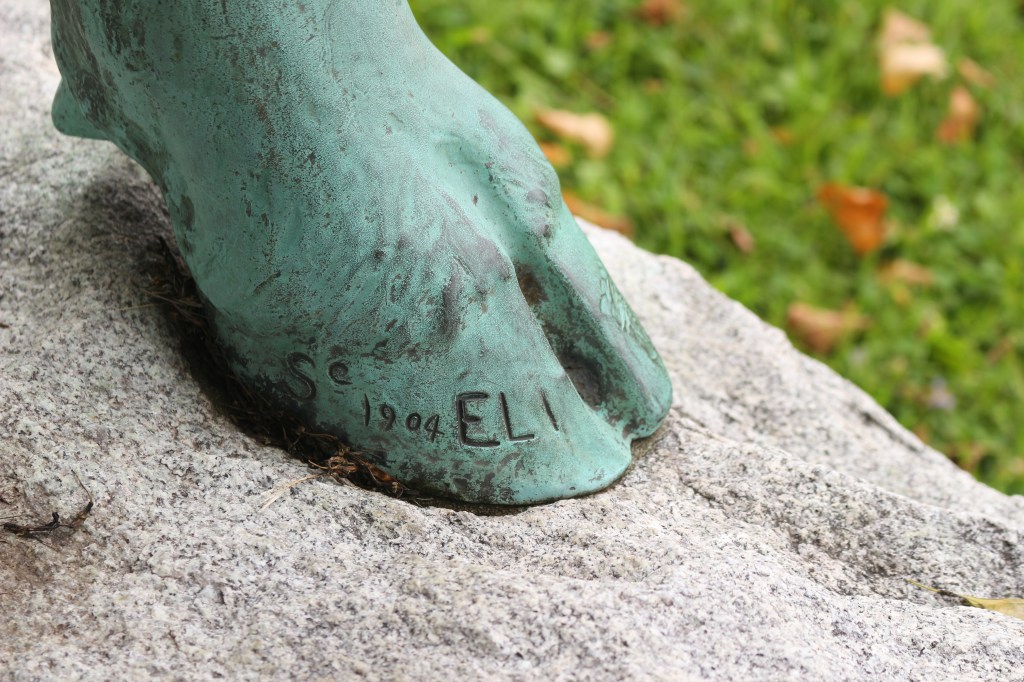
The Elks Rest in the Oakwood Cemetery in Syracuse, New York, has an Elks Rest marked by a bronze elk.  This particular statue was created by “ELI” who signed the hoof, dated 1904. 

The sculptor was Eli Harvey (September 23, 1860—February 10, 1957) an Ohio-born artist whose most famous work of art was, in fact, for the Benevolent Protective Order of Elks, who commissioned him to create a life-sized elk for use on their buildings and cemetery plots.

Eli Harvey’s sculptures can be found in art museums, historical societies, and zoos across the country.  Harvey’s elks can be found in many locations around the United States, including: Greenwood Cemetery in New Orleans; Evergreen Cemetery in Colorado Springs, Colorado; North Burial Ground, Providence, Rhode Island; Clinton County Historical Society in Wilmington, Ohio; Prince Street in Alexandria, Virginia; Riverside Cemetery in Waterbury, Connecticut; Elks Opera House in Prescott, Arizona; Lakewood Cemetery in Minneapolis Minnesota; Mohawk Trail in Florida, Massachusetts; B.P.O.E Lodge in Kirkwood, New York; Toledo Memorial Park in Sylvania, Ohio; Woodlawn National Cemetery in Elmira, New York; Elks National Home in Bedford, Virginia; Highlawn Cemetery in Terre Haute, Indiana; Greenlawn Cemetery in Newport News, Virginia; Kensico Cemetery in Valhalla, New York; and Roselawn Cemetery in Pueblo, Colorado.

Green-Wood Cemetery, New Orleans, Louisiana

Posted in Uncategorized | 2 Comments

A Son’s Tribute to His Pioneer Parents

REUBEN FLAGG
DIED NOV. 9, 1869
IN THE 71ST YEAR OF HIS AGE
WAS ONE OF THE FOUR FIRST FAMILIES
THAT SETTLED IN WILL CO.
A PIONEER IN THE ADVANCE GUARD OF THE
WESTERN EMIGRATION 1830
HAULED THE LUMBER TO BUILD THE FIRST
FRAME HOUSE ERECTED IN CHICAGO.
OUR MOTHER BETSEY K.
WIFE OF REUBEN FLAGG
DIED FEB. 20, 1876
IN THE 71ST YEAR OF HER AGE
MOTHER OF THE FIRST WHITE CHILD BORN IN WILL CO.
MARY JANE
DIED JULY 11, 1853 AGED 9. YRS. 10. MS 26. DS.
HENRY C.
DIED DEC. 17, 1854 AGED 15. YRS. 3. MS. 10. DS.
SAMATHA E.
DIED FEB. 25. 1872 AGED 41. YRS. 5. MS.
CHILDREN OF R. & B. FLAGG


According to the trade magazine publication, Monument Reporter, December, 1909, Volume 42, Issue No. 12, published by Nichols and Co., Chicago, Illinois, page 13, the Flagg monument was a “unique monument erected at the Plainfield, Cemetery, Plainfield, Ill. For George Flagg, in memory of his father and mother, Reuben A. Flagg and his wife. This job was cut out of one solid piece of Indiana buff Bedford stone. It is 5-0 x 4-0 x 7-2 to the top of the chimney and weighs 15,000 pounds. It required six horses to haul it from the depot to the cemetery. Mr. and Mrs. Flagg were one of the first four families in Will County and always lived in a log cabin of this style; and that is why this monument was especially designed for them by Arthur Wunderlich of the E. Wunderlich Granite Co., Joliet.”

Posted in Uncategorized | Leave a comment