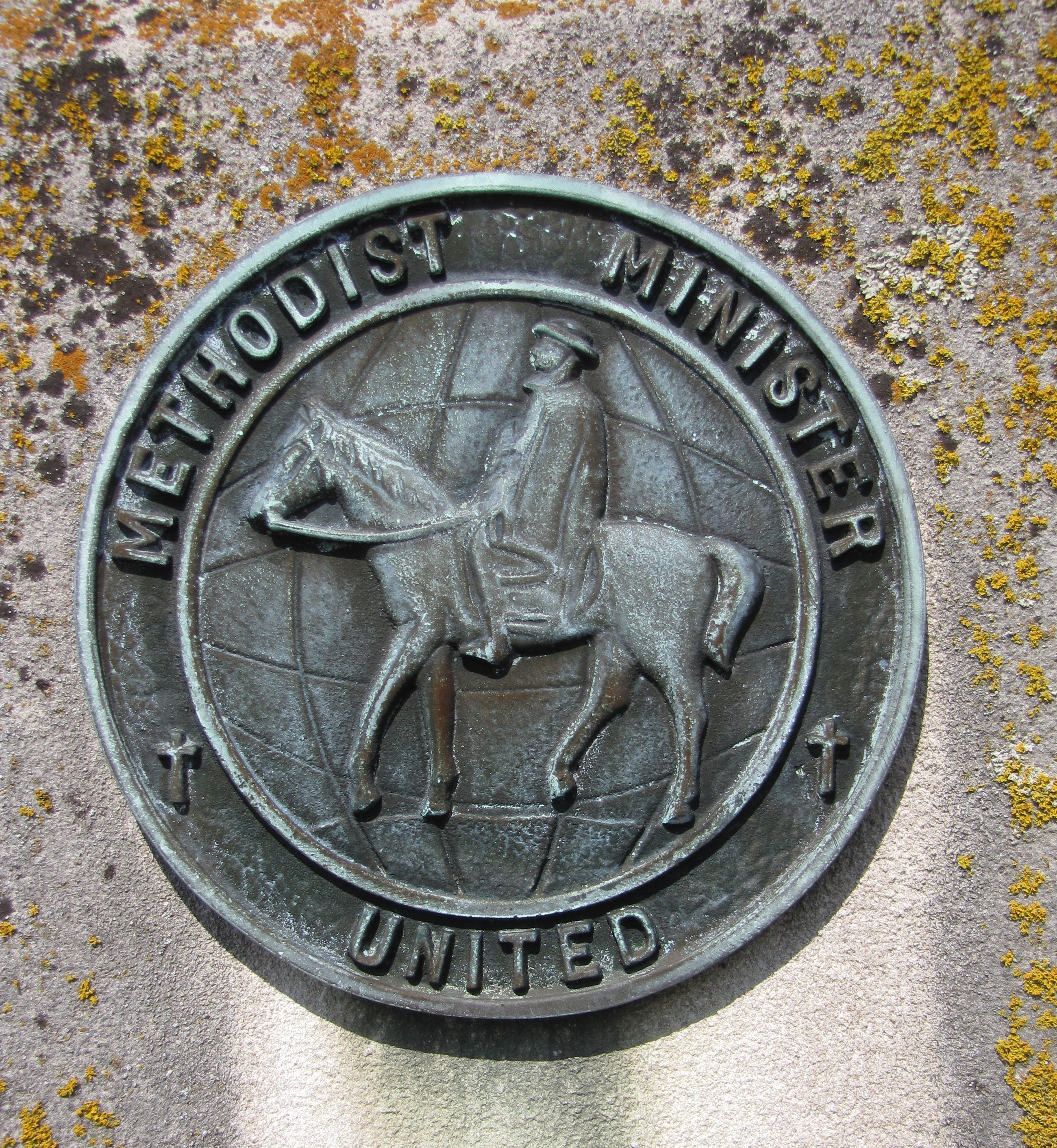
Horseback Evangelism

Greene County Chapel Cemetery, rural Greene County, Indiana

The metal marker affixed to the gravestone shows a minister riding a horse.  The image is an appropriate one, especially for the Methodist clergy.  While many denominations had circuit riding ministers during the settlement of the Frontier, no single church grew at the rate of the Methodist church largely because of the horseback evangelism of the Methodist ministers.  In 1784, only 14,986 people belonged to the Methodist Church but by 1839, over 749,216 people were members.  The number of traveling clergy during that time had grown from 83 circuit preachers or “saddlebag ministers” as they were often called to over 3,500 serving congregants in the far-flung reaches of our new and sprawling country.  The circuit riders rode from village to village and met with people in homes, open fields, country stores, and courthouses, nearly anywhere, so they meet the needs of the people living in remote areas.  The tradition of the travelling clergy as they were officially called by the Methodist Church is gone, but Methodist churches can be found in every corner of the country largely because of the efforts of ministers who were willing to live a lonely life on the back of a horse spreading the Word.

Posted in Metal Markers | 3 Comments

Another Squirrel

Greene County Chapel Cemetery, rural Greene County, Indiana

Even though, they are considered rare, I have come across more squirrels displayed on gravestones, since I first wrote about the image as a funerary symbol.  The carving in the photo above is found in a rural cemetery in Greene County, Indiana.  The squirrel is a delicately-carved, shallow bas-relief on a limestone marker.  Some sources say that if the squirrel is holding a nut, it is a sign of religious meditation and spirtual striving. Clearly this little squirrel is in that prayerful position.

Posted in Symbolism | Leave a comment

The Tasty Morel

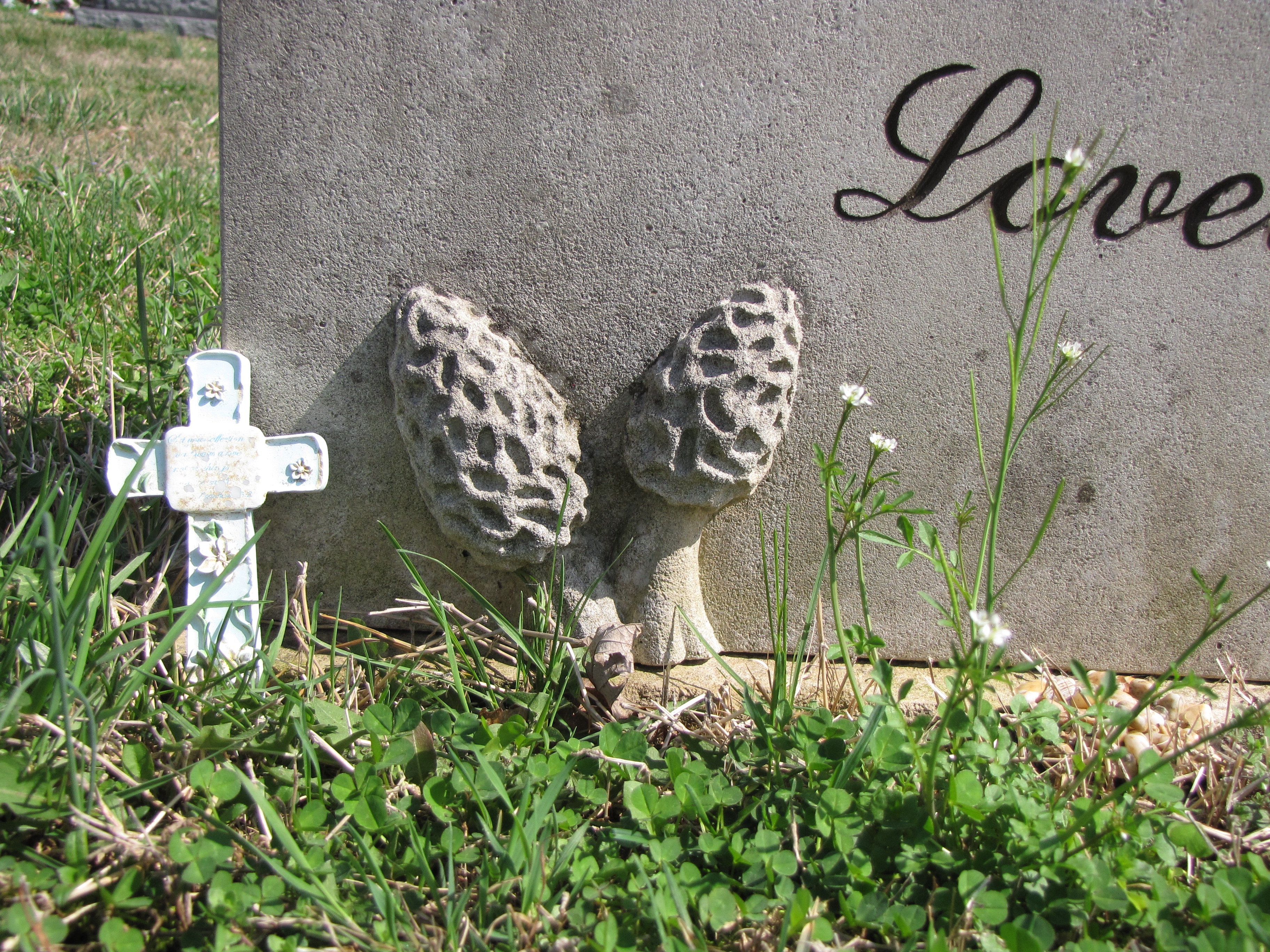
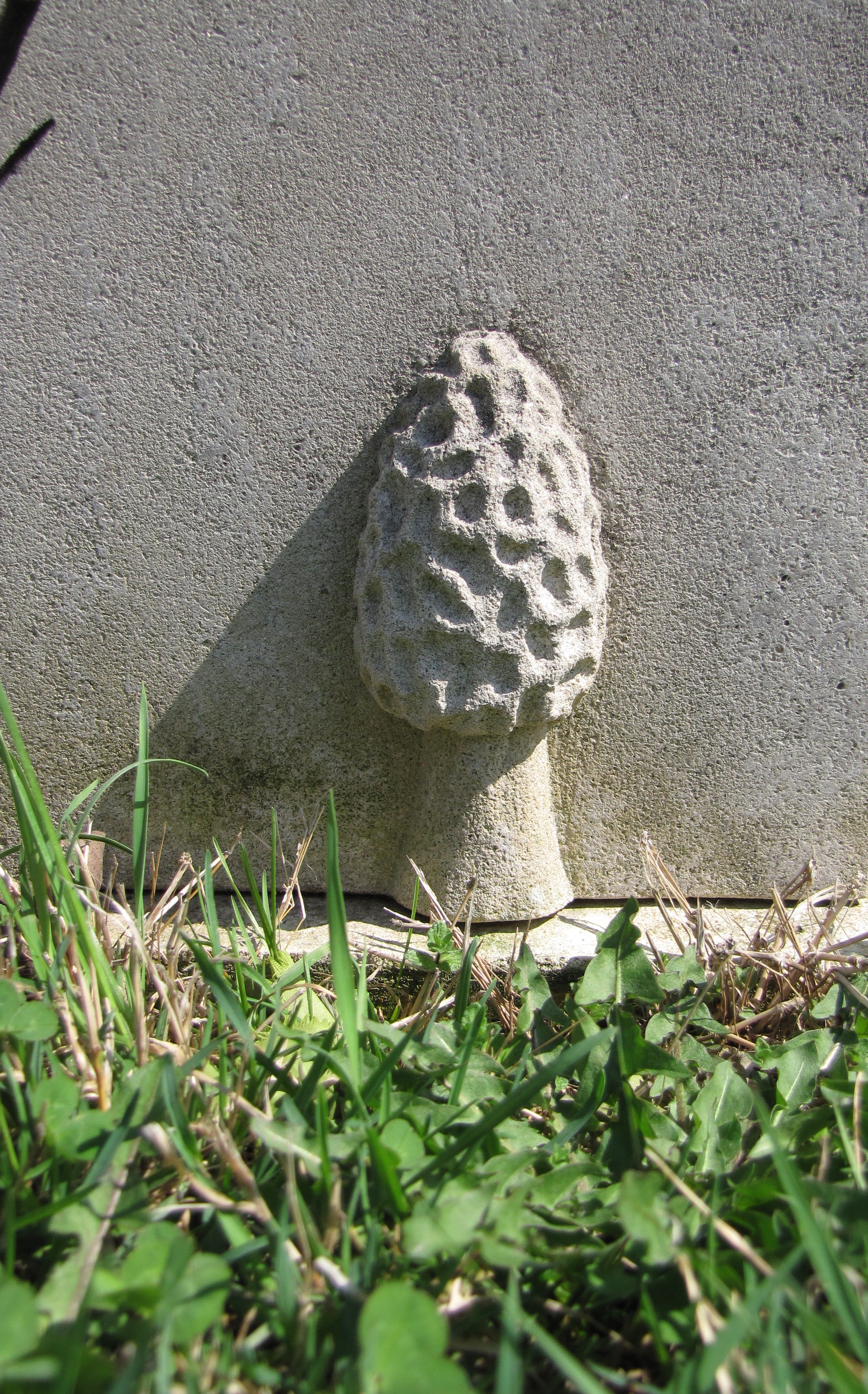
The Greene County Chapel Cemetery, rural Greene County, Indiana

The word morel comes from the Latin word maurus meaning brown and refers to edible mushrooms from the genus Morchella.  Around the country, Morel mushrooms are called many names—molly moochers, dryland fish, sponge mushrooms, hickory chickens, merkels, and miracles—but whatever you call them they are delicious.  These honeycombed sponge-topped tasty morsels pop up in the spring and are sought after by chefs everywhere.  For me, the best way to prepare them is to wash them, lightly flour them and fry them in butter.  Pure delight.

These carved morels on a gravestone in rural Greene County, Indiana, surely marks the grave of a passionate mushroom hunter who enjoyed the search and better yet the reward of a fresh cooked batch of woody tasting delights.

Posted in Uncategorized | Leave a comment

Improved Order of Redmen

Grandview Cemetery, Bloomfield, Indiana

The metal marker above marks the grave of a member of the Improved Order of Redmen, which claims its beginnings with the patriots who were in the Sons of Liberty during the American Revolution.  The society models itself after the Iroquois Confederacy councils.  In fact, some of the metal markers display images of Native Americans because the society based their organization on the rites and rituals of the Native Americans.  Written on the headband of the feathered headress are the initials T.O.T.E which stands for Totem of Eagles.  According to their Website, the IORM “promotes patriotism and the American Way of Life, provides social activities for the members, and supports various charitable programs.”  The different clubs or chapters are divided into “tribes”.

Posted in Metal Markers | Leave a comment

The Clover

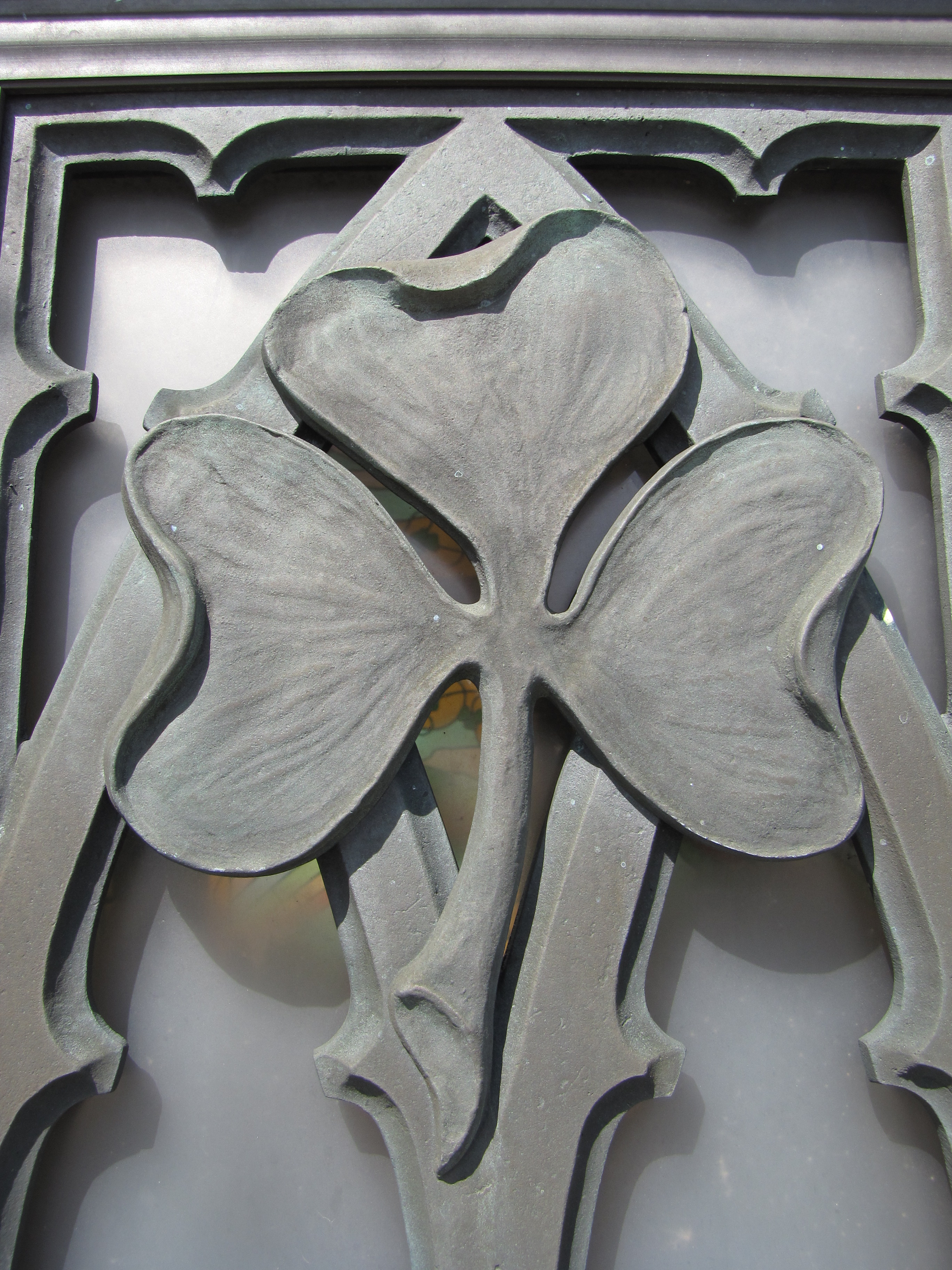
Crown Hill Cemetery, Indianapolis, Indiana

The clover is the symbol of Ireland because legend has it that St. Patrick, the country’s patron saint, brought it to the emerald isle.  The three leaves of the clover represent the Trinity–the Father, the Son, and the Holy Ghost.

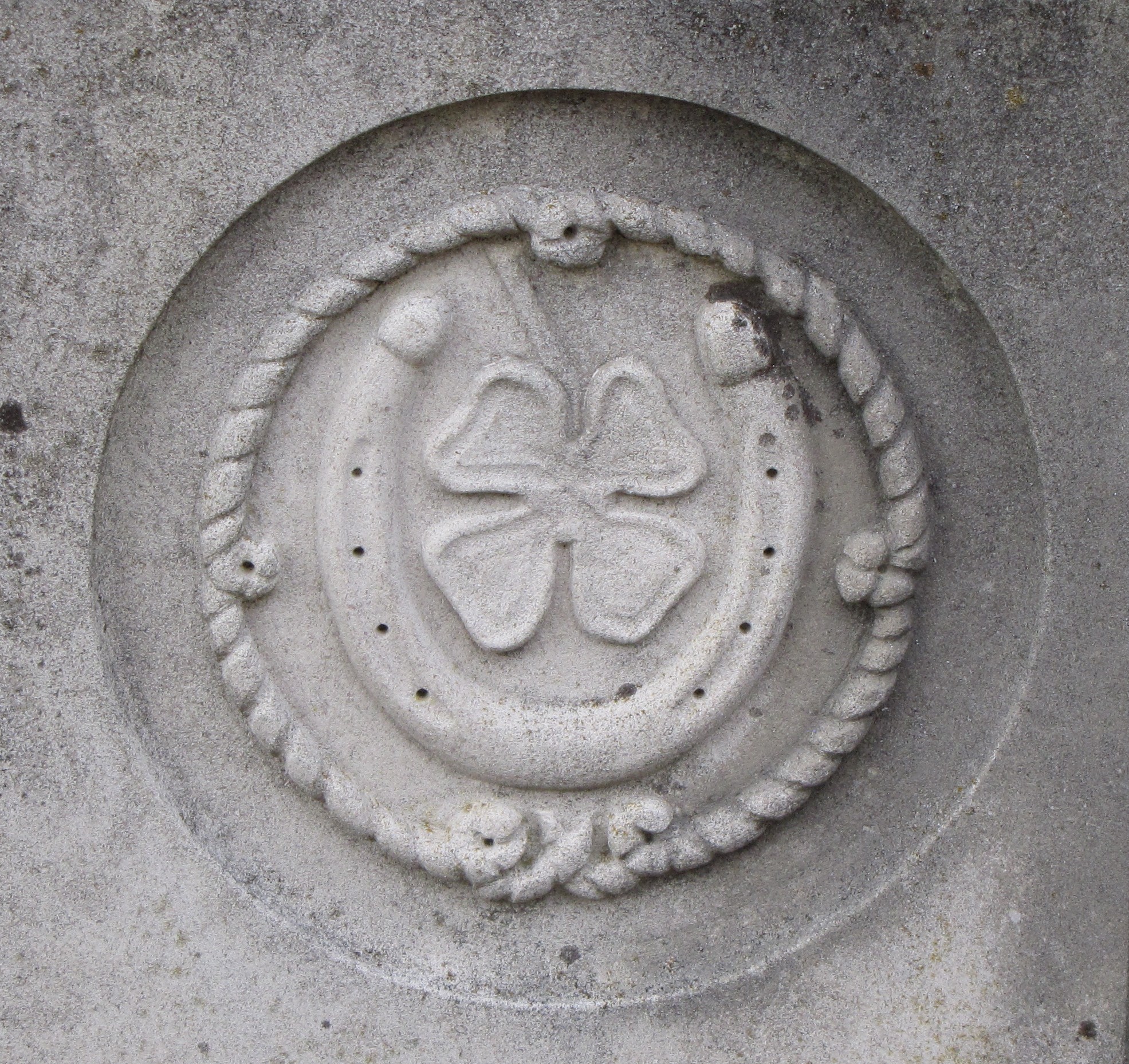
Beech Grove Cemetery, Bedford, Indiana

The four-leaf clover is not a commonly seen gravestone symbol.  The four-leaf clover is universally recognized as a symbol of good luck.

The craving above has the clover tucked inside a horshoe.  To a superstitious person, a horseshoe with the ends pointing up, is viewed as good luck.  These can ususally be found tacked up above a doorway and kept as a talisman.  The claim is that the luck stays in the horseshoe and is bestowed on the owner.  Conversely, some believe that if the horseshoe has the ends pointing down, the good luck will drain from the shoe and be bestowed on those around it.  In gravestone art, however, the horseshoe is a symbol that wards off evil, not as a good luck charm.

Posted in Symbolism | 1 Comment

Military Order of the Cootie

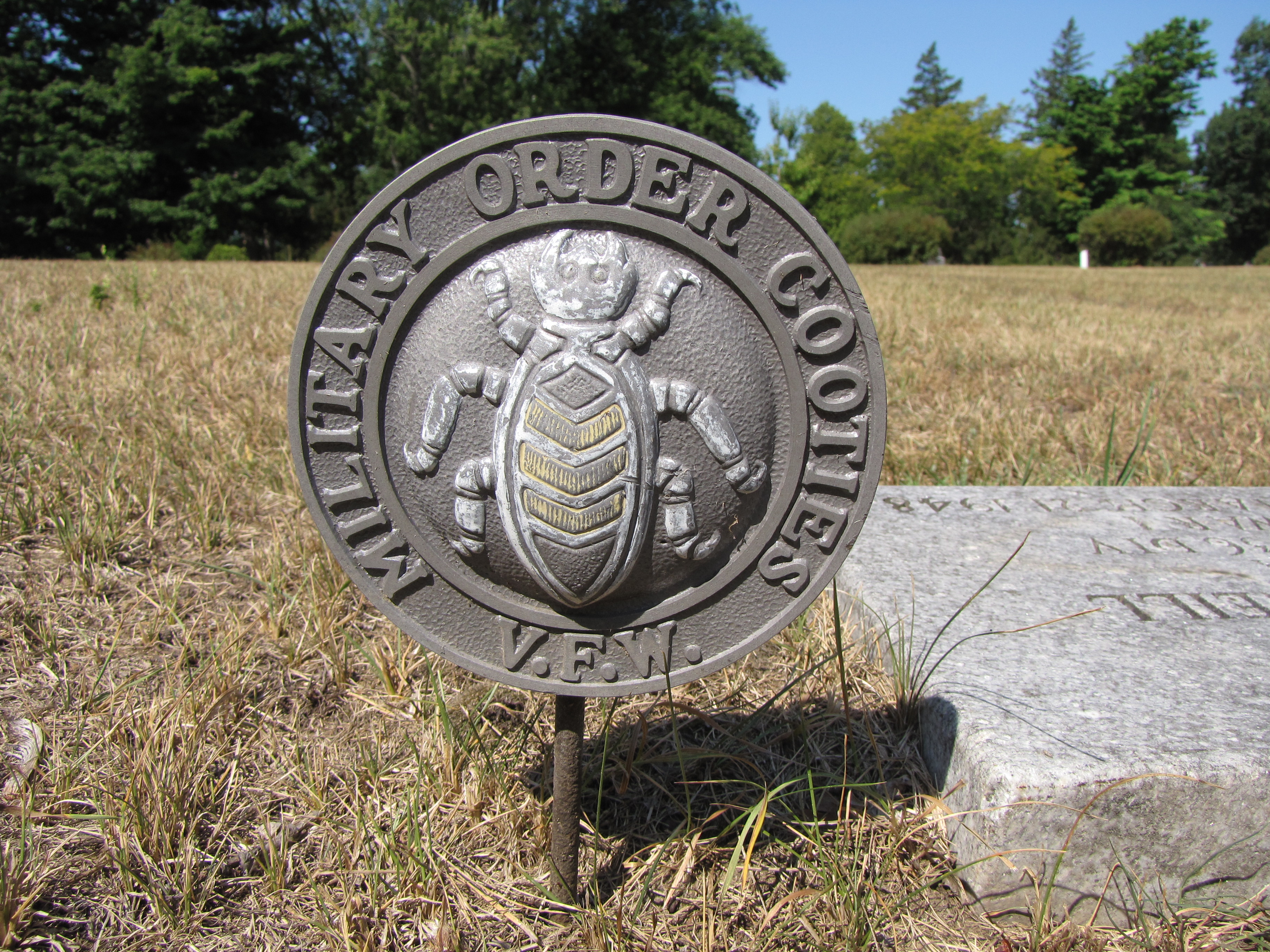
Lakeview Cemetery, South Haven, Michigan. This marker is a replica of the Military Order of the Cootie insignia.

The Military Order of the Cootie (MOC) is the Honor Degree from the Veterans of Foreign Wars (VFW). The origin of the order dates back to the Spanish American War and the Imperial Order of the Dragon.  Founded in 1920 after World War I, the “Cooties” have to be members in good standing of the VFW who have displayed a willingness to work hard for the parent organization.  They have an offbeat humor and apply that to their problem-solving and the services that they deliver.

Since their founding, the MOC have taken on among others, several special projects:

  • Visits hospitalized veterans and residents and entertain them to “Keep ’em Smiling in Beds of White.”  
  • Support of the VFW National Home
  • Fund scholarships for VFW members’ children

Reflective of the sense of humor of this service organization, the cooties take their name from the lice that were found in many of thebattle encampments during World War I.  Today there are 37,000 Cooties organized into 1,000 units which they call “Pup tents”.

The official brightly-colored uniform of the VFW’s Military Order of the Cootie is comprised of red pants with a white stripe running down each side; ruffled white shirt; lace-trimmed red vest emblazoned on the back with a gold-outlined, bug-like creature with flashing light bulb eyes; red, overseas-style cap worn sideways so that the tassels dangle beside the wearer’s ears.

Lakeview Cemetery, South Haven, Michigan

Posted in Metal Markers | 1 Comment

Dry Stone Wall

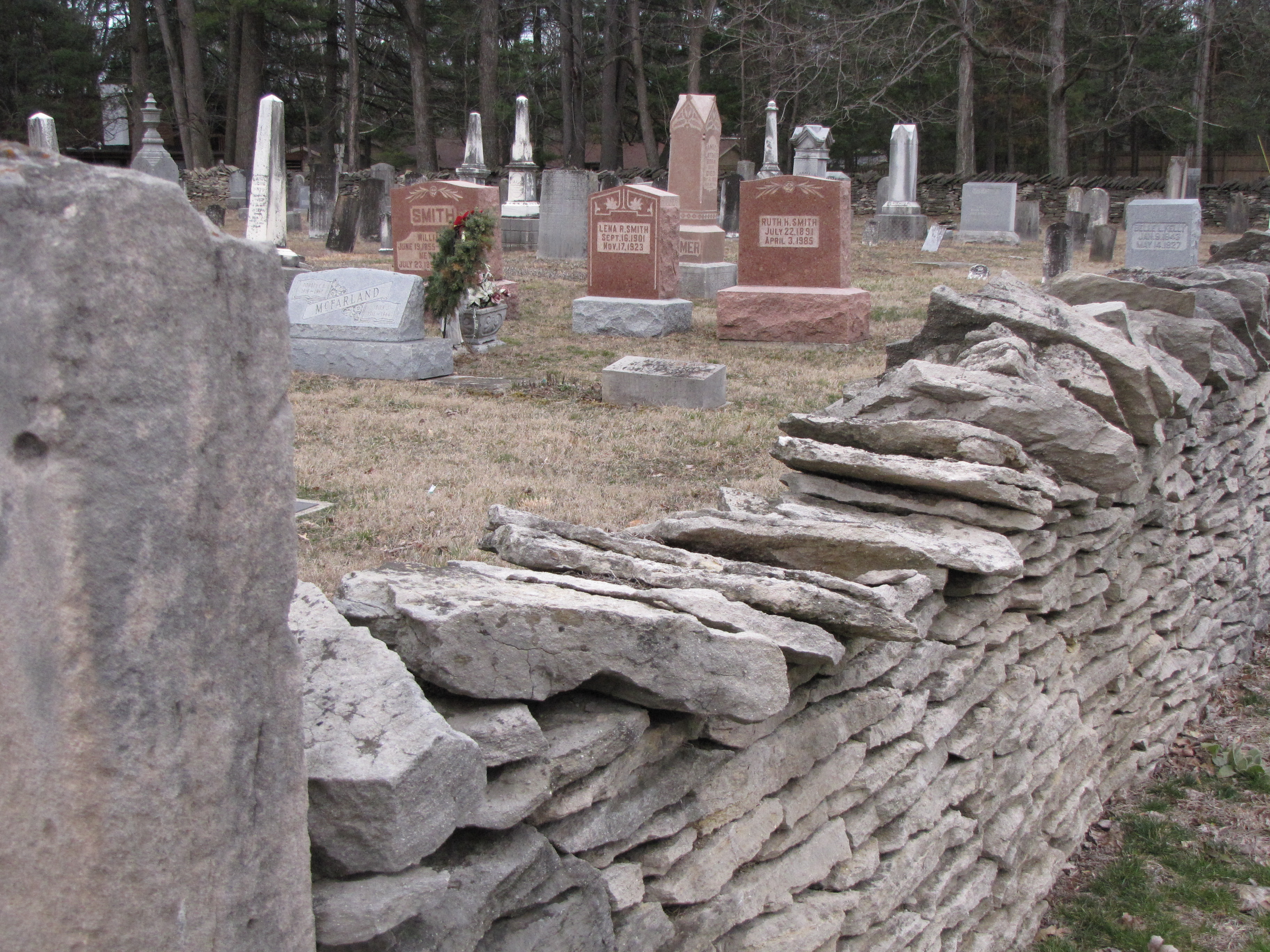
The Covenanter Cemetery Gates, Bloomington, Indiana

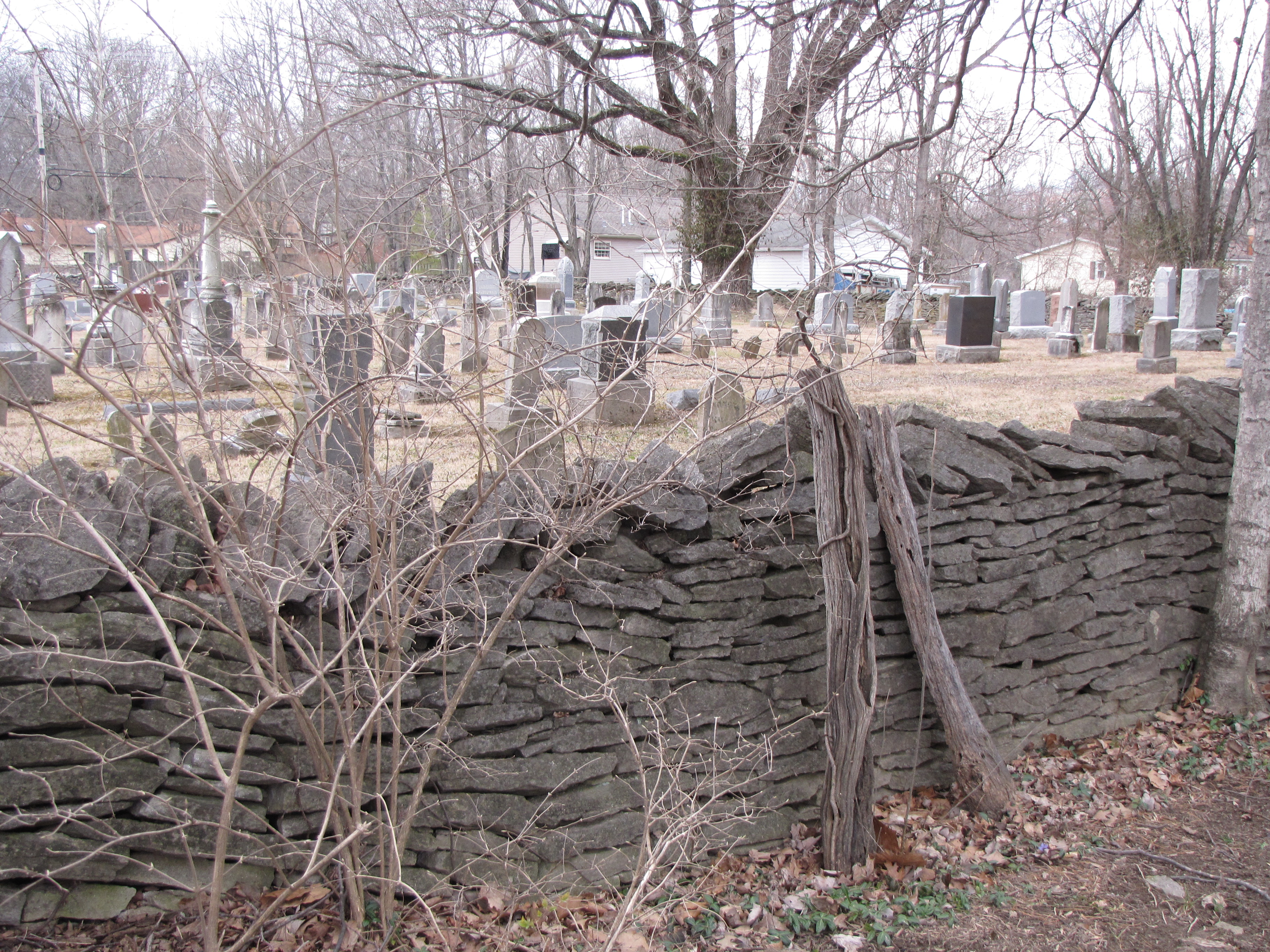
The Convenanter Cemetery is nestled in a quiet residential neighborhood in Bloomington, Indiana.  The two portals into the graveyard are simple wrought-iron gates, the only entryways through the stone walls, reminiscent of rural England and Scotland, that surround the tiny cemetery.

Many refer to the this type of wall as a “rock fence”, while others call it a “dry stone hedge” or “dry stone wall”, named for the building technique—so named because “dry” refers to the fact that no mortar is used in the construction of the wall. In Scotland, when these walls are used to mark property boundaries, the walls are referred to as “dykes”.

The walls are built in such a way that the integrity of their construction rests upon the way the stones are stacked in an interlocking design that strengthens the wall. This technique of wall building is common in areas of the country where rocky soils exist—New England, New York, Pennsylvania, the bluegrass region of Kentucky, and parts of Indiana. The Scot-Irish immigrants brought this dry stone construction technique with them when they migrated to the United States.

Posted in Cemetery Gates | 1 Comment

The Basketball

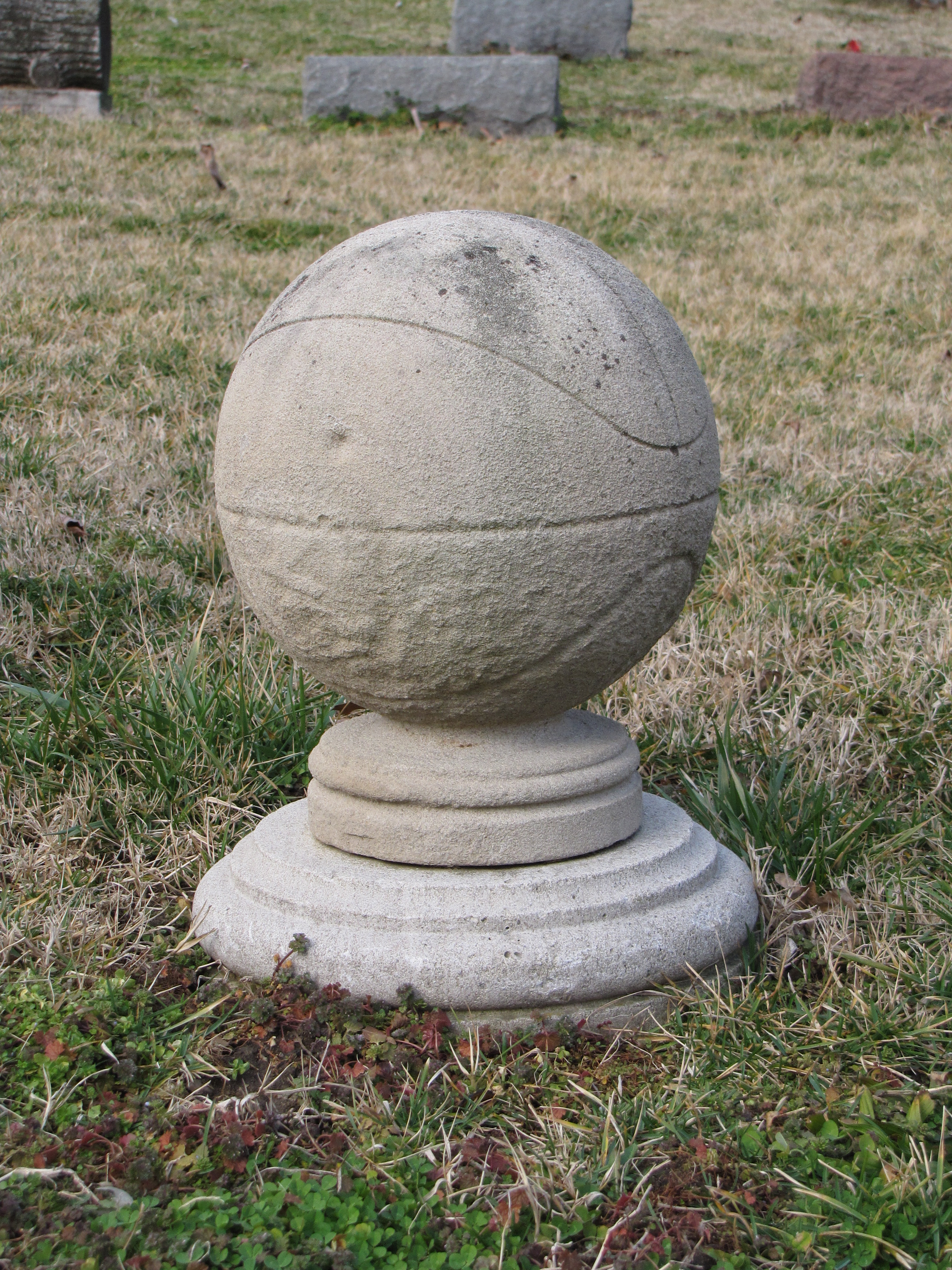
Beech Grove Cemetery, Bedford, Indiana

Warren Dean Jones, August 10, 1931—December 27, 1948

At first, the carved limestone basketball at Bedford’s Beech Grove Cemetery looks like a fan’s tribute to Indiana’s state sport—Hoosier basketball. As most know who follow sports, basketball is as popular in Indiana as football is in Odessa, Texas, or hockey in Minneapolis, Minnesota. But, the life size limestone basketball actually commemorates the poignant story of 17-year old, Warren Dean Jones.

It sounds almost cliché but Bedford which is known for limestone quarries and high-quality precision stonecutters named their high school basketball team Cutters just like the team in the movie Breaking Away about Bloomington’s famed bicycle race. During the 1948 season of his senior year, Jones, an honor roll student and popular athlete, was the star center leading the Bedford High School Cutters on scoring. After practice one afternoon, Jones went home complaining of not feeling well. When he didn’t start feeling better, his parents, Elmer and Eva, called the family doctor to come and examine him, but Warren Dean died of an apparent heart attack before the doctor arrived.

The community rallied around the family to pay respects to the fallen high school senior. The Cutters were to be in a tournament but the principal asked a team from Columbus, Indiana to take their place. The basketball players on Warren Dean’s team served as his pallbearers. And as a final tribute, the high school was to have a dance on the following night which was canceled. More than 40 high school girls donated the flowers from the corsages they were going to wear to form a floral blanket to drape over his casket.

The limestone basketball not only represents the sport that Warren Dean Jones loved but the community that loved him.

Posted in Symbolism | 1 Comment

The Swan

White Oak Cemetery, Bloomington, Indiana

The swan is familiar to us all from Hans Christian Anderson’s story.  In the tale the poor duckling, mocked and ridiculed for being so ugly, magically transforms into an elegant and graceful adult swan–thereby becoming a symbol of transformation.  The swan in funerary art could possibly represent the metamorphosis from one form into the next.  Because the swan often pair for life, the swan is also a symbol of love.

In the monument above, the epitaph reads:

COME TO THE EDGE, HE SAID.

THEY SAID, WE ARE AFRAID.

COME TO THE EDGE, HE SAID.

THEY CAME.

HE PUSHED THEM…AND THEY FLEW.

Posted in Symbolism | 5 Comments

National Society, Colonial Daughters of the Seventeenth Century


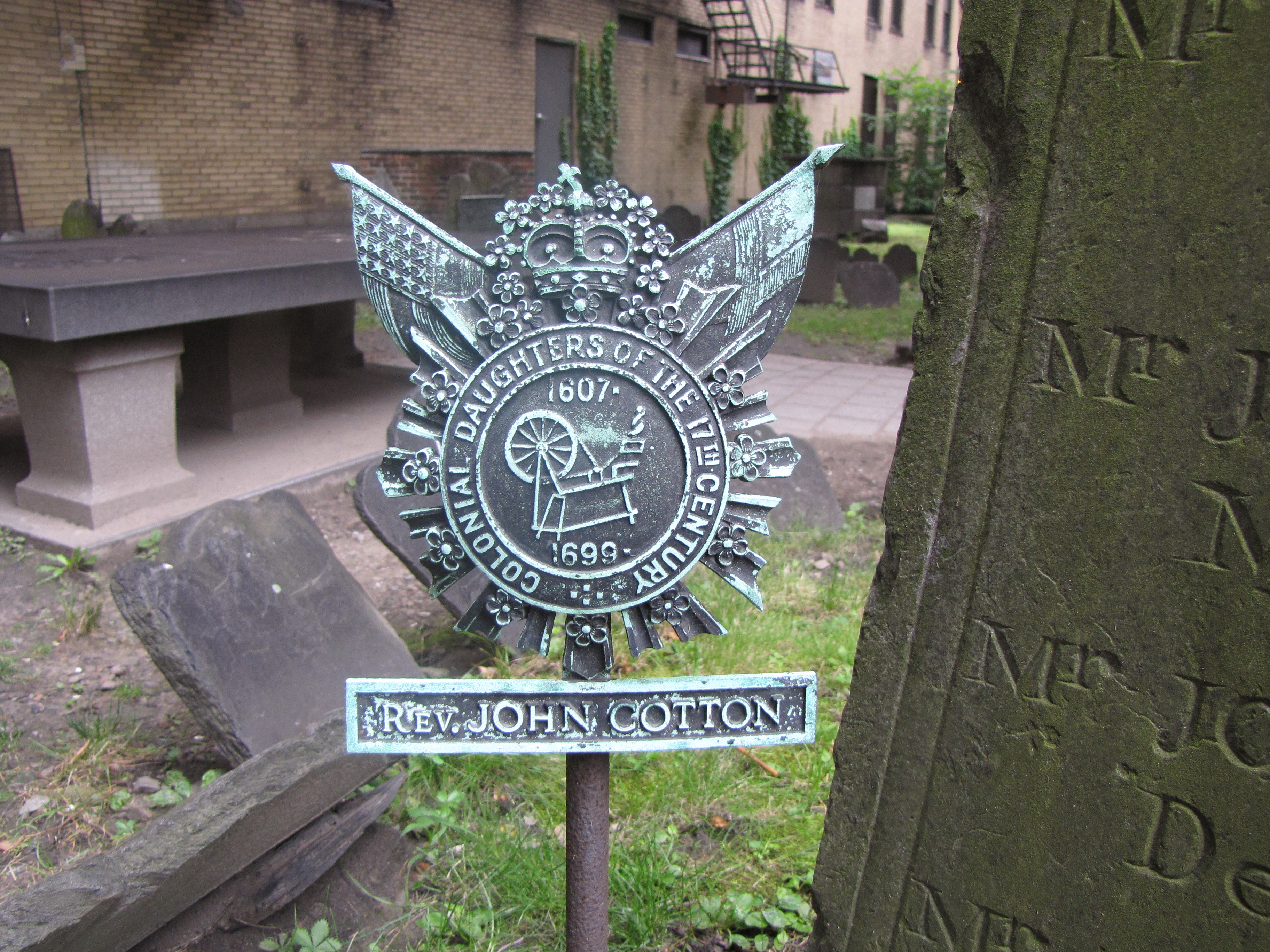
King's Chapel Cemetery, Boston, Massachusetts

Many organizations were founded in the later part of the 19th Century that required the prospective members demonstrate that their ancestors had been in the United States before a certain date or that their ancestors had served in a war.  Examples of these organizations are Sons of the American Revolution (1889), The Daughters of the American Revolution (1890), The Daughters of the War of 1812 (1892), The Order of the Founders and Patriots of America (1896), The National Society, Colonial Daughters of the Seventeenth Century (1896), The Mayflower Society (1897), and The National Society of the Colonial Dames of America XVII (1915).

The National Society, Colonial Daughters of the Seventeeth Century was founded by Mrs. Harlan P. Halsey in 1896 in Brooklyn, New York.  The Society admits women of good moral character over the ages of eighteen who can prove they are descended from an ancestor who rendered service in one of the American Colonies from 1607 to 1699.

The organization is still active with twenty-one chapters supporting the Society’s aims through their providing  scholarships at Lincoln Memorial University; granting  awards to honor graduates at military academies; maintaining historical displays; has restoring and preserving important Colonial papers and documents; and establishing a publishing program.

Posted in Symbolism | Leave a comment