
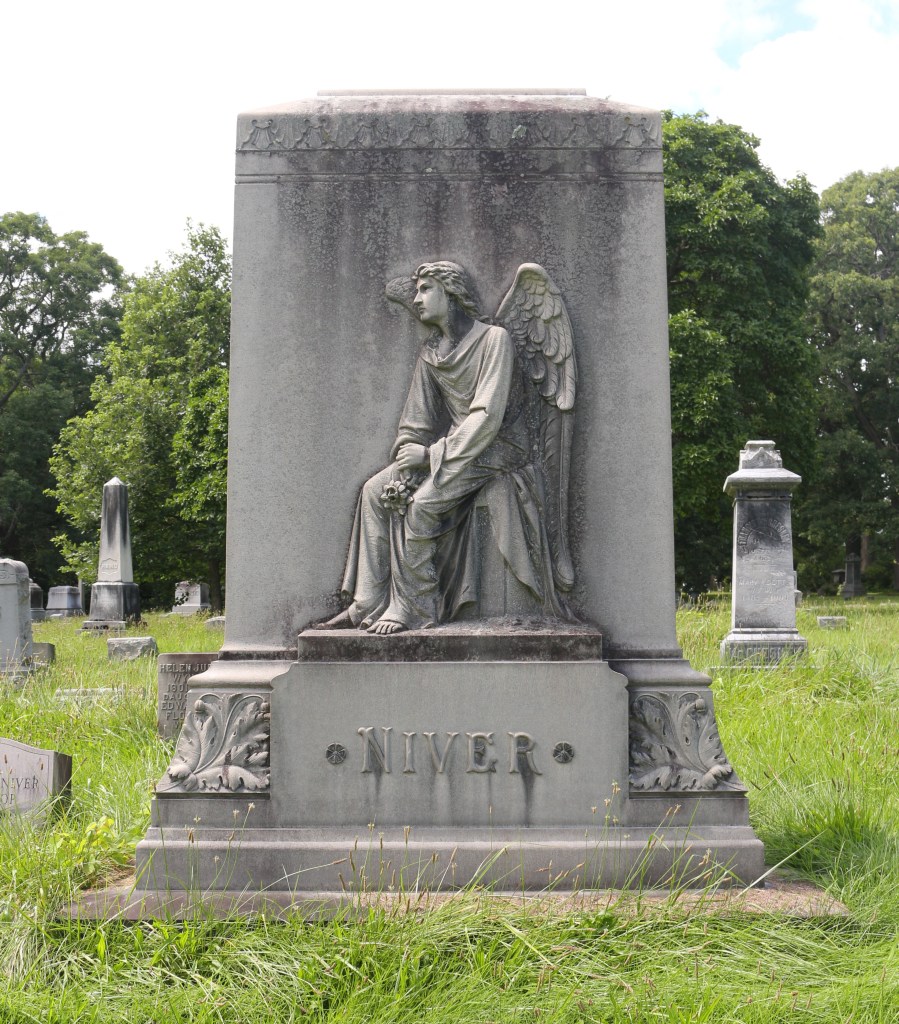
The Niver Family monument in the Oakwood Cemetery in Syracuse, New York, depicts a mourning figure—in this instance, an angel. We know it is an angel by its wings. Christian art began depicting angels with wings in the fourth century. Before then, angels were represented in several different forms–sometimes in human form, but they were also represented as a doves, or even as a hand reaching down from Earth from the Heavens. Beginning with the reign of Constantine, angels began being portrayed with wings, as is this figure, sullen with its eyes cast toward Heaven.
The angel here is seated and holding a passionflower. The passionflower was so named by Spanish Christian missionaries because they saw the flower imbued with religious symbolism and identified the parts of the flower and associated them with the passion of Jesus Christ.
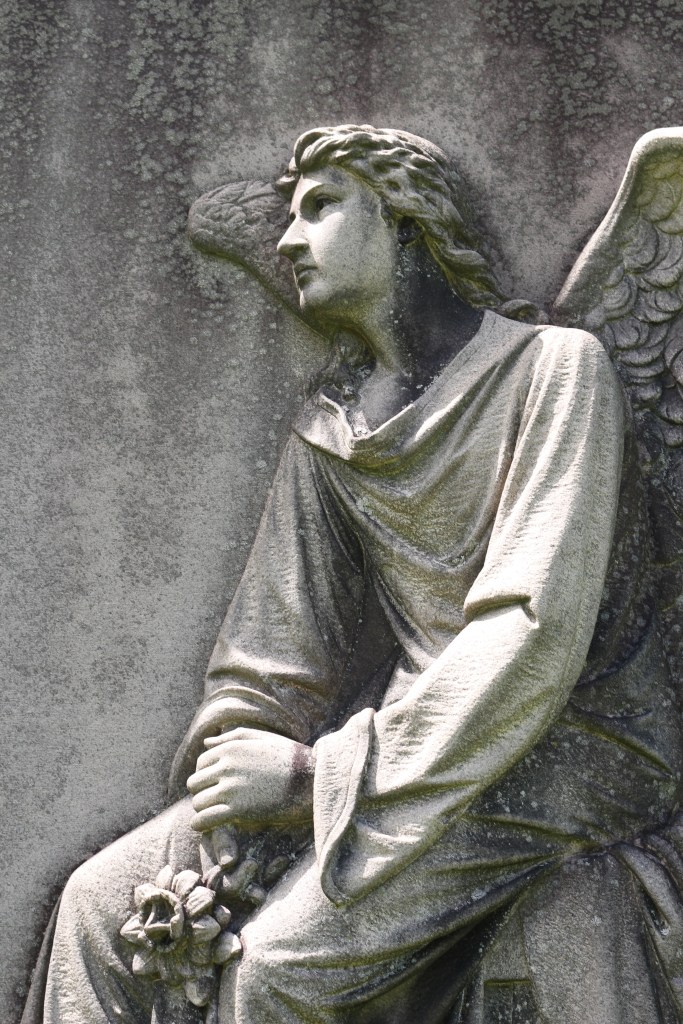
Then ten petals represent the ten faithful disciples. The two apostles who were not considered were St. Peter, the denier, and Judas Iscariot, the betrayer.
The filaments that circle the center of the flower represent Christ’s crown of thorns.
The curled filaments represent the whips used in flagellation of Christ.
The white color was equated with Christ’s innocence.
The styles symbolize the nails.
Flanking the name plate are poppies. In cemetery symbolism the poppy represents eternal sleep.


 Gravely Speaking