
Gravely Speaking and Syngrammata have decided to dig deep into our photo collections in order to bring you pairs of images drawn from our many years combing through American cemeteries. Each pair will be linked by a theme which we are free to interpret. Suggestions of future themes to follow are welcome in the comments! This week’s theme is all about Cats.
Gravelyspeaking writes:
Her Cat, Her Only Friend
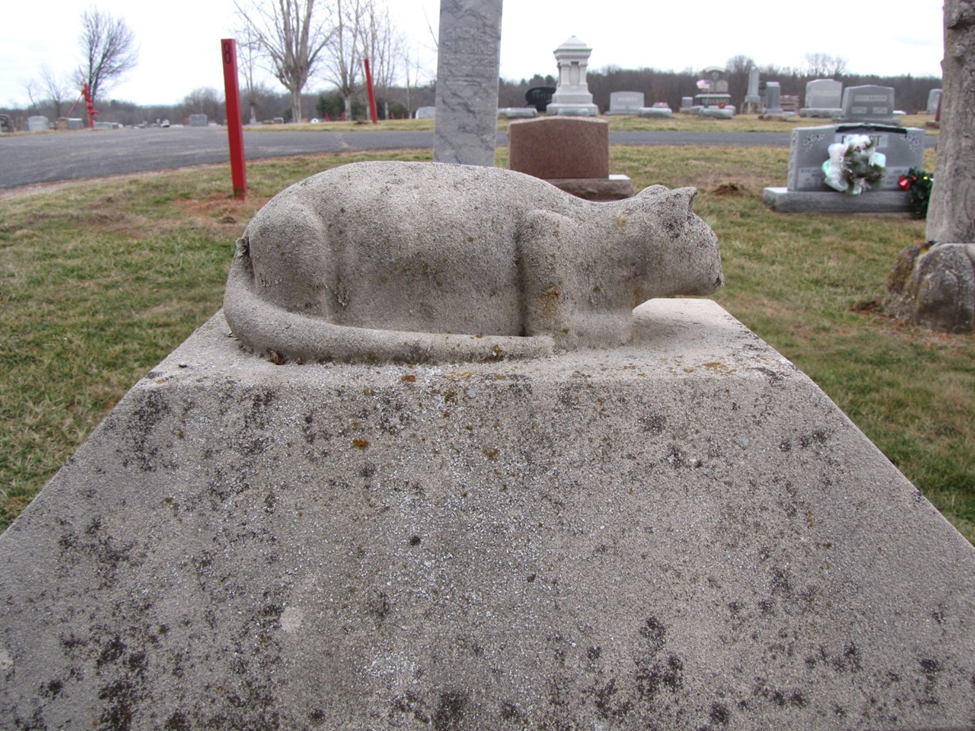
There has always been a debate between dog and cat lovers about which furry little friend makes the best companion. I have many friends who have cats galore and swear by them, while others like myself, have dogs and always have. We see dogs as the old bromide tells us, “as man’s best friend”. And it is true—you walk into the room and your dog’s eyes light up, tail wags. Walk out and back again, and he is just as happy, almost like he hadn’t seen you in hours! You just don’t get that reaction from a cat.
Whether dog and cat lovers can agree or not, graveyard aficionados can attest that many more dogs can be found on gravestones than cats. In fact, in my experience, I have seen very few cats adorning tombstones—so when I saw a gray marble cat perched atop the gravestone of Pollie Barnett in the Fairview Cemetery in Linton, Indiana, I was drawn to it. Then I was pulled in further by the following epitaph:
HERE POLLIE BARNETT IS AT REST,
FROM DEEPEST GRIEF AND TOILSOME QUEST,
HER CAT, HER ONLY FRIEND,
REMAINED WITH HER UNTIL LIFE’S END.
Surely, there was a mystery surrounding this gravestone. According to the area legend, Pollie (born September 23, 1836 – died February 27, 1900) had two daughters, one spirited girl named Sylvania. Her other daughter’s name has been lost to history, most likely because she wasn’t the focus of the sad tale. The book, Weird Indiana: Your Travel Guide to Indiana’s Local Legend’s and Best Kept Secrets, says that Sylvania disappeared without a trace. There were several reasons that could have explained the disappearance—she never came home from a quilting bee, she didn’t return to the house from gathering fire wood, or that she ran off with a local boy.

Whatever happened, Pollie never recovered from the loss. She became despondent and made it her life’s mission to search for her absent daughter. For the rest of her life, Pollie traveled the roads in and around Linton, calling for her daughter. According to the book, Pollie kept the search wandering hither and yon for the next 32 years—never giving up her desperate search for Sylvania. Area storytellers recalled Pollie tired and bedraggled carrying her black cat with her wherever she went—often only stopping to sleep in a road ditch or a kind farmer’s barn.
Linton townspeople commissioned a tombstone tribute to Pollie and her best friend—a black cat, which rests with a watchful eye, on top of her gravestone forever looking after Pollie.
Syngrammata Writes:
In West Laurel Hill Cemetery in Bala Cynwyd, a suburb of Philadelphia, stands the monument of Lee A. Holloway. Above the inscriptions, “More than just friends,” and “They asked for so little but gave so much,” stand the sculpted granite figures of a cat and a dog.

Figure 1. Holloway monument. West Laurel Hill Cemetery, Bala Cynwyd, PA. Photo: author.
Both figures are stylized but imbued with personality. The cat is labeled with the name “Oliver-Boo,” and (like the dog, “Archie”) looks up at the cemetery visitor with a glance they might have shown in life. Oliver-Boo affectionately rubs against Archie, and both have had small offerings laid at their feet.
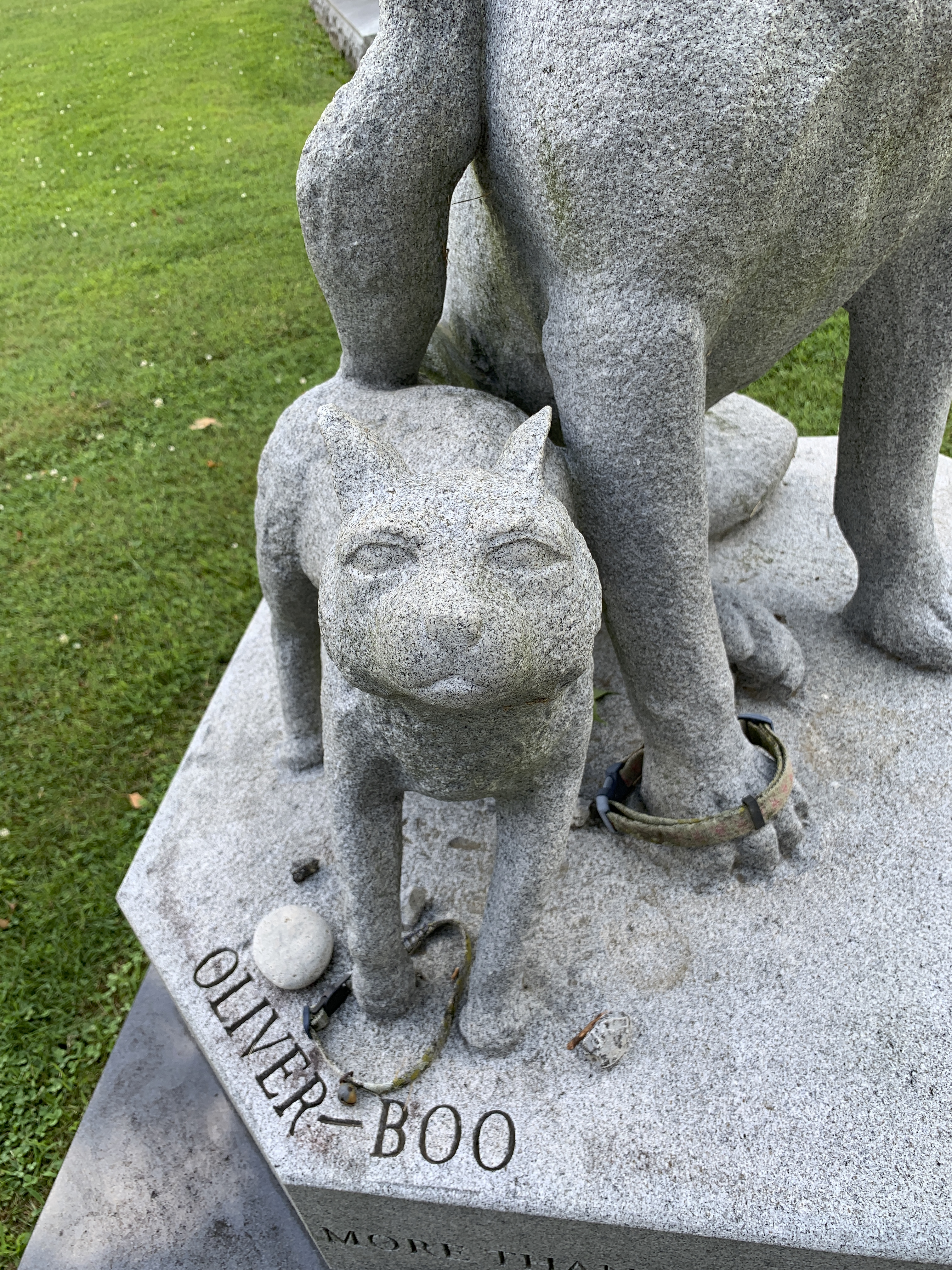
Figure 2. Holloway monument. Detail of Oliver-Boo. West Laurel Hill Cemetery, Bala Cynwyd, PA. Photo: author.


 Gravely Speaking
Dear Douglas,
I’m trying to post this on my end and the WordPress server is acting up. I’ll keep trying!
G.
Gregory S. Bucher
Principal Lecturer in Classics UMD College Park
>