

An iron fence surrounds the John Rourke Family Mausoleum in the Catholic Cemetery in Savannah, Georgia. The iron gates and fencing around a cemetery were common and imbued with a power—the power to keep the malevolent spirits such as ghosts, fairies, and witches at bay.
It was thought that iron had a supernatural power. That belief manifested itself in many Victorian practices. Hence a horseshoe nailed to a door was thought to be a talisman protecting those inside and repelling evil spirits. Burying an iron knife in front of the threshold to your home was believed to ward off witches from coming in. And the iron fencing around a cemetery was believed to contain the souls of the dead.
The magical powers of the gate and fencing are also found surrounding family plots. It was thought that once the gate was closed the spirits could not follow you home!
The Rourke gate, in addition to keeping spirits enclosed, displays other symbols with meaning. In the top corners above the angel in the center of the gate are poppies embedded in the design. In the cemetery, this motif represents eternal sleep. Just as it was portrayed in the movie, The Wizard of Oz, the main characters lie down in a field of poppies where they fall into a deep sleep. That same imagery is used here.
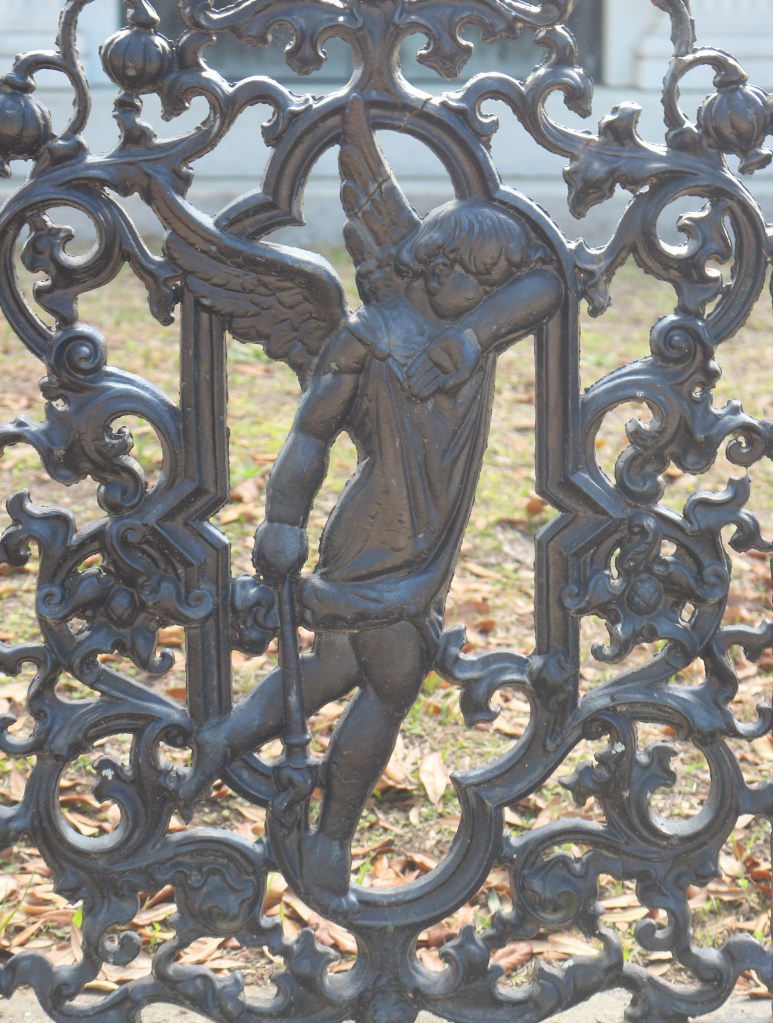
Also, at the center of the gate, an angel is holding an inverted torch; and that same symbol flanks the angel in the gate. The flame is symbolic of the soul. Here the inverted torch represents a life that has been extinguished.
Lastly, the angel holding the inverted torch covers his face. This act is mentioned in the Bible—Isaiah 6:2. According to theologians, the angels covered their faces as an act of respect and humility as they were not worthy of looking directly at God. It is also thought that God’s holiness is so bright, that the light was blinding.


 Gravely Speaking
Fairies are considered evil spirits? Since when? I don’t think Shakespeare saw them that way. Perhaps mischievous, but not evil. Fascinating break down of the imagery and the juxtaposition of religion and superstition. Seems almost like hedging bets.