
Gravely Speaking and Syngrammata have decided to dig deep into our photo collections in order to bring you pairs of images drawn from our many years combing through American cemeteries. Each pair will be linked by a theme which we are free to interpret. Suggestions of future themes to follow are welcome in the comments! This week’s theme is Día de los Muertos.
Gravely Speaking writes:
The King of Terrors takes a rest
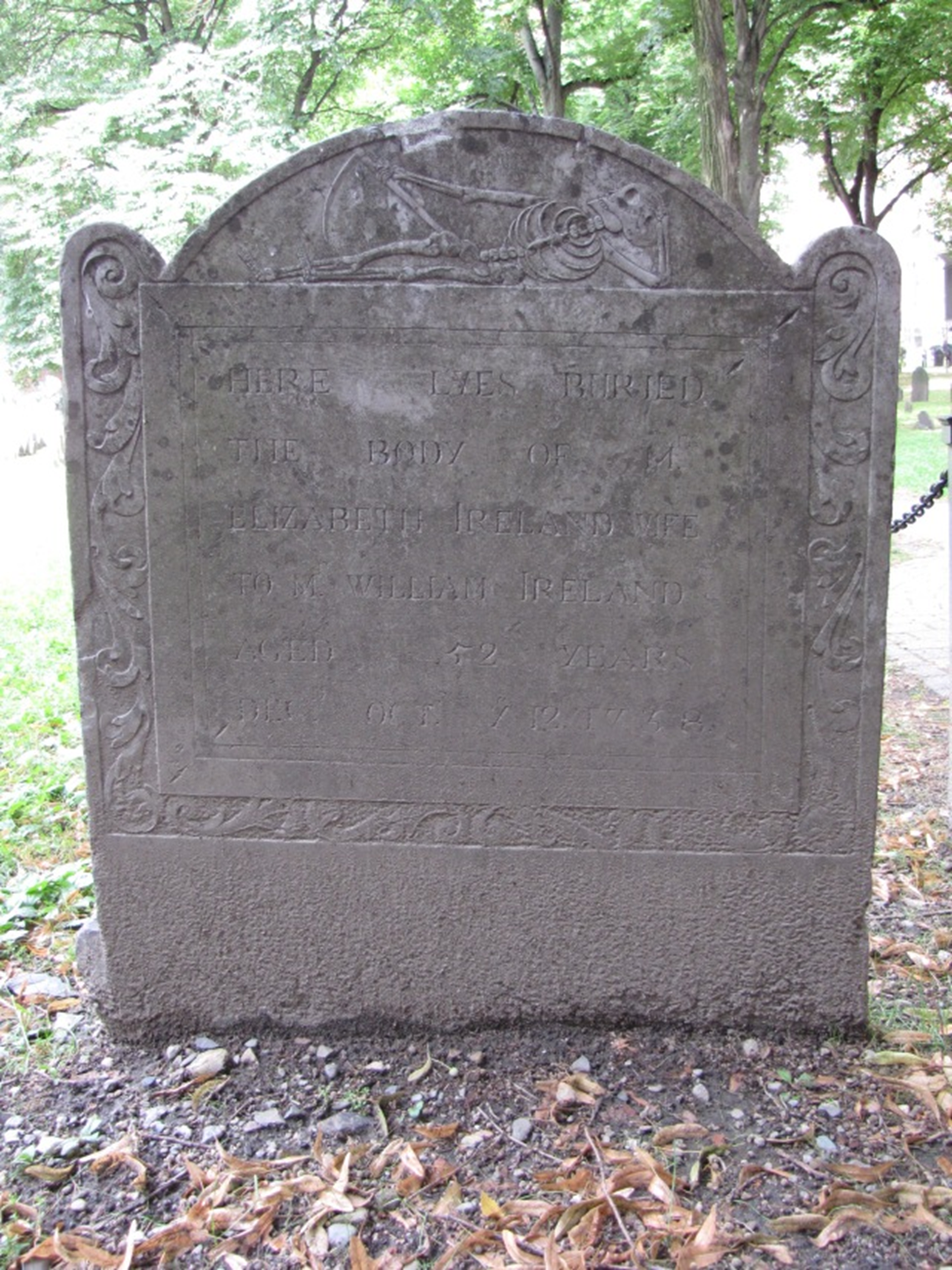
HERE LYES BURIED
THE BODY OF MRS.
ELIZABETH IRELAND WIFE
TO MR. WILLIAM IRELAND
AGED 52 YEARS
DEC’D. OCT. Ye 12, 1738.
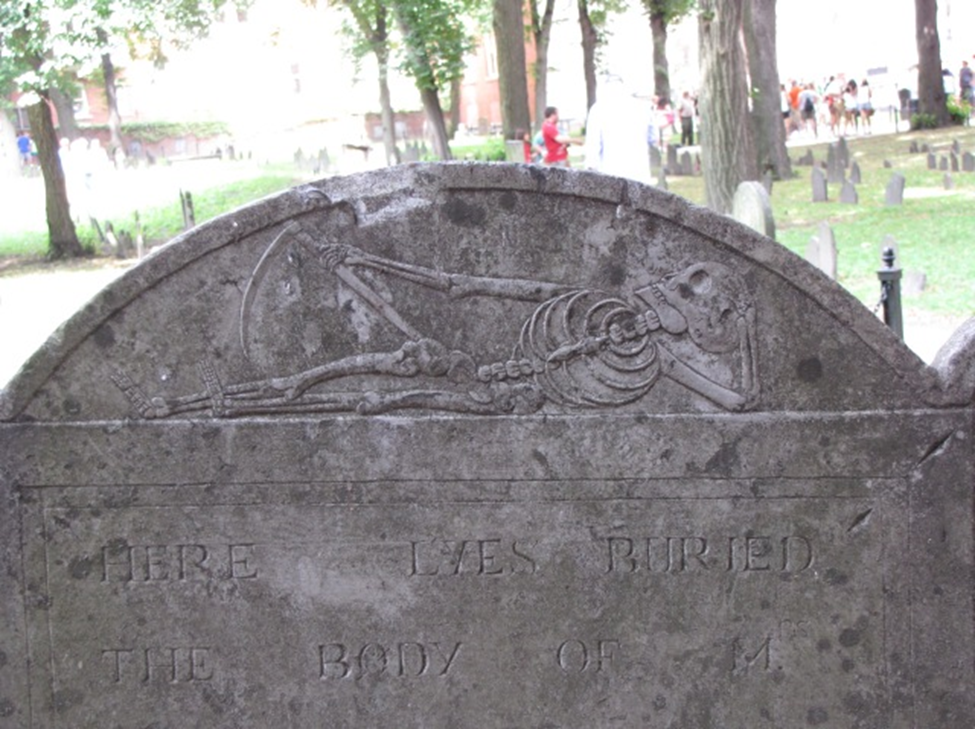
Many symbols in the graveyard are meant to remind passersby that life is short and that all will die. These images are called Memento Mori and are a call to “remember death“. The skeleton is one of these symbols. The skeleton above is holding a scythe, a weapon with which the lives are cut down in the Divine Harvest. When the skeleton is depicted with a scythe, arrow, spear, or darts, the figure is referred to as the “King of Terrors”. Here, on this gravestone in the Granary Burial Ground at Boston, the King of Terrors is depicted reclining, either taking a respite from the exhausting work of harvesting lives or resting up before his brutal work begins.
Syngrammata writes,
Death and the Maiden

In Spring Forest Cemetery in Binghamton, New York, Oliver C. and Clarissa Crocker erected this columnar monument for their son, John K. Crocker.
JOHN K. CROCKER
SON OF
OLIVER C. AND
CLARISSA CROCKER
DIED OCT. 4, 1862,
AGED 23 YEARS

Death, in the guise of Father Time, creeps up on an unsuspecting maiden. His scythe and the hourglass tell us what we need to know about him. The maiden represents Crocker only in a indirect way: death follows us all. In fact, this is a rare version of the story of ‘Death and the Maiden’. She represents sensuality and life, and she is distracted from noticing death creeping up on her by the vanities she contemplates: posies, a book, the cup. The broken column she rests upon is itself a constant symbol of life cut off short. This monument encourages us to look over our shoulders and ready ourselves for that final moment, and as such this image, like Gravely Speaking’s astounding skeleton, falls into an even larger category: the memento mori: “remember that you will die.”


 Gravely Speaking