
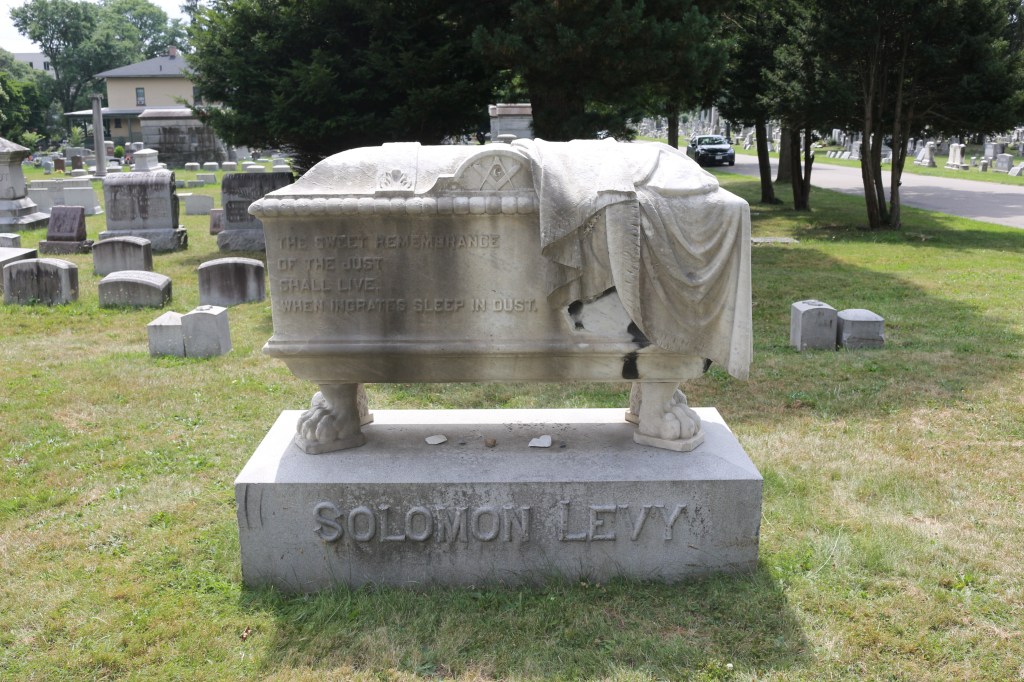
SOLOMON LEVY
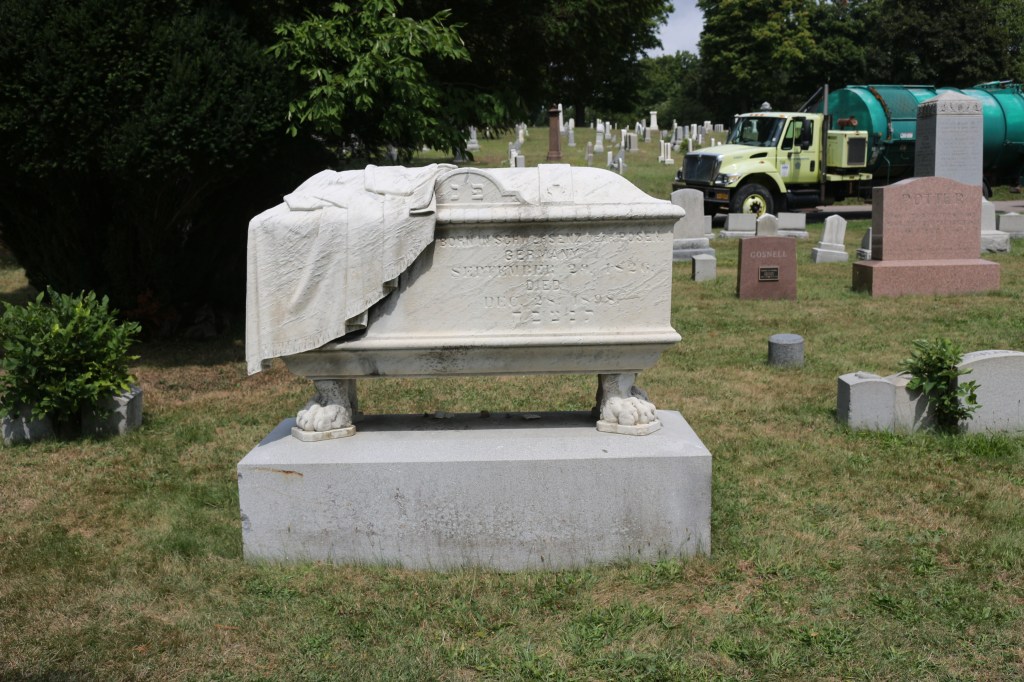
BORN IN SCHWERSENZ NEAR POSEN,
GERMANY
SEPTEMBER 29, 1826,
DIED
SEC. 28, 1898
IN SWEET REMEMBRANCE
OF THE JUST
SHALL LIVE
WHEN INGRATES SLEEP IN DUST
The Solomon Levy monument in the Mount Hope Cemetery in Rochester, New York, is a white marble sarcophagus—and a potpourri of symbolism. The sarcophagus as a gravestone form is an ancient burial monument designed to look like a coffin. This tomb is embellished with ornamentation and draped with a funeral pall held up with lion’s feet resting on a light gray granite block. But the “coffin” is empty–just an empty symbol of the receptacle.
The word, sarcophagus, is derived from two ancient Greek words, sarx, which meant flesh and phagein meaning to eat. The two words together, sarkophagus, mean flesh eating. The term came from the limestone used by the ancient Greeks to bury the dead which was thought to decompose the flesh of the deceased.
This powerful monument was designed to project strength. Holding up the tomb are four large meaty lion paws. The lion has long been a symbol of bravery, strength, and majesty. In popular culture, the lion is known for its power and is called King of the Jungle and King of the Beasts. The lion is often used as a royal emblem, found eight times in the Royal Arms for the late Queen of England alone!
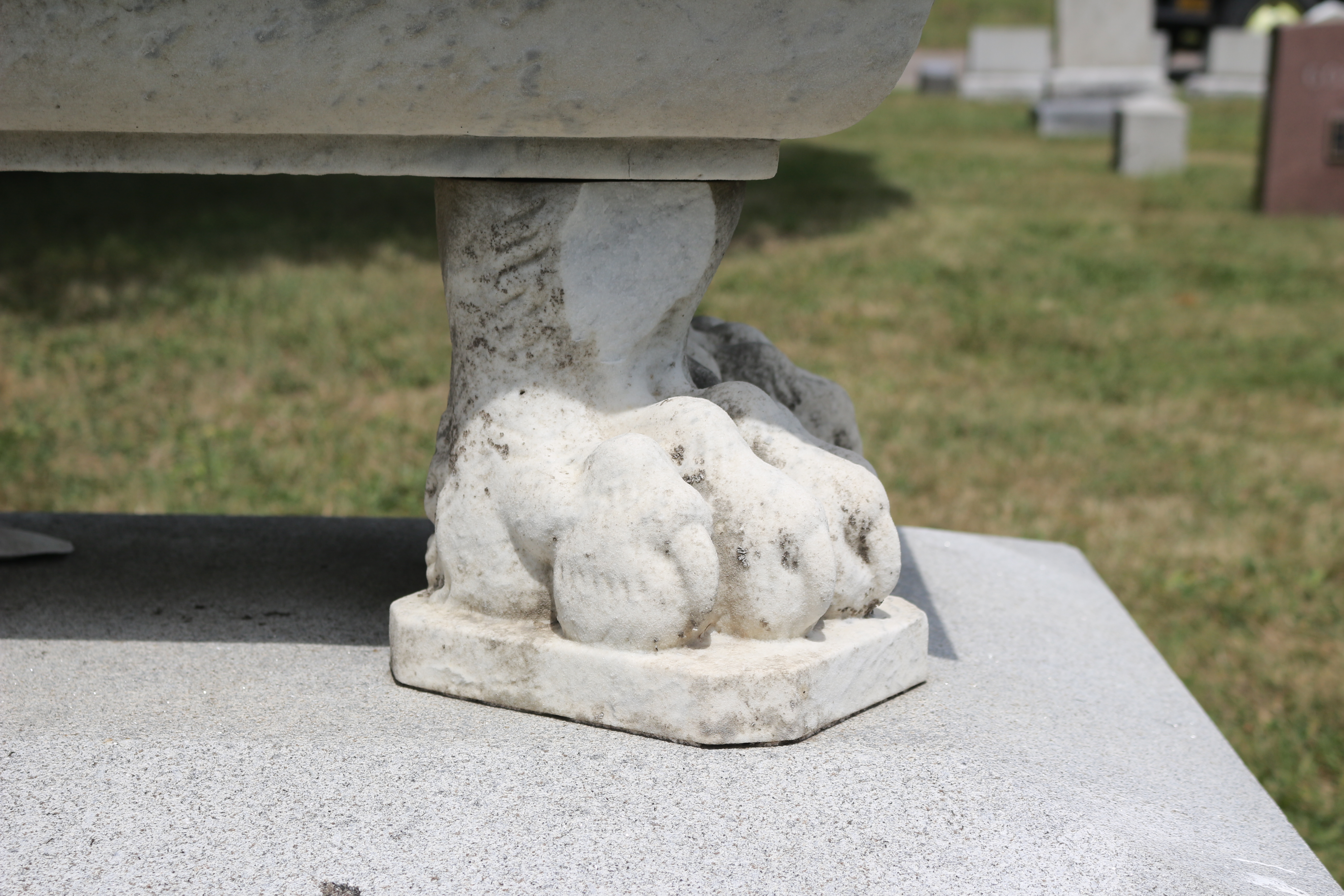
The lion in funerary art symbolizes the power of God. It is often depicted flanking the entrance of a tomb to guard against evil spirits to the passageway to the next realm. It also represents the courage of the souls the lions guard. There is also a connection of the lion to the Resurrection. It was once believed that lion cubs were born dead but would come to life after three days when the cubs were breathed upon by a male lion. The three days is significant because it is the number of days Jesus was in the tomb before he was Resurrected.
In addition to the other motifs carved into this monument, the sarcophagus also displays a fringed funeral pall in a sign of grief. The drapery represents a shroud symbolizing death and sorrow. The drapery can also be a motif that represents a veil that separates the Earth and Heaven.
Emblazoned on the front of the tomb is the most recognizable emblem of the Freemasons, the square and compass, with the letter “G” appears in the middle of the emblem. Each component of the symbol represents a different Masonic orthodoxy, though, these are not hard and fast: The compasses represent the boundaries of wisdom a person should have the strength to circumscribe and stay within. The square symbolizes virtue in all actions, just as the expression “square deal” means treating people with fairness. The letter “G” seems to have more than one meaning. It could possibly mean God, as in the creator of the universe; or Gimel, which is the word for the third letter of many Semitic languages. The number three is significant to many Masonic rituals and beliefs. Some also believe the “G” may represent geometry.
Lastly, in Hebrew, in a half circle at the top of the tomb on the side that gives Levy’s scant biographical information, are the two letters “pey” and “nun” which is translated to “here lies buried”. Below the Levy’s date of death are inscribed the Hebrew letters “taf”, “nun”, “tzadik”, “bet”, and “hey” meaning “May their soul be bound up in the bonds of eternal life”.


 Gravely Speaking
Hi, I tried to post a comment but was unsuccessful.I was surprised to see this post!! I was a Tour Guide
What a great cemetery in which to be a guide. I wish I’d talked to you before I went, I am sure you could have directed me to some graves that I missed.